New Epstein Files Reveal Links to Secret Nigeria Oil Deal and Goodluck Jonathan
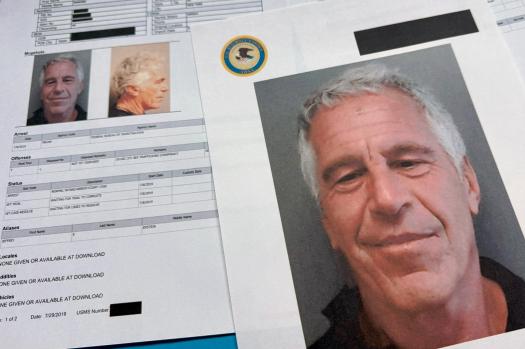
Freshly released documents have revealed new details linking the late American financier and sex offender Jeffrey Epstein to a proposed Nigerian oil transaction and contacts connected to former President Goodluck Jonathan’s era.
The records show that Epstein discussed a possible deal involving Nigeria’s crude oil in private emails with a businessman identified as David Stern.
The exchange suggests that the deal was presented as a quick-profit opportunity linked to buyers in China.
In one of the emails dated September 20, 2010, Stern told Epstein that a contact referred to as “PA” had introduced him to individuals who claimed they could access Nigerian oil and resell it abroad for profit.
The plan was described as a way to earn millions of dollars from the transaction.
“PA has asked me to see a guy who has access to Nigerian oil, and when selling it to China (or somebody else), F. can make around $6m.”
Despite the promise of huge returns, doubts were raised about the legitimacy of the proposal. Stern openly questioned the deal and warned Epstein that it looked suspicious.
“This seems very fishy (as my boss JEE would say),” he wrote.
Nigeria’s oil industry has long struggled with issues of secrecy, illegal trading, and weak transparency. Over the years, several administrations have tried to reform the sector, but problems such as crude oil theft and black-market sales have persisted. Only recently has the national oil company begun releasing audited financial statements to the public.
The emails form part of a wider set of correspondence that Epstein had with wealthy and influential figures before his death in 2019. Some of the messages mention Nigeria in relation to business talks, investments, and planned visits.
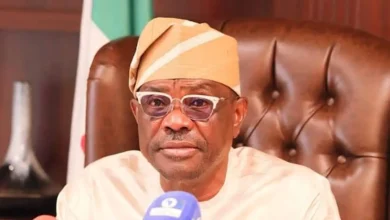
Another email from September 27, 2010, shows that George Reenstra, an American aviation executive, informed Epstein that he had to travel suddenly to Nigeria to meet with then-President Goodluck Jonathan. He described the meeting as unavoidable and urgent.
“I unexpectedly must leave this evening for Nigeria. I have tried hard to delay this trip but it is with the the country President and I have no alternative,” he wrote.
Reenstra added that he had handed over documents related to an ongoing business matter to his partner and hoped the financial arrangements would be completed while he was away.
“I have passed all the documentation to my partner, Jon Parker, and he will be able to assist you in completing the transaction. I will have email access but not the ability to open attachments. Hopefully we can resolve the contract issues and get the funds into deposit early this week per our telephone and e-mail exchanges of last week,” he stated.
There is no public confirmation that the meeting with the Nigerian president eventually took place.
However, the email indicates that Epstein’s network extended into discussions involving Nigeria’s leadership period.
The newly released files also reveal that Epstein kept in touch with several powerful individuals across politics, business, and royalty. The correspondence includes names linked to former US President Donald Trump’s political circle and other global figures.
Epstein had been facing trial on sex trafficking and conspiracy charges before his death in a US jail in 2019. He had pleaded not guilty. Since then, there has been sustained public pressure for authorities to release records connected to his case and associates.
The documents show that Epstein maintained communication with prominent personalities such as Bill Clinton, Elon Musk, and Britain’s Prince Andrew. Some emails included social invitations and proposed meetings.
One exchange involved an invitation to dine at Buckingham Palace. Another message suggested introducing the prince to a young Russian woman. Photographs included in the files appear to show the royal figure in a compromising setting with an unidentified woman.
Prince Andrew had previously claimed he had no contact with Epstein after a visit to his New York residence in 2010. However, the emails indicate messages were still exchanged in early 2011.
Elon Musk’s name also appeared several times in the records. Some emails from 2012 and 2013 discussed a possible visit to Epstein’s private island. Musk later said Epstein had repeatedly invited him and that he refused, describing him as “obviously a creep.”
The files further show that the current US Commerce Secretary, Howard Lutnick, arranged a visit to Epstein’s island in 2012. There were also friendly exchanges between Epstein and Steve Bannon, a former adviser to Donald Trump.
In one message from January 2019, Epstein asked Bannon if he had received a Christmas gift.
A few days later, he invited him to spend time with him in New York.
Nevertheless, the revelations have renewed attention on Epstein’s global connections and the extent of his interactions with political and business leaders across different countries, including Nigeria.