Defence Minister Breaks Silence on Plan to Introduce Mandatory Military Training for Youths
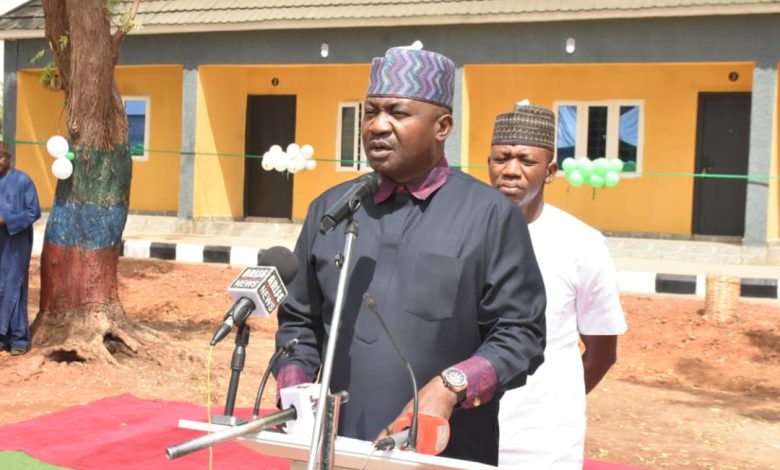
The Minister of Defence, Gen. Christopher Musa (retd.), has dismissed claims that the Federal Government plans to introduce compulsory military training for Nigerian youths.
He said Nigeria will continue to operate a professional volunteer armed forces system, supported by civic national service programmes.
The clarification comes amid growing public debate over security reforms and proposals calling for wider youth participation in national defence.
Musa spoke during the presentation of a book titled “Serving the Nation: Exploring Mandatory Military Service for Nigerian Youths” in Abuja on Friday. He was represented at the event by the Deputy Director, Special Duties, Col. George Usibe.
He explained that the publication contributes to national dialogue on service and responsibility but does not reflect the current policy position of the Federal Government.
He noted that Nigeria’s security structure is built around a professional military, complemented by civic service initiatives such as the National Youth Service Corps (NYSC).
According to him, many countries adopt different models of national service, with some enforcing compulsory military service while others rely on voluntary armed forces supported by civic and reserve systems.
“Our Armed Forces operate as a professional volunteer military dedicated to defending the sovereignty and territorial integrity of the Federal Republic, while supporting civil authorities in addressing internal security challenges. This professional force is complemented by civic national service through the National Youth Service Corps, which continues to play a vital role in promoting national integration, exposure and youth engagement across our diverse federation.
“Additional youth-oriented and community-based platforms further contribute to resilience and civic responsibility within our society. It is therefore important to state clearly that there is presently no policy to introduce mandatory military service in Nigeria.”
The defence minister said insecurity cannot be solved by manpower alone. He stressed that effective governance, strong institutions and trust between citizens and the state are critical to lasting peace.
While ruling out compulsory military training, Musa said the government remains open to research-based discussions and public engagement on national service.
He added that any future policy direction must be guided by the Constitution, economic capacity and institutional readiness.
He said, “However, the Federal Government recognises that scholarly inquiry and constructive public dialogue remain indispensable to policy evolution. Ideas must be examined, assumptions tested and perspectives shared within the marketplace of national thought.”
He further stated that Nigeria’s approach remains consultative and forward-looking, with emphasis on voluntary participation, skills development and civic responsibility among youths.
Musa also said arguments in favour of mandatory service often point to unity, discipline and national cohesion, but warned that such decisions must consider financial realities and the social impact on young citizens.
According to him, strengthening the Armed Forces through technology, inter-service cooperation and operational readiness remains a priority of the government’s defence reforms under the Renewed Hope Agenda.
He said innovative hybrid models that expand civic service opportunities and voluntary reserves may be more suitable for Nigeria’s current needs.
At the event, the author of the book, Mohammed Abubakar, said countries such as Finland, Israel, South Korea and Singapore have used mandatory military service to strengthen national security.
He disclosed that findings from his survey showed that 73.1 per cent of respondents supported compulsory military service, while 79.7 per cent believed it could help address insecurity in Nigeria.
Abubakar also stressed the importance of manpower, technology and good governance, warning that without accountability and strong institutions, security efforts would remain ineffective.