REVEALED: How Nigeria Paid Millions to Boko Haram for Kidnapped Pupils
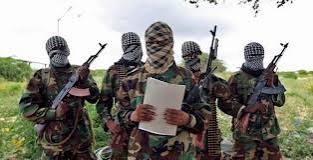
Fresh details have emerged on how the Nigerian government allegedly secured the freedom of pupils kidnapped from a Catholic boarding school in Niger State.
Intelligence sources say millions of dollars were paid to militants linked to Boko Haram as part of negotiations that led to the release of the victims.
The victims were students and staff abducted from St. Mary’s Boarding School, Papiri in November.
The attackers reportedly took nearly 300 people during the raid. Some of the victims later escaped, but many remained in captivity for days before negotiations began.
Security sources familiar with the talks said the government paid a large sum of money to secure the release of about 230 pupils and staff members.
According to the sources, the funds were transported by helicopter to a militant camp in Gwoza, a known stronghold of insurgents near the border with Cameroon.
The money was reportedly delivered to Ali Ngulde, a commander believed to be operating in the area. Because of communication challenges in the remote region, the militant reportedly crossed into Cameroon before confirming the delivery. Shortly after confirmation, the first group of around 100 children was released.
Sources also claimed that two commanders linked to Boko Haram were freed during the negotiation process. This alleged arrangement contradicts Nigeria’s law banning ransom payments to kidnappers, a policy introduced to discourage the country’s growing abduction crisis.
However, Nigerian authorities have repeatedly denied paying any ransom. Officials insist the victims were freed through negotiations without financial exchange. A spokesperson for the country’s security services maintained that “Government agents don’t pay ransoms.”
Despite the denial, several intelligence officials familiar with the discussions insist money changed hands. Estimates of the payment vary widely.
One source suggested that about ₦40 million was paid per hostage, placing the total close to seven million dollars. Another source claimed the overall payment was about ₦2 billion.
The negotiations were reportedly coordinated by Nigeria’s National Security Adviser, Nuhu Ribadu. His office has not publicly responded to questions regarding the alleged payments.
Investigators believe the attack was orchestrated by a notorious militant commander known as Sadiku. The jihadist leader is feared across parts of northern Nigeria and has been linked to several high-profile attacks.
Security analysts also suspect Sadiku played a major role in the deadly assault on the passenger train between Abuja and Kaduna in 2022. That attack involved heavy gunfire and explosives and resulted in dozens of kidnappings, with families later paying large sums to secure the release of victims.
Experts say the group holding the schoolchildren likely kept them in camps located in Borgu Local Government Area, about 370 kilometres from Minna, the capital of Niger State. The area is remote and difficult for security forces to access.
Analysts believe the kidnappers were seeking funds to sustain their operations. Some reports suggest the militants recently moved from earlier hideouts in Shiroro and needed fresh resources to maintain their network.
The incident has also drawn international attention. The abduction occurred at a time when the United States government under Donald Trump raised concerns about alleged persecution of Christians in Nigeria.
Security experts, however, say kidnapping in the country affects people from different religious and ethnic backgrounds. Most victims are ordinary Nigerians targeted for ransom by criminal groups and insurgents.
Data from Armed Conflict Location & Event Data Project (ACLED) shows hundreds of abductions are recorded across Nigeria each year. Many incidents involve multiple victims, making mass kidnappings a persistent security challenge.
Nigeria passed a law in 2022 that criminalises ransom payments and prescribes jail terms of up to 15 years for offenders. Despite the law, families often pay kidnappers to save their relatives, while authorities struggle to curb the growing problem.
A recent report by SBM Intelligence described kidnapping in Nigeria as a “structured, profit-seeking industry.” The report estimated that criminal groups generated more than $1.6 million from abductions within a one-year period.
The insurgency linked to Boko Haram has continued to destabilise parts of northern Nigeria since 2009.
The group gained global attention after the Chibok schoolgirls kidnapping, when 276 girls were abducted from a government school in Borno State.