FIFA Sanctions Nigeria, DR Congo After Controversial World Cup Qualifier Clash
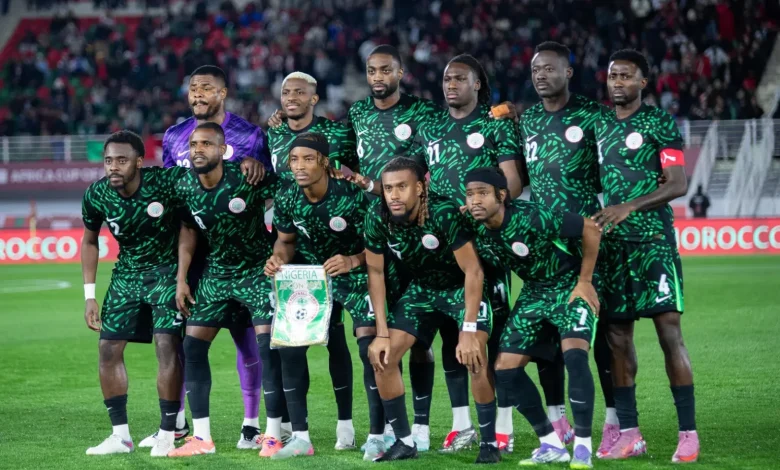
World football governing body FIFA has sanctioned the Nigeria Football Federation and the DR Congo Football Federation over disciplinary incidents that occurred during a tense 2026 World Cup African play-off encounter between Nigeria and DR Congo.
The sanctions come months after the dramatic clash in November 2025, which ended in heartbreak for the Nigeria national football team, popularly known as the Super Eagles.
DR Congo defeated Nigeria 4–3 on penalties in Morocco after both sides battled fiercely for a place in the next stage of the qualification process.
In its latest disciplinary report covering the World Cup qualifying series, FIFA confirmed that both football bodies were found guilty of separate breaches during the match.
Nigeria was sanctioned over crowd-related misconduct involving the throwing of objects from the stands. According to FIFA, the incident constituted a violation of Articles 17 and 17.2.b of its disciplinary code, which deals with order and security at matches. As a result, the Nigerian federation was fined 1,000 Swiss francs.
The Congolese federation received a heavier punishment. FIFA said supporters of the DR Congo team used laser pointers or similar electronic devices during the game, an act that contravenes Article 17.2.d of the disciplinary regulations. The offence attracted a fine of 5,000 Swiss francs.
The controversial fixture had already generated heated reactions in Nigeria following the painful defeat. Head coach Eric Chelle openly criticised DR Congo officials in the aftermath of the match, even alleging that spiritual practices influenced the outcome.
Beyond the disciplinary measures, attention has also shifted to Nigeria’s formal protest against the Congolese federation.
The Nigerian football body had accused DR Congo of fielding players whose nationality switches were allegedly processed under questionable circumstances.
Nigeria submitted a petition to FIFA on December 15, 2025, requesting a full investigation into the eligibility of several players who featured in the decisive play-off match. The complaint argued that the Congolese federation may have provided misleading information while securing nationality clearance for some foreign-born players.
The list included several well-known footballers who started the game for DR Congo, alongside substitutes who were introduced during the contest.
Details of the petition later surfaced publicly through journalist Osasu Obayiuwana, who shared parts of the document indicating that some players allegedly received approval to represent DR Congo only days before the crucial encounter.
While FIFA is yet to release a final decision on Nigeria’s protest, DR Congo have continued preparations for the intercontinental play-offs.
The team is expected to face the winner of the semi-final between New Caledonia and Jamaica on March 31 for a spot at the 2026 FIFA World Cup.
Interestingly, DR Congo recently omitted two of the disputed players, Michel-Ange Balikwisha and Mario Stroeykens, from their latest 26-man squad ahead of the decisive matches.
The development has further intensified discussions among Nigerian football fans who are awaiting FIFA’s ruling on the eligibility dispute.
Recall that Nigeria had formally petitioned FIFA after the controversial play-off defeat, insisting that the matter be thoroughly investigated in the interest of fairness in the World Cup qualification process.