
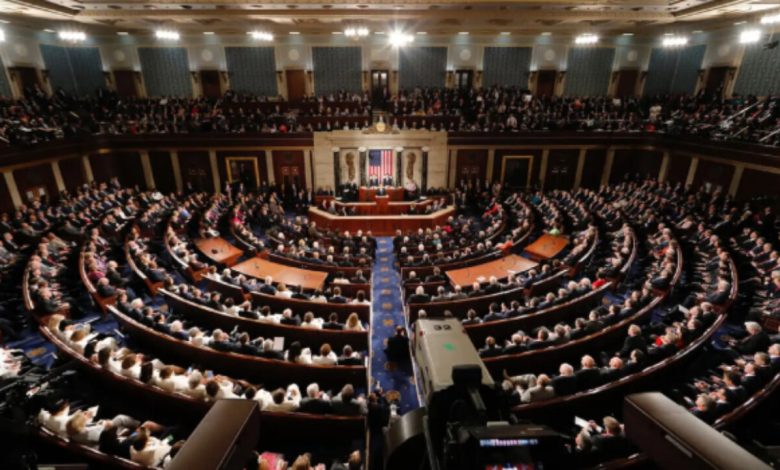
House Appropriations Vice Chair and National Security Subcommittee Chairman Mario Díaz-Balart (R-FL), along with Representatives Robert Aderholt (R-AL) and Riley Moore (R-WV), led a joint briefing with the House Foreign Affairs Committee to address the escalating violence and targeted persecution of Christians in Nigeria. The session featured experts on religious freedom and foreign relations.
The briefing follows President Donald J. Trump’s October 31 directive to the House Appropriations Committee to investigate the ongoing slaughter of Christians in Nigeria and submit their findings.
Participants included Rep. Mario Díaz-Balart (R-FL), House Appropriations Committee Vice Chair and National Security, Department of State, and Related Programs Subcommittee Chairman
Rep. Robert Aderholt (R-AL), Labor, Health and Human Services, Education, and Related Agencies Subcommittee Chairman and Values Action Team (VAT) Chair
Rep. Riley Moore (R-WV), House Appropriations Legislative Branch Subcommittee Vice Chair and religious liberty advocate
Rep. Brian Mast (R-FL), House Foreign Affairs Committee Chairman
Rep. Chris Smith (R-NJ), House Foreign Affairs Africa Subcommittee Chairman
Hon. Vicky Hartzler, Chair, U.S. Commission on International Religious Freedom
Sean Nelson, Alliance Defending Freedom International
Dr. Ebenezer Obadare, Council on Foreign Relations
Subcommittee Chairman Díaz-Balart emphasised, “No one should live in fear because of how they worship. Defending religious liberty worldwide is both a moral duty and a vital American interest. As Chairman of the subcommittee that funds U.S. national security interests and foreign policy priorities, I remain committed to advancing policies that protect the freedom to live according to one’s faith without fear of violence and retribution.
“I address this issue in my FY26 funding bill, and I intend to strengthen these efforts by passing a full-year funding measure, which is essential to advancing an America First agenda.”
Congressman Aderholt stated, “The rising violence and targeted persecution of Christians in Nigeria is a crisis that can’t be ignored. Throughout my time in Congress, I have worked to protect the most vulnerable, including those whose lives and liberties are threatened simply because of their faith. We must stand firmly with Nigeria’s Christian communities and all persecuted believers worldwide, and I commend our collaborative efforts to provide the President with the information needed to confront this growing tragedy.”
Congressman Moore added, “Our brothers and sisters in Christ are being persecuted and slaughtered in Nigeria simply for professing their faith in our Lord and Saviour Jesus Christ. That’s why President Trump designated Nigeria as a Country of Particular Concern, and why he asked me, along with the House Committee on Appropriations, to look into the horrific persecution of Christians in Nigeria.
“I’m grateful to Chairman Díaz-Balart for convening this critical discussion to receive expert testimony and engage in an important dialogue to ensure we have a full picture of the ongoing crisis Nigerian Christians face every day. The world will no longer turn a blind eye to the persecution of Christians in Nigeria.”
Chairman Mast added, “This is not merely ‘inter-communal violence’ or a ‘resource conflict,’ as many claim. This is a targeted campaign of religious cleansing. Whether it is Boko Haram, Islamic State West Africa Province, or radicalised nomadic Fulani militants, the objective is to drive Christians out of their ancestral lands in the Middle Belt and impose a radical Islamist ideology, as has already happened across the northern states, where blasphemy laws are used to oppress.
“As Chairman of the House Foreign Affairs Committee, I firmly stand with President Trump in his decision to redesignate Nigeria as a Country of Particular Concern. We must demand that the Nigerian government disarm these militias, return displaced families to their homes, and bring the perpetrators to justice.”
Congressman Smith observed, “To be a Christian—or moderate Muslim—living in Nigeria means to be living under the constant threat of murder, rape, and torture by radical Islamist groups, such as Boko Haram and Fulani terrorists.
“The most brutal and murderous anti-Christian persecution in the world—as well as the systemic targeting and killing of moderate Muslims who speak out against radical Islamists or refuse to conform with their extreme ideals—occurs in Nigeria, the ground zero of religious violence. The Nigerian government has a fundamental, constitutional obligation to protect its citizens; however, the perpetrators of this persecution operate with complete impunity.
“The United States is committed to standing firmly with the persecuted, no matter where in the world. Under the strong leadership of President Trump, I am confident that the United States will hold the Nigerian government accountable for its complicity in the rampant religious persecution occurring within its borders.
“The Nigerian government is trying to run out the clock; we cannot allow this to happen. We must act quickly and decisively to save more lives.”Expert testimony emphasised the need for decisive action
Hon. Vicky Hartzler, Chair of the U.S. Commission on International Religious Freedom, highlighted the severity of religious freedom violations in Nigeria, “Religious freedom in Nigeria has been under siege in 2025 and, unfortunately, it seems to be getting worse.
“Just a few days ago, on November 22nd, 303 children and 12 teachers were abducted in an attack on St. Mary’s School, a Catholic institution in Niger State. A few days earlier in Kwara State, gunmen besieged a church and kidnapped several innocent people, including a pastor, and killed two others.
“Muslims, too, fall victim to such violence: in August, bandits abducted over 100 individuals, mostly women and children, from a mosque in Zamfara State and killed 27 worshipers in a mosque in Katsina State… No matter the group perpetrating the violence, we must be clear: religious freedom violations are rampant.
“They are horrible, egregious, violent, and Christians are the predominant victims. But no matter the religion of the victim, all killings must be stopped, and the government must take decisive action now to prevent any further killings.”
Hartzler further outlined how the U.S. can assist, “The U.S. government should also work directly with the government of Nigeria to vastly improve its accountability and transparency, while better leveraging relevant U.S. security assistance such as police training and reform, and conflict mediation.
“Resources could also be invested in using early warning systems to reduce community violence, and the U.S. government should insist Nigerian government officials respond when there is an early warning. Too many times, local villagers learn of an impending attack and reach out for protection, only to have their cries for help ignored to their ultimate demise.
“Worse yet, there are stories of law enforcement being called during an attack, and yet no help is sent. This is unacceptable!… Washington has always seen Nigeria as the linchpin to West African economic prosperity, and the U.S. government should continue to work with the Nigerian government to provide technical expertise and other forms of assistance to train, support, and counter violent insurgent groups so the entire region can prosper.
“After all, peace not only promotes religious freedom but secures trade and markets so Nigeria can be more self-sufficient and achieve the great potential it has long sought.”
Sean Nelson, Senior Counsel at Alliance Defending Freedom International, described the experiences of Nigerian Christians:
“Our cases have involved Christians unjustly imprisoned by Sharia courts, false allegations of crimes merely for evangelism or protecting Christian converts or operating charities, Christians kidnapped and tortured, girls taken from their parents and forced into marriages and forcefully converted to Islam, and both Christians and minority Muslims charged with blasphemy accusations.
“I have met with clients who have shared their heartbreaking testimony directly with me, many of whom barely escaped being murdered by extremists or even people that they knew within their communities. I have visited villages directly attacked by Fulani militants and witnessed the aftermath of pastors beheaded, mass graves, widows and orphans, churches and homes torched, destroyed farmlands, and the pains of mass displacement and the constant sense that Christians are defenseless against these religiously-motivated attacks, and that the government has regularly failed to protect them.”
Nelson continued, “Officials in Nigeria dismiss any consideration that religion plays a role in these attacks, and have put very few resources into the areas where Christians have been hit hardest, in the Middle Belt. When Christians report imminent attacks, their pleas are often ignored by law enforcement and officials, leading to tragic results.
“Nigeria also maintains and enforces one of the most draconian blasphemy laws in the world. In the 12 northern Sharia states, a person can be sentenced to death for alleged blasphemy, one of only seven places in the world with such a law. These laws inspire terrible mob violence, including against Christians like Deborah Yakubu and Rhoda Jatau.”
Dr. Ebenezer Obadare, Douglas Dillon Senior Fellow for Africa Studies at the Council on Foreign Relations, identified Boko Haram as the central threat: “The deadliest and most serious threat confronting the Nigerian state today is jihadist terror, perpetrated by the Islamist group Boko Haram. Boko Haram translates to ‘Western education is forbidden.’
Boko Haram’s barbarous and implacable campaign to overthrow the Nigerian state and establish an Islamic caliphate in its stead is the source of Nigeria’s present discontents. Every proposal to solve the Nigerian crisis that does not take seriously the need to radically degrade and ultimately eliminate Boko Haram as a fighting force is a non-starter.”
Obadare also proposed a two-pronged strategy for the U.S., “As recent events have shown, the Nigerian authorities are not impervious to incentives. Since the country’s Country of Particular Concern (CPC) designation and President Trump’s threat of unilateral military action against Boko Haram, President Tinubu has made several moves, including ordering air strikes against Boko Haram targets, the recruitment of an additional 30,000 policemen, and, most recently, declaring a national security emergency in the country. Washington must keep up the pressure.
“The policy goal should be two-fold: first, work with the Nigerian military to neutralise Boko Haram. Second, the United States should put pressure on President Tinubu to (1) make Sharia law unconstitutional in the twelve northern states where they have been adopted since 2000 and (2) disband the various Hisbah groups across northern states seeking to enforce and impose Islamic law on all citizens regardless of their religious identity.”
The House Appropriations Committee continues to work closely with the Trump Administration to combat religious persecution worldwide. Appropriators are investigating the massacre of Christians in Nigeria and preparing a comprehensive report for the President, outlining ways Congress can support the White House’s efforts.
