
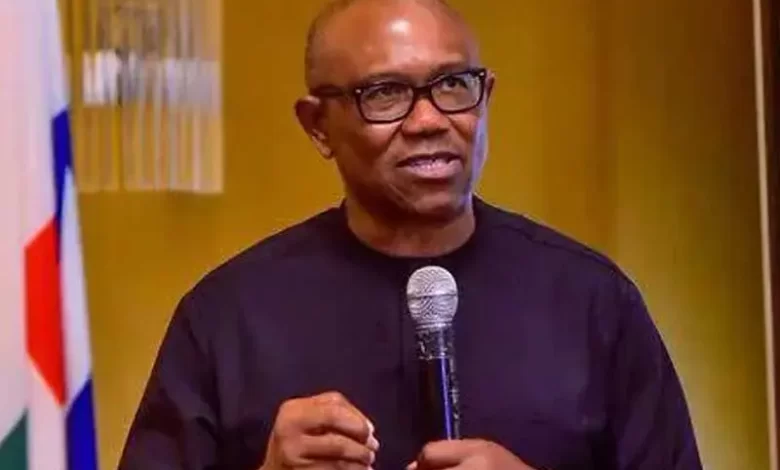
Former presidential candidate of the Labour Party, Peter Obi, has taken a strong swipe at members of the House of Representatives over their refusal to criminalise vote-buying during party primaries.
He described the decision as a major blow to Nigeria’s democratic growth and a missed opportunity for meaningful reform.
Obi reacted while lawmakers were considering amendments to the Electoral Act, 2022. He said many Nigerians had expected the National Assembly to confront vote-buying head-on, especially at the early stages of the electoral process where candidates emerge.
Sharing his views in a post on X on Sunday, Obi expressed disappointment over the direction taken by the House. He noted that the expectation was for lawmakers to close gaps that continue to weaken elections in the country.
“Just yesterday, Nigerians hoped that the House of Representatives would finally take a decisive stand against the cancer of vote-buying,” Obi wrote.
According to him, the refusal to criminalise inducement at party primaries showed a lack of political will to fix the system from its foundation.
“By refusing to criminalise vote buying at the foundational stage of party primaries, the House has chosen to protect a broken system rather than safeguard the nation’s future,” he said.
The former Anambra State governor argued that addressing vote-buying after primaries would not solve the problem. He stressed that the process of selecting candidates is where manipulation often begins.
“Any effort to stop vote buying must begin at the primaries. Without addressing the problem at its roots, any measures taken later will lack the strength to endure,” he stated.
Obi further warned that when money determines electoral outcomes, democracy loses its value and purpose.
“A democracy where votes are bought is not a true democracy; it is a criminal marketplace. Nigeria deserves better. We must prioritise reform,” he added.
He also raised concerns that vote-buying has become normalised across different sectors of society, not just in politics.
“Disturbingly, the culture of vote buying has now trickled down even to town unions, village unions, clubs and associations, as well as student elections,” he said.
Obi concluded by calling for urgent and courageous reforms, insisting that Nigeria’s democratic future should not be compromised for political convenience.
“The future of our democracy must not be for sale. A new Nigeria is possible, but only if we confront these practices boldly and insist that integrity begins at the very start of our electoral process,” he said.
The comments came amid ongoing legislative changes to the Electoral Act. The House of Representatives recently approved tougher penalties for some electoral offences. These include higher fines and longer jail terms for forging nomination documents and election result sheets, as well as penalties for the misuse of voters’ cards.
However, lawmakers rejected a proposal seeking jail terms for individuals who induce delegates financially or materially during party primaries, congresses, or conventions. The provision was dropped over fears that it could be misused to target political opponents.
In another significant change, the House altered provisions on over-voting. Instead of cancelling results outright in affected polling units, excess votes would now be deducted proportionately from candidates’ totals, while the presiding officer faces prosecution.
