
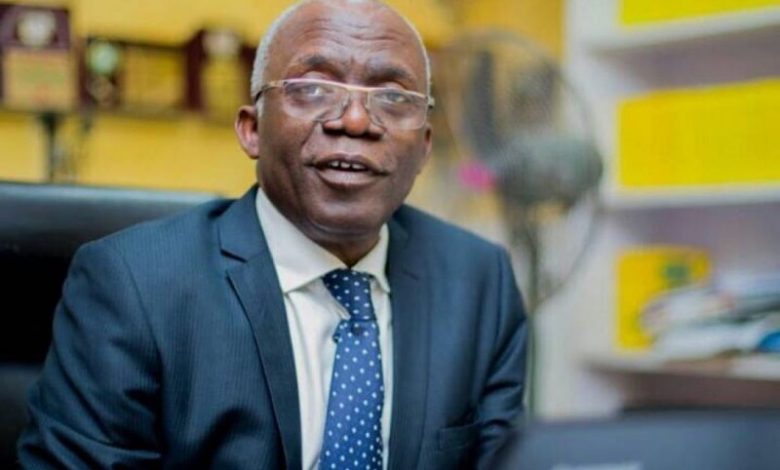
Human rights lawyer and Senior Advocate of Nigeria (SAN), Femi Falana, has stated that the new tax laws cannot be enforced until controversies over their legitimacy, sparked by allegations of unauthorised insertions, are resolved.
Falana made the remarks on Wednesday while speaking with journalists in his hometown of Ilawe-Ekiti.
He criticised the Federal Government for not using the final days of 2025 to address concerns and make verified copies of the tax laws publicly available before their planned commencement on January 1, 2026.
“If that was not done, the government will put itself in trouble by deciding to implement the laws. There are interest groups ready to challenge the legitimacy of the laws,” he warned.
Allegations have emerged that certain provisions were illicitly inserted into the tax bills passed by the National Assembly, meaning the laws signed by President Bola Tinubu on June 26, 2025, differ from the versions originally approved by lawmakers.
President Tinubu, in a personally signed statement on Tuesday, affirmed that the new tax laws, including those enacted on June 26, 2025, would take effect as scheduled.
However, Falana insisted that the laws could not take effect until all questions regarding their authenticity are resolved.
“The laws cannot take effect until the controversies surrounding the legitimacy of the provisions are addressed. There are questions about the authentic tax laws, so which laws are we talking about? Until we have clean copies of the tax laws, you cannot talk about a commencement date,” he said.
He further criticised the National Assembly for a lack of transparency, noting, “There is a serious allegation that some items were smuggled into the new tax laws. Some have described it as forgery.
“Whichever way you look at it, the National Assembly has itself to blame. In this day and age, it is unacceptable that we cannot access bills passed by the National Assembly and signed into law by the President. Why are the bills not on the National Assembly’s website?”
Falana urged the government to ensure Nigerians are well-informed about the provisions and to justify the imposition of taxes.
“As taxes are going to be imposed on Nigerians, the federal, state, and local governments should be prepared to justify the payment of taxes.
“The government must be ready to use the taxes to fight poverty, unemployment, insecurity, and infrastructural decay. The government cannot expect Nigerians to pay more taxes if they cannot send their children to school, pay astronomical medical bills, or even buy food,” he said.
He also threatened legal action against the government over what he described as discriminatory policies under the new tax laws, which exclude certain profitable companies from taxation.
“Under the new laws, some of those who make money and deposit in banks daily are excluded from paying taxes. Free trade zones have been established where the richest companies operate, and they are exempted from paying federal, state, and local taxes as well as import duties.
“If you want progressive taxation, the rich must pay more than the poor, but the reverse is the case under the new regime.
“This is unjust, discriminatory, and illegal. Any law inconsistent with the Constitution must be struck down. Those making huge profits cannot be excluded from paying taxes—it is ridiculous,” Falana concluded.
