How Boko Haram Secretly Uses AI to Build Bombs, Improve Deadly Attacks — Report
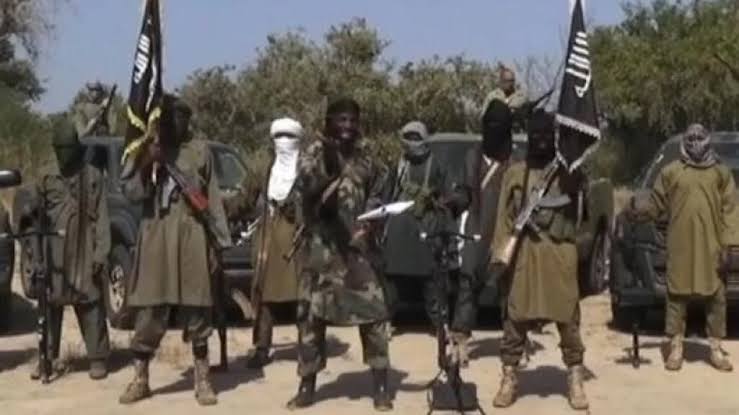
A new report has revealed that Boko Haram fighters are increasingly turning to artificial intelligence tools to improve their operations, gain technical knowledge and enhance their effectiveness on the battlefield.
The findings suggest that members of the terrorist group have been using AI-powered chatbots to obtain information on military tactics, weapons maintenance, explosives and other operational activities.
The development has raised fresh concerns among security experts about the potential misuse of rapidly advancing technology by violent extremist groups.
According to the report, some insurgents said they relied on AI tools to solve practical problems encountered during attacks.
One former Boko Haram commander recounted how an operation against a military base was disrupted after fighters were unable to cross a defensive trench constructed around the facility. The group subsequently turned to AI platforms for guidance on how to modify motorcycles to overcome the obstacle.
“We used AI to learn how to do this. We gave it information, like what motorcycles we use and the distance we need to jump and so on, and it gave us steps on what we have to do,” the former commander said.
Following the recommendations, mechanics reportedly adjusted the motorcycles to improve their speed and acceleration. Fighters also carried out repeated practice sessions before launching another operation.
The study further revealed that AI tools were used for purposes beyond battlefield mobility. Former insurgents told the researcher that chatbots were regularly consulted for information relating to explosives, weapons repairs and other technical aspects of the group’s activities.
One former commander from the Islamic State West Africa Province, ISWAP, a faction linked to Boko Haram, described AI as a readily available source of detailed information.
“You type in the question or use your voice, and it gives you a detailed answer, like ‘How can I build a bomb?,’ and then it tells you how. It is like a human robot! We used it a lot,” he said.
Several former members interviewed for the study reportedly described AI as a valuable resource that reduced uncertainty during operations.
“Trial-and-error can kill you. AI gives you accuracy,” one insurgent told the researcher.
Another former member claimed the group used information obtained through AI systems to improve the effectiveness of explosive devices.
“Before, the bomb explosion was not that big, but then they studied it. AI told us what chemicals to put in that made the explosion heavier,” he said.
The report noted that some fighters viewed artificial intelligence as a strategic tool that could increasingly support their activities.
“God has helped us, and so will AI,” one commander reportedly told the researcher.
According to the findings, Boko Haram members experimented with several AI platforms, including ChatGPT, Claude, Gemini, Grok and DeepSeek. Former fighters said they often compared responses from different systems in search of the most useful information.
The study also suggested that extremist groups are moving beyond the use of AI for propaganda, recruitment and translation. Researchers believe some organisations are now exploring ways to use the technology for operational planning, intelligence gathering, communications and other tactical purposes.
Technology companies whose platforms were mentioned in the report said they prohibit the use of their products for terrorism or violent activities.
OpenAI stated that the use of its systems for terrorism violates its policies and said efforts are ongoing to strengthen safeguards against misuse. Google and Anthropic also said their AI models are designed to reject dangerous requests and that safety measures continue to be improved.
However, former insurgents interviewed during the study claimed that some experienced users were able to bypass restrictions by disguising requests as legitimate projects or educational inquiries.