How Alleged Coup Plotters Spent Millions Seeking Spiritual Backing for Failed Coup
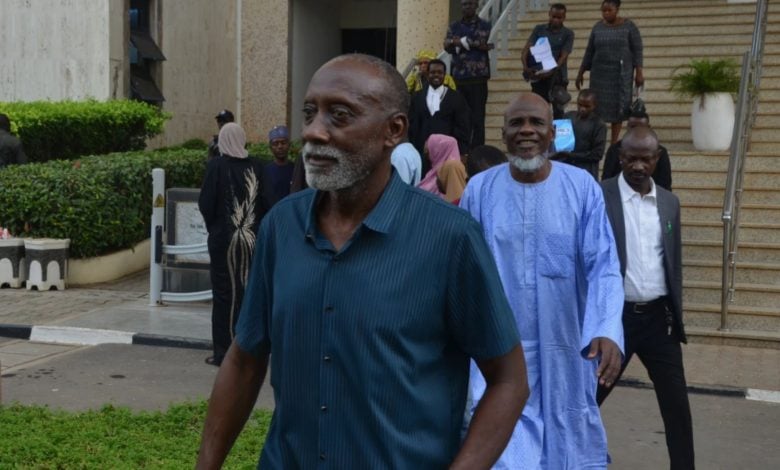
Fresh details have emerged from the ongoing trial of six men accused of plotting to overthrow President Bola Tinubu.
POLITICS NIGERIA reports that the alleged mastermind of the failed coup, Nigerian Army Colonel Mohammed Ma’aji, allegedly spent millions of naira seeking spiritual support from Islamic clerics as part of preparations for the planned takeover.
The revelations are contained in investigation records which form part of the prosecution’s proof of evidence before both the military-organised General Court Martial and the Federal High Court in Abuja, where the alleged coup case is being heard.
According to the records obtained by Premium Times Newspaper, Ma’aji repeatedly sought prayers, spiritual guidance and support from Islamic clerics while allegedly working to remove the Tinubu administration from power. However, the clerics told investigators that rather than support the plan, they made several attempts to discourage him from carrying out what he repeatedly described as a planned “riot” against the government.
The Federal Government arraigned six suspects before the Federal High Court in Abuja on April 22, 2026, over the alleged 2025 coup plot. Those standing trial are retired Major General Mohammed Gana, retired Navy Captain Erasmus Ochegobia Victor, Police Inspector Ahmed Ibrahim, Presidential Villa electrician Zekeri Umoru, Bukar Goni and Kaduna-based Islamic cleric Abdulkadir Sani.
They are facing 13 counts bordering on treason, terrorism, money laundering and failure to disclose information in a case filed by the Office of the Attorney-General of the Federation. All six defendants have pleaded not guilty and challenged the admissibility of their statements.
According to investigators, the alleged plot was uncovered in September 2025, leading to the arrest of serving and retired military officers as well as several civilians. The investigation allegedly uncovered a network involving military personnel, civilians and religious figures.
One of the clerics questioned by investigators, Bukar Goni, said his relationship with Ma’aji began through Major M.A. Usman, whom he had known while the officer was at the Nigerian Defence Academy. Goni explained that Usman frequently sought prayers after repeatedly failing the Staff and Command examinations required for promotion.
Through Usman, Goni later met Ma’aji, who also complained about repeatedly failing promotion examinations to become a brigadier general. According to the cleric, the colonel believed his superiors were deliberately frustrating his military career.
Goni said he advised Ma’aji to perform “sadaka,” an Islamic charitable sacrifice, after which the officer allegedly began sending him money ranging from ₦300,000 to ₦1 million on different occasions. Despite the prayers, Ma’aji reportedly failed another promotion examination.
“He met me with tears,” Goni told investigators.
“I consoled him and told him to depend on God and remain prayerful.”
According to the cleric, Ma’aji later began talking about a group of “boys” planning what he repeatedly described as a “riot.” Goni said he immediately advised against the idea, while Major Usman privately appealed to him to use his spiritual influence to delay any violent action.
The cleric claimed he succeeded in persuading Ma’aji to postpone the alleged operation twice. In an effort to discourage him further, Goni said he told the colonel he would experience a significant dream within 20 days.
When Ma’aji later returned and reported dreaming that insects covered his legs, the cleric said he interpreted it as a divine warning that any physical action he intended to take would ultimately destroy him.
According to Goni, the colonel accepted the interpretation and temporarily abandoned the alleged plan before later reviving discussions about the planned uprising.
The investigation also alleges that Ma’aji later sought to determine whether Goni genuinely supported the alleged conspiracy by sending him messages through Major Usman. The cleric maintained that throughout the period, he continued offering only prayers while attempting to discourage the alleged coup.
Goni admitted receiving substantial sums of money from Ma’aji but insisted every payment was for religious and charitable purposes.
According to his statement, the colonel transferred about ₦10 million within 15 days for prayers. He also allegedly made two separate transfers of ₦20 million each.
The cleric said he initially believed the money was intended to support the construction of his mosque, a project they had previously discussed during his son’s wedding in Maiduguri. Unable to reach Ma’aji for clarification, he said he began using the funds for the mosque project.
He told investigators that about ₦24.7 million had already been spent acquiring land, while the remaining balance was reserved for further construction.
Another Islamic cleric, Abdulkadir Sani of Zaria in Kaduna State, also told investigators that Ma’aji sought his prayers.
Sani, who is among the six defendants standing trial, said he first met the colonel during a religious celebration at the Emir’s Palace in Bida.
“He approached me, greeted me and asked me to pray for him,” Sani said.
“He didn’t mention anything like a coup.”
According to his statement, the alleged coup discussion only emerged later when a man identified as Adamu visited him with what he described as a message from his superior.
Sani said he immediately warned that the alleged operation would fail because members of the group would betray one another.
“I told him it won’t be successful because there are two people who will betray them,” he told investigators.
According to the prosecution’s records, Ma’aji later contacted the cleric again seeking urgent prayers to prevent the predicted betrayal and subsequently transferred ₦2 million into Sani’s bank account.
The cleric said he only became aware that investigators were monitoring the transaction after discovering that his bank account had been restricted. According to him, he visited the Economic and Financial Crimes Commission to find out why the account had been flagged, but was arrested during the visit.