Analyst Reveals What Stopped Rigging In Osun Election
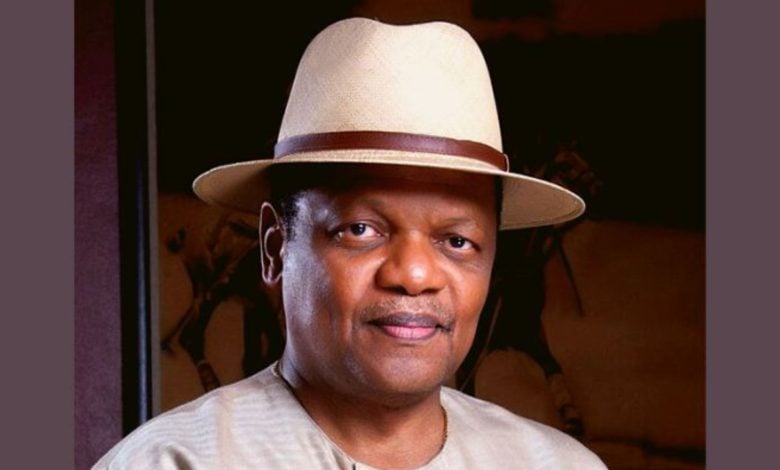
Economist and founder of ANAP, Atedo Peterside, has revealed that high voter turnout was the real factor that stood in the way of rigging in the Osun State governorship election, cautioning against reading too much else into the outcome.
He laid out the argument in a post on his X account on Sunday.
Peterside said the 43.4 per cent turnout recorded in Saturday’s election was high by recent Nigerian standards and demonstrated that strong voter participation remains the most effective safeguard against rigging.
He called on Nigerians to keep pressing the Independent National Electoral Commission to remain accountable, describing it as a duty to hold the commission’s “feet to the fire.”
Peterside also raised concerns over gaps in the commission’s Result Viewing Portal, IREV. As of 8:50 a.m. on Sunday, a day after the poll, he noted that only 98.35 per cent of results had been uploaded to the portal, short of the expected 100 per cent.
He said INEC still needed to explain why results from 62 of the state’s 3,763 polling units remained unpublished, even though he acknowledged the outstanding figures were largely inconsequential to the overall outcome since Governor Ademola Adeleke had already been declared winner.

His remarks add to a string of observations he made through the election weekend. Early on Sunday, before the final upload gap narrowed, Peterside had pressed the commission on a separate delay, asking why the last stretch of results took longer to appear on IREV than the bulk that came before it.
At that point, results from 3,614 polling units, representing about 96 per cent of the total, had been uploaded, with unofficial tallies from election observers showing Adeleke ahead of Oyebamiji by roughly 74,000 votes.
He had commended INEC’s pace in releasing the bulk of results by around 2 a.m., but questioned why the process appeared to slow considerably once it neared completion.
The Osun poll was Peterside’s second flashpoint for IREV scrutiny in recent months. Ahead of the election, he had described the contest as a key test for INEC’s credibility going into the 2027 general election, arguing that strong turnout, particularly among first-time young voters, would make it harder for vote buyers and other actors seeking to manipulate results to succeed.
He also pointed to Osun’s youthful voter base as a demographic capable of swinging outcomes on its own where mobilised effectively, and argued more broadly that large turnout figures make it harder for vote buyers to influence an election’s outcome.
INEC’s official figures showed that of 2,339,544 registered voters in Osun, 1,010,684 were accredited and 1,005,800 ballots were eventually cast, translating to the turnout rate Peterside referenced.
Adeleke was declared winner with 511,067 votes against Bola Oyebamiji of the APC, who polled 444,815, and Najeem Salaam of the ADC, who came third with 17,180. The declared result gave Adeleke a winning margin of more than 66,000 votes and control of 19 of the state’s 30 local government areas.