Sokoto Govt Security Adviser Reveals Biggest Obstacle to Defeating Bandits
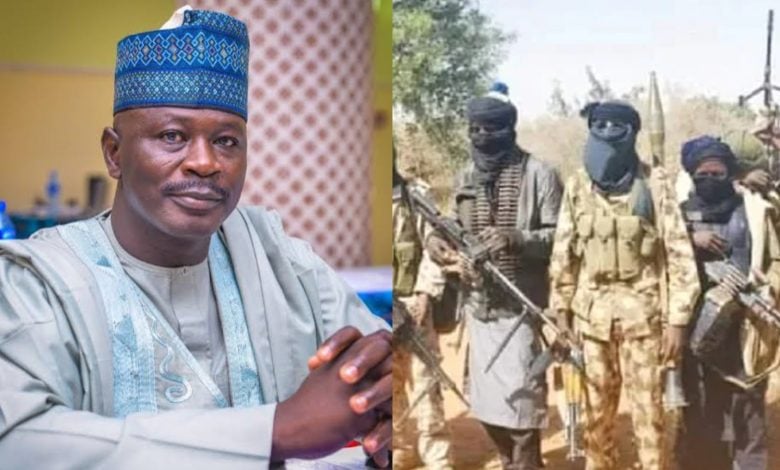
The Special Adviser to Governor Ahmed Aliyu of Sokoto State on Security Matters, Col. Ahmed Usman (rtd) has said the activities of informants remain one of the biggest obstacles to the fight against banditry and other forms of insecurity in the State.
Usman said criminal groups operating in parts of the state often depend on information from people within the communities to plan attacks, evade security forces and move through difficult terrains.
The retired military officer spoke on the security situation in Sokoto, the efforts of Governor Ahmed Aliyu’s administration, the challenges facing security agencies and the need for a change in military strategy.
He said the state government had made security one of the central priorities of its administration since coming into office.
According to him, the government inherited a security structure that lacked adequate operational support, vehicles, equipment and a regular coordination mechanism for security agencies.
He said one of the first major steps taken by the administration was the establishment of the State Security Committee under the chairmanship of the Deputy Governor, Engr. Idris Mohammed Gobir.
The committee brings together security chiefs, traditional rulers and other stakeholders to assess emerging threats and coordinate responses.
Usman said the government also restored and increased operational allowances for security personnel while providing vehicles, motorcycles, protective equipment and surveillance gadgets.
He disclosed that more than 200 Toyota Hilux and Buffalo vehicles and 250 motorcycles were provided during the first phase of the intervention.
He added that the administration later procured 62 additional armoured vehicles, 320 motorcycles, bulletproof helmets and vests, night-vision equipment, thermal imaging devices and other security materials.
The package, he said, was worth about N27.6 billion.
In another major intervention, Governor Aliyu recently approved N1.7 billion for the purchase of 1,000 Bajaj motorcycles for security operations across the state.
The motorcycles are expected to help security personnel access areas that cannot be easily reached with conventional patrol vehicles.
Usman explained that this was particularly important in eastern and southern parts of Sokoto, where criminal groups operate around forest corridors and difficult rural routes.
He said many of the armed groups move between Sokoto and neighbouring Zamfara State, using areas around Rabah, Isa, Tambuwal and Kebbe as routes.
According to him, criminals can attack a community and quickly withdraw into forests where larger security vehicles may have difficulty following them.
The security adviser said the government’s investments had also contributed to the rescue of kidnapped victims.
He said 70 kidnapped persons had been rescued from January to the time of the interview, while 63 victims were rescued in 2025 and 20 others in 2024.
He attributed the progress to improved cooperation between the military, police, Department of State Services, Nigeria Security and Civil Defence Corps and local security formations.
Despite these interventions, however, Usman admitted that insecurity remains a serious concern in parts of Sokoto, particularly in the eastern axis.
Communities in Isa, Sabon Birni, Goronyo and Rabah have continued to face security threats, prompting calls for sustained operations and improved protection for residents.
Recent reports have also raised concerns over the movement of residents from some affected communities into safer locations.
Usman said the government recognised the difficulties faced by displaced residents and remained committed to creating conditions that would allow affected people to return home safely.
He maintained that security could not be solved through funding and equipment alone.
“Security is a complex issue; funding alone cannot solve it. Equipment and logistics are important, but success also depends on strategy, intelligence, personnel commitment, and community cooperation.”
He called for a major review of military tactics, arguing that bandits and terrorists were no longer fighting a conventional war.
According to him, armed groups rely heavily on speed, surprise, local knowledge and guerrilla-style operations.
He therefore urged the military to develop specialised counter-insurgency and counter-banditry units capable of operating effectively in the North-West terrain.
The security adviser said highly trained and mobile personnel could make a major difference if properly equipped and supported with reliable intelligence.
In March 2026, Usman warned that conventional tactics were leaving troops exposed to attacks by armed groups using unconventional methods.
Beyond military strategy, he stressed the importance of cooperation between security agencies and local communities.
He said traditional rulers, hunters, vigilante groups, youths and ordinary residents all have important roles to play in identifying suspicious movements and providing information.
However, he singled out informants as a major problem that must be confronted if the fight against banditry is to achieve lasting results.
“A major obstacle in the fight against insecurity is the activities of informants who provide intelligence and logistical support to terrorists and bandits.”
Usman said criminal networks could not operate effectively for long without people who supplied them with information about security movements, local residents and potential targets.
He said the Sokoto State Government was therefore working towards legislation that would introduce stiffer punishment for people who knowingly assist terrorists and bandits.
“If the problem of informants is effectively addressed, the security situation in many parts of the North-West would improve considerably.”
He also warned that security agencies must respond more quickly when communities come under attack.
The retired colonel said the bravery of Nigerian soldiers and other security personnel should not be questioned, but their effectiveness could be undermined by poor strategy, inadequate intelligence or delayed responses.
He backed the directive recently issued by the Minister of Defence that soldiers should engage armed terrorists encountered during operations rather than wait unnecessarily for further orders.
“I believe it is a good directive. If an armed enemy is attempting to kill you, it makes no sense to say you must wait for another order before defending yourself. That would be unreasonable.”
Usman also called for more careful recruitment into the military and other security services.
He argued that military service requires discipline, patriotism and a willingness to make sacrifices rather than being treated simply as a source of employment.
He further said the welfare of security personnel must remain a priority.

The adviser commended President Bola Ahmed Tinubu for approving improved salaries and welfare packages for military personnel, saying better conditions could strengthen morale among troops operating in difficult environments.
The fight against insecurity, he added, must also go beyond military operations.
He called for greater investment in education, agriculture, rural infrastructure and employment opportunities for young people.
According to him, poverty and lack of opportunities can create conditions that criminal groups exploit when recruiting new members.
The Sokoto government has also continued to strengthen community-based security initiatives.
The state has established the Sokoto State Community Guards Corps, while forest guards have been deployed to vulnerable forest corridors as part of broader efforts to improve surveillance and intelligence gathering.
Usman said the government would continue working with federal security agencies to protect communities and prevent criminal groups from establishing control over rural areas.
He also urged residents to remain vigilant and report suspicious activities to the appropriate authorities.
“Security is a shared responsibility. We must all remain alert and promptly report any suspicious movement to the appropriate authorities.”