FG Stops Overseas Scholarships, Gives Reason
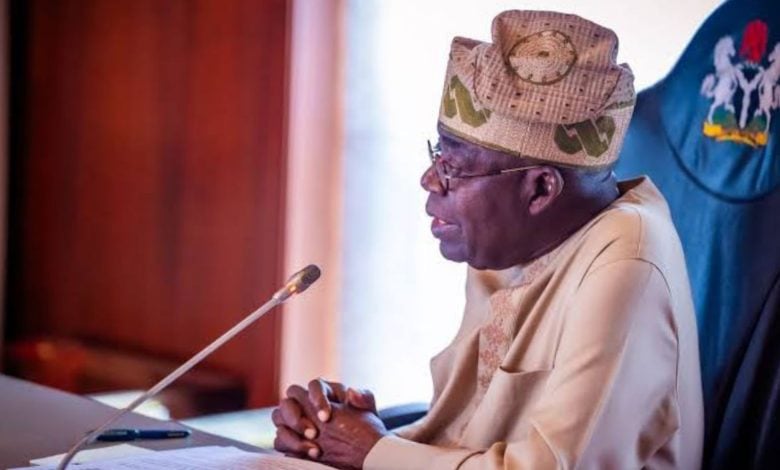
The Federal Government has stopped funding new foreign scholarships under its Bilateral Education Agreement programme.
According to the government, it can no longer justify spending scarce public resources on courses that are already available in Nigerian tertiary institutions.
Minister of Education, Dr Tunji Alausa, said the decision followed a review of the country’s foreign scholarship arrangements and was driven by the need to reduce unnecessary expenditure while strengthening universities, polytechnics and colleges of education at home.
Alausa explained that Nigeria had significantly expanded the capacity of its tertiary institutions over the years, making it unnecessary to continue sending large numbers of students abroad to study programmes that can be offered locally.
He recalled that shortly after assuming office, he was presented with a proposal for about 100,000 Nigerian students to travel to Morocco to study programmes, including mass communication and journalism, taught in English.
The proposal, according to the minister, immediately raised questions about its cost and usefulness because the same courses were available in Nigeria, while the students would first have to spend a year learning French before beginning their academic programmes.
Alausa said, “Number one, we have all those courses in Nigeria. And yet, number two, they were going to spend the first year learning French before they started the programme.”
He said the government could achieve much more by investing the money domestically instead of committing huge resources to overseas education.
“And number three, in the position of a few million to support this in Nigeria, we support thousands of them,” he said.
The minister described the previous arrangement as an inefficient use of government funds, saying the circumstances that originally made foreign scholarships necessary had changed.
“So the Bilateral Education Agreement was not making sense, again, to us in government. It was a way to waste government funds,” Alausa said.
He added, “And this President will not waste any public funds.”
The government’s decision does not mean Nigerian students will be prevented from receiving scholarships offered directly by foreign governments. Countries willing to sponsor Nigerian students can still provide such opportunities, but the Federal Government intends to be more selective about using Nigerian funds to finance studies overseas.
Students who were already beneficiaries of the government-funded bilateral scholarship programme will also not be abandoned. Existing beneficiaries are expected to continue receiving support until they complete their studies, while new awards under the arrangement have been discontinued following the review.
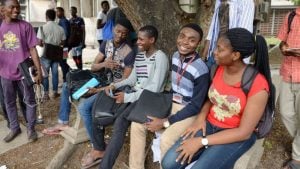
Alausa said the policy was necessary because the reasons for establishing some of the foreign education arrangements no longer exist in the same form.
“When those programmes were set up 20 years ago, they were meant to get students to go to the government colleges where we did not have capacity,” he said.
“But in the last 20 years, we’ve built a number of capacities in the tertiary institutions — universities, polytechnics and colleges,” he added.
The minister said the government would rather begin by addressing the needs of Nigerian students and institutions within the country.
“So we have to start with Nigerians,” he said.
The shift comes as the Federal Ministry of Education pursues reforms aimed at making Nigerian tertiary institutions more competitive and better aligned with the country’s economic needs. The government has placed greater emphasis on technical and vocational education, research, innovation, digital learning and the development of industry-relevant skills.
The Federal Government is also relying on domestic support mechanisms, including scholarships and bursaries for Nigerian students and the Nigerian Education Loan Fund, to improve access to tertiary education.
Alausa said government investment in education must deliver clear benefits to the country rather than simply fund the movement of students outside Nigeria.
He has also stressed the importance of ensuring that research carried out in Nigerian institutions leads to practical solutions, businesses and industrial development.
“We want undergraduate researchers to see a clear pathway from academic research to industrial application, enterprise, innovation, and national development,” he said.
According to the minister, Nigeria’s future competitiveness will depend less on the volume of certificates produced and more on its ability to turn knowledge and research into economic value.
“The most successful nations of the 21st century will not necessarily be those endowed with greater natural resources. They will be those that can systematically transform knowledge into solutions, research and intellectual capital into economic and industrial value,” Alausa said.
Meanwhile, the National Association of Nigerian Students, NANS, recently criticised former Vice President Atiku Abubakar’s proposal to restore fuel subsidy if elected president in 2027.
NANS president, Akinteye Babatunde, acknowledged the hardship caused by the removal of the subsidy but argued that returning to the former system without fixing its underlying problems would not provide a lasting solution.
“However, the real measure of the reform should not be the savings alone, but what the government does with those savings,” Akinteye said.
He called for greater investment in education, healthcare, infrastructure, agriculture and other sectors that could improve living conditions and strengthen the economy.