JUST IN: Tinubu Government Blames States, Local Govt for Rising Poverty in Nigeria
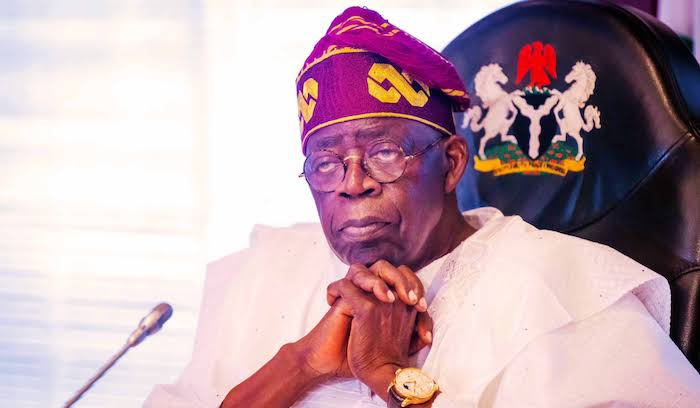
The Federal Government has shifted responsibility for Nigeria’s growing poverty crisis to state governments and local councils.
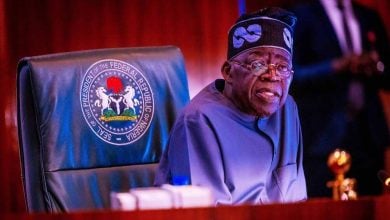
Officials in President Bola Ahmed Tinubu’s administration said the burden of addressing multidimensional poverty does not rest on the Federal Government alone.
They argued that state and local governments are constitutionally responsible for providing basic services that can lift citizens out of hardship.
On Wednesday, the Special Adviser to the President on Information and Strategy, Bayo Onanuga, made the government’s stance clear in a public statement.
“Who should be blamed for the 133m Nigerians, multidimensionally poor? The Federal Government? No. The states? Yes. The 774 local councils? Yes,” Onanuga wrote.
“They are constitutionally empowered to provide all the facilities that will take our people out of that crushing poverty bracket. Not the Federal Government.”
According to him, the responsibility for basic services such as health care, education, clean water, and sanitation lies mainly with subnational governments.
He insisted that poverty figures should not be used to attack the Tinubu administration, stressing that the structure of governance places key duties on states and councils.
The same view was echoed by a former Minister of State for Budget and National Planning, Prince Clement Agba.
Agba spoke at a public policy forum where he addressed what he described as confusion surrounding Nigeria’s poverty statistics.
“Well let me use this opportunity to speak on a couple of things that Nigerians have been talking about, issues of poverty and the misconceptions that have been around it,” he said.
“I released the survey information that showed that multi-dimensionally, 133 million Nigerians are poor. And that has been misrepresented.”
Agba explained that multidimensional poverty is different from financial poverty.
“Financially, 69.5 million Nigerians are poor, living below the $2 a day premise. But multi-dimensionally, 133 million Nigerians are poor,” he said.
He noted that multidimensional poverty focuses on access to essential services rather than income alone.
“What is multidimensional poverty? Multidimensional poverty addresses lack of access,” he said.
“Lack of access to some basic things. Lack of access to basic education. Lack of access to basic health. Lack of access to potable drinking water. Lack of access to sanitation.”
Agba argued that these services fall under the duties of state and local governments, not the Federal Government.
“So who’s responsible for this? Is it the federal government of Nigeria? Is it the state government? The local government?” he asked.
“And the truth from what the survey showed, the federal government has nothing to do with multi-dimensional poverty.”
He rejected claims that past and present presidents caused the rise in poverty figures.
“I’ve seen a lot of people talk about this, that Buhari has increased the number of poor people in Nigeria, or President Tinubu has done so. It has nothing whatsoever.”
Agba also reminded Nigerians that the country operates a federal system with three layers of authority.
“We run the Federation. And there are three chairs: the federal government, the state government, and then the local government,” he said.
He accused many governors of focusing development projects mainly in state capitals while ignoring rural communities.
“This is because, like I’ve always said, our governors, when they need the office, they remember their entire state. They go around and campaign,” he said.
“But once they win, they put 80% or so of the resources to the state capitals.”
According to him, this pattern has deepened hardship in villages and remote communities.
“We forget the communities, we forget the local government,” Agba stated.
He criticised the prioritisation of tertiary hospitals over primary health centres, which he said should be the focus of state and local authorities.
“Rather than state governments and local governments to build primary health care centres, they concentrate on tertiary health care. That’s not their responsibility.”
Agba further illustrated how poverty can exist even when people have money but lack services.
“If you have all the money in the world and you go to your community, and you fall ill at night of about 11 p.m. and you need to go to the hospital, and there is no one available, you are multi-dimensionally poor, even if you have ten million dollars in your pocket,” he said.
He added that long distances to schools also define multidimensional poverty.
“If you decided to relocate to your local community with your family, and you need your children to go to school, and they have to go 10 kilometres or 20 kilometres to get to a school, you are multi-dimensionally poor.”
However, the comments by Onanuga and Agba have sparked debate across the country, with many Nigerians questioning the role of the Federal Government in reducing poverty and ensuring equitable development.