2027: INEC Launches Probe Into ‘Strange’ Names in NDC Candidate List
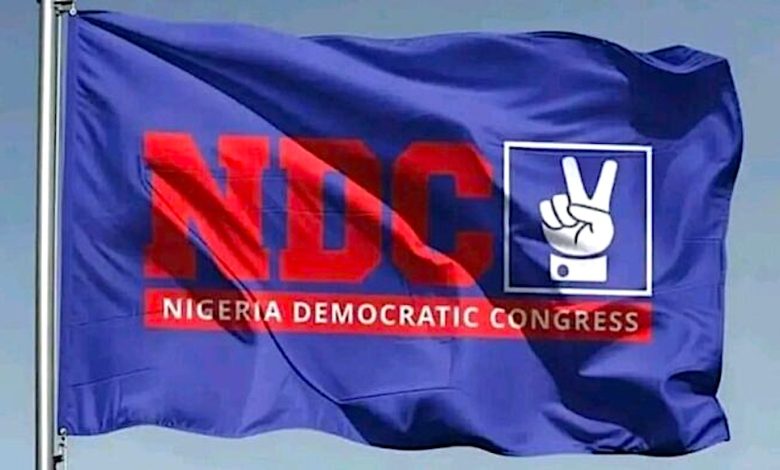
The Independent National Electoral Commission (INEC) has commenced a review of its records following allegations by the Nigeria Democratic Congress (NDC) that unauthorised names were published as its candidates for the 2027 general elections.
The controversy centres mainly on several State House of Assembly constituencies in Anambra State, where the NDC claimed that persons it did not nominate or submit appeared on INEC’s published list.
INEC has rejected the allegation that it deliberately replaced the party’s candidates.
However, the electoral commission has now indicated that its electronic and documentary records will be examined to establish how the disputed names entered the candidate nomination system.
The development followed a complaint by the NDC after INEC published details of candidates for the 2027 State House of Assembly elections.
The party alleged that its genuine candidates were removed and replaced with persons it described as unknown to the organisation.
The NDC particularly raised concern over the situation in Anambra State, which is also the home state of its presidential candidate, Peter Obi.
INEC’s Chief Press Secretary and Media Adviser to the Chairman, Adedayo Oketola, said the commission had no legal power to nominate candidates for political parties.
He explained that parties are responsible for conducting their nomination processes and submitting the names of candidates through the commission’s designated platform.
“For the avoidance of doubt, INEC does not nominate candidates for political parties. The nomination of candidates is the responsibility of political parties, subject to compliance with the Constitution, the Electoral Act 2026 and other applicable laws, Regulations and Guidelines,” he said.
According to Oketola, the candidate nomination portal was designed to allow political parties to submit the details of their candidates using access credentials issued to them by INEC.
He said the system also keeps an electronic record of activities carried out on the platform.
This, he explained, means the commission can trace the history of entries and determine how particular names came to be listed.
“It is, therefore, possible to establish objectively the history and source of entries relating to any candidate whose name appears on the portal,” Oketola said.
The INEC spokesman said the dispute should therefore be settled by checking the available records rather than relying on allegations or assumptions.
He also addressed the role of INEC officials who monitor political party primaries.
According to him, monitoring a primary does not give the electoral commission the authority to determine who eventually becomes a party’s candidate.
“Neither does a report made by officials who monitor a primary confer upon the commission the power to choose a candidate for the political party,” he said.
He added that the commission’s monitoring activities are carried out for statutory purposes.
The process, he said, does not transfer the responsibility for candidate nomination from political parties to INEC.
Oketola further said disputes arising from party primaries, appeals or subsequent changes to nomination outcomes must be handled in accordance with the Electoral Act 2026 and other applicable laws.
“INEC cannot assume the role of a political party in choosing its candidates, nor can it disregard applicable statutory requirements governing the nomination and submission of candidates,” he stated.
The NDC had made a more specific allegation concerning Form EC9.
The party claimed that INEC officials went directly to some individuals, obtained their nomination forms and uploaded their details without the authorisation of the party.
Oketola described that allegation as serious but said the commission had the means to determine whether it happened.
“Rather than make categorical assertions on matters that can readily be established from those records, the commission will examine the relevant records relating to the constituencies identified by the NDC,” he said.
The commission also asked the NDC to provide evidence of any official allegedly involved in unauthorised interference with its nomination process.
Oketola said credible evidence of misconduct would be investigated through the appropriate procedures.
He maintained that INEC had no interest in deciding which candidates should represent political parties at the polls.
“Its responsibility is to administer the electoral process impartially and in accordance with the constitution, the Electoral Act and applicable regulations and guidelines,” he said.
The dispute began after the NDC accused INEC of publishing names it said were never approved by the party.
In its complaint, the party said the disputed names appeared in several constituencies in Anambra State.
The names listed by the NDC include Umennaajiego Jude Ezenwa for Onitsha South 1; Akpotue Obinna Chibuike for Onitsha South 2; Nwankwo Chiemerie for Orumba North; Maduagwu Eric K for Anaocha 1; Ngoebisi Obinna for Idemili North; Isintume Charles for Njikoka 1; Nwachukwu Nonso for Nnewi South; Okeke Ifeanyi Akunne for Nnewi South 2; Nnonyelu Samson E for Ayamelum; and Azotani Chuks Francis for Dunukofia.
There is a discrepancy in the party’s public account over the number of disputed names, with its statement referring to nine names while the list it published contains 10 names.
The NDC National Chairman, Moses Cleopas, said the matter was especially troubling because the affected constituencies are in Anambra, the political base of the party’s presidential candidate.
The party claimed that it had completed its primaries and subsequent appeal process before producing a final list of candidates.
According to the NDC, stakeholders from Anambra, the national leadership, representatives of Obi and members of its appeals panel participated in the process.
The party said the final list was agreed upon and signed before it was uploaded through the access code provided by INEC.
It alleged that some names were subsequently left in “Pending” status on the commission’s platform.
The NDC further claimed that INEC officials said the disputed names were already in the system based on information submitted by officials who monitored the party’s primaries.
The party said it objected to the names and submitted what it described as the authentic list of candidates.
It nevertheless alleged that the disputed names remained on the system and were eventually published.
Cleopas called on the INEC Chairman to intervene and establish how the names entered the commission’s records.
“We call on the INEC chairman to urgently and immediately cause an investigation into the matter and unravel how this came to be,” it said.
The party also claimed that similar concerns had emerged in other parts of the country.
It mentioned Benue and Imo states as areas where it said it had noticed what it considered a similar pattern.
The NDC alleged that genuine candidates were being replaced with individuals who were not recognised as products of its nomination process.
INEC, however, has rejected the suggestion that its officials have the authority to impose candidates on political parties.
The commission has instead pointed to its electronic audit trail as a means of establishing the source of the disputed entries.
Oketola also reminded political parties that they have a responsibility to comply with the law throughout their nomination processes.
This includes the conduct of primaries, handling of internal appeals, submission of candidates and use of the nomination portal within the prescribed timelines.
“The Commission will neither nominate candidates for political parties nor lend itself to the imposition of candidates on any political party,” Oketola said.
Recall that INEC had earlier published the personal particulars and nomination documents of Peter Obi and his running mate, Rabiu Musa Kwankwaso, under the NDC platform as part of the process for the 2027 presidential election.
The commission said the publication of Form EC9 was required under Section 29(3) of the Electoral Act 2026.