Why Petrol is Still Expensive in Nigeria Despite Refinery — Dangote
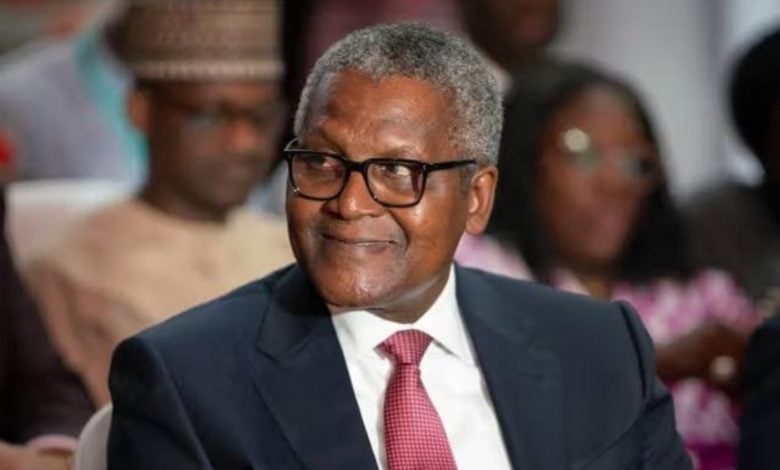
Aliko Dangote, President of Dangote Industries Limited, has explained why petrol remains expensive in Nigeria despite the operation of his $20 billion refinery in Lagos.
Dangote attributed part of the situation to the continued smuggling of petrol from Nigeria into neighbouring countries, where he said the product sells at significantly higher prices.
According to him, the difference between domestic prices and those in neighbouring markets makes it attractive for traders to move petrol across the borders and sell it for higher returns.
He made the disclosure during an interview aired by Arise TV on Tuesday while speaking about the rising cost of petrol, the supply of petroleum products and the possible impact of the ongoing crisis in the Middle East.
Dangote said Nigerians should not determine whether petrol is expensive without comparing its price with what consumers pay in countries around Nigeria.
“You know, expensive is relative. In the sense that today, maybe, you know, a lot of them, there’s ignorance also. What they need to do is ask, what is the neighbour’s price?”
He said the price difference between Nigeria and neighbouring countries remained one of the reasons Nigerian petrol continues to find its way across the borders.
“I don’t know if you know that there’s still a lot of smuggling of the same petrol we are producing to our neighbouring countries.”
Dangote claimed that petrol prices in some neighbouring countries were between 30 and 50 per cent higher than in Nigeria.
“Because those neighbouring countries are about 30 to 50 per cent more expensive than Nigeria. So, it’s not actually like for like.”
The businessman explained that the situation creates an opportunity for people involved in the illegal movement of petroleum products.
Where petrol can be bought at a lower price in Nigeria and sold at a substantially higher price across the border, traders can make significant returns without producing the product themselves.
Dangote specifically mentioned Niger Republic as an example.
He said petrol sold in Nigeria at N1,350 per litre could command a price that was between 20 and 25 per cent higher in Niger.
“And people can now go and ask, okay, fine, what is the price of, even now at N1,350? Okay, the price in Niger is 20 to 25 per cent more than Nigeria,” he said.
He questioned the attractiveness of such a business opportunity when compared with ordinary commercial activities.
“So, what business are you going to do that will make you have an instant 25 per cent return?” he asked.
According to Dangote, the price gap could encourage some traders to divert petrol originally meant for the Nigerian market to border communities.
He gave an example of how such diversion could allegedly take place.
“So, it means that, yes, you take the [petrol], you go and take it across the border. You pretend you are taking it to Sokoto, you go and just take it to Ilela, and you sell.
“Actually, they don’t have.”
The Dangote Petroleum Refinery recently increased its petrol gantry price from N1,265 to N1,350 per litre. Following the adjustment, pump prices rose further at some filling stations in different parts of the country.
The latest increase has renewed questions over the expected impact of domestic refining on petrol prices.
For years, Nigeria depended heavily on imported refined petroleum products despite being one of Africa’s major crude oil producers.
The commencement of large-scale operations at the Dangote refinery was expected to reduce the country’s dependence on imported refined products.
However, Dangote has maintained that local refining does not completely separate the Nigerian market from developments in the international oil market.
The refinery still operates within an environment affected by crude oil prices, foreign exchange movements, logistics costs and other market conditions.
The current situation has also been complicated by developments in the Middle East.
Dangote warned that the international crisis could create a bigger challenge for the petroleum market in the coming period.
According to him, the major concern may no longer be only the price Nigerians pay for petrol but whether enough petroleum products will be available.
“And the problem now, going forward, I must also warn that this crisis in the Middle East is not even about price; it’s about availability,” Dangote said.
The Middle East crisis has continued to raise concerns in the international energy market, particularly over crude oil and refined petroleum product supplies. Disruptions to global energy flows have already affected prices and availability in several markets.
Despite the concerns, Dangote assured Nigerians that his refinery would continue supplying the domestic market.
He said the refinery was prepared to maintain supplies even if international conditions became more difficult.
“We will deliver to Nigeria. Nigerians don’t need to worry. There will not be any shortage from our own part.
“There won’t be any shortage. There will not be any queues. We will make sure that we keep satisfying the market, despite all odds,” Dangote added.
The refinery has become an important source of refined petroleum products for Nigeria since beginning operations.
It has also expanded its activities beyond the domestic market, supplying products to international destinations as global demand has increased.
The latest comments by Dangote also came shortly after the commencement of the public offering of shares in Dangote Petroleum Refinery and Petrochemicals.
The initial public offering was formally launched at the Nigerian Exchange Limited in Lagos on Monday.
However, popular social media commentator, VeryDarkMan referred to the offering as ‘ponzi scheme’ and threatened to sue MTN for sending him a promotional message regarding the Dangote IPO.

The offer involves 4.1 billion ordinary shares priced at N525 per share. The company is targeting N2.15 trillion from the offering, while the minimum subscription is 10 shares, valued at N5,250.
The offer is open to retail and institutional investors, as well as eligible African investors, with the subscription period scheduled to close on October 13, 2026.