INEC Raises Alarm Over AI Fake Results Ahead of 2027 Elections
The Independent National Electoral Commission, INEC has raised concern over the growing use of artificial intelligence to create fake election results, deepfake videos and manipulated audio ahead of Nigeria’s 2027 general elections.
The commission warned that the rapid development of generative AI has created a new challenge for election communication, with fabricated materials capable of appearing genuine and spreading widely before they can be verified.
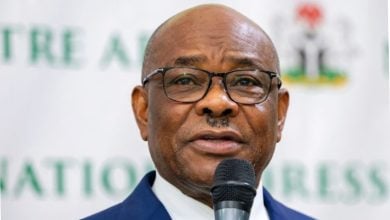
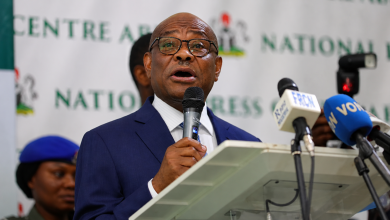
INEC Chairman, Professor Joash Amupitan, said the threat was already becoming part of the country’s electoral environment and should not be treated as a future possibility.
Amupitan raised the concern in Abuja during a capacity-building workshop organised for the commission’s Public Affairs Officers (PAOs).
He was represented at the event by a National Commissioner and Chairman of the Information and Voter Education Committee, Mohammed Kudu Haruna.
The workshop was organised under the theme, “Strengthening PAOs Capacity for Credible, Verified and Responsible Election Communication Towards 2027.”
According to Amupitan, the increasing sophistication of artificial intelligence means that false information can now be produced at a lower cost and in forms that may be difficult for ordinary members of the public to identify as fake.
“Generative AI has made it cheaper and considerably harder to detect manipulated audio, video and images. Its misuse extends beyond fabricated content to targeted messaging capable of dividing voters along conflicting narratives,” he said.
The INEC chairman said the challenge was broader than the manipulation of election-related photographs or videos.
He noted that artificial intelligence could also be used to create targeted narratives capable of influencing how voters understand candidates, political parties and electoral developments.
He stressed that the integrity of an election now extends beyond what happens at polling units and during the collation of results.
“Election credibility today no longer depends only on ballot papers, BVAS machines and result sheets, but equally on the information environment in which voters form their judgments.
“Electoral technology and electoral communication should be treated not as separate concerns but as a single discipline,” he said.
The warning comes as political parties, candidates, voters and election stakeholders prepare for the 2027 elections.

INEC has already fixed February 20, 2027, for the presidential and National Assembly elections, while the governorship and State Houses of Assembly elections are scheduled for March 6, 2027.
Amupitan said the amount of information about INEC and the electoral process would rise significantly as the elections draw closer.
He therefore stressed the need for public affairs officers to verify information, respond quickly to false claims and ensure that official communication remains consistent.
The commission’s Director of Voter Education and Publicity, Victoria Eta-Messi, also highlighted the important role of its communication officers in shaping public understanding of electoral activities.
“It is through you that Nigerians form much of their impression of who we are, what we stand for, and how reliable our information is,” she told the participants.
Eta-Messi said the commission operates under constant public scrutiny and frequently faces attempts to misrepresent its activities.
She added that additional capacity-building programmes were being planned to strengthen the ability of INEC communication personnel to handle the challenges that would accompany the 2027 election cycle.
The concern is not limited to INEC.
Media stakeholders have also warned that artificial intelligence could create serious problems for journalists and voters if fabricated election information begins circulating during critical stages of the electoral process.
The warning was contained in a communiqué issued after the 8th Bagauda Kaltho Media Lecture Series organised by the Africa Media Development Foundation (AMDF).
The lecture, held on September 19, 2026, focused on journalism, press freedom and election misinformation ahead of the 2027 general elections.
Participants at the event identified fabricated election results, deepfake videos and manipulated audio as some of the emerging dangers facing the electoral information space.
The stakeholders warned that false information can move across social media platforms at a speed that makes it difficult for professional newsrooms and fact-checkers to respond before the content reaches a large audience.
This could become particularly sensitive on election days when voters, political parties and the wider public are waiting for verified information from polling units and collation centres.
A fabricated result presented as genuine, for instance, could circulate widely before official figures are announced.
Similarly, an altered video or audio recording could be used to falsely suggest that a candidate, INEC official or political party made a statement that was never made.
The media stakeholders therefore called for stronger verification systems within newsrooms and greater investment in training journalists in fact-checking, digital verification, artificial intelligence and investigative journalism.
They also urged technology companies and digital platforms to work with media organisations, civil society groups and relevant government institutions to develop better ways of identifying manipulated and AI-generated content.