It Shouldn’t Be – Peter Obi Rejects OK Movement’s Campaign List
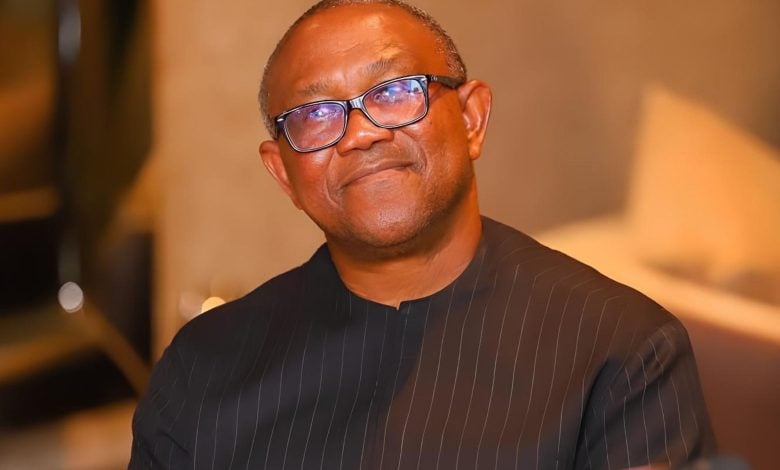
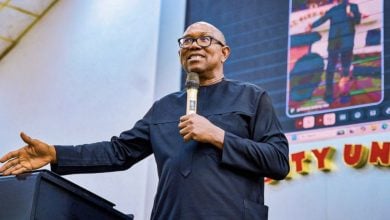
The presidential candidate of the Nigeria Democratic Congress (NDC), Peter Obi, has rejected the 59-member Presidential Campaign Council recently constituted by the Obi-Kwankwaso Movement, popularly known as the OK Movement.
Obi said the movement and other groups backing his 2027 presidential bid with Rabiu Kwankwaso should operate as support organisations rather than create structures that perform the functions of the NDC.
He spoke during an interview on Arise Television’s Prime Time on Thursday, while reacting to the dispute between the NDC and the OK Movement over the campaign council.
The OK Movement had unveiled the 59-member council on September 17, with its Director-General, John Ughulu, named to head the campaign structure and National Secretary, Saadatu Sani, appointed as secretary. The structure also included zonal and state coordinators as well as directors for mobilisation, strategy, security and other areas.
However, the NDC subsequently dissociated itself from the council, saying it was not authorised by the party.
Obi said he agreed with the position of the NDC National Leader, Senator Seriake Dickson, that support groups must complement the party rather than establish parallel structures.
“First is that the NDC is a political party we all belong to and I agree entirely with the position of the leader.
“OK Movement — Obidient group, Kwankwasiyya and other supporting groups are supporting groups. They must play their roles as supporting groups supporting the party. They should not play the role of a party.
“We have a situation where one of the supporting groups is using the nomenclature or forming presidential campaign council. It shouldn’t be,” Obi said.
Asked whether he was consulted before the OK Movement constituted the council, Obi said he was unaware of the decision.
He further said any action undertaken in the name of the OK Movement should have the approval of both himself and Kwankwaso.
“Your OK Movement is Obi and Kwankwaso. So, whatever you do must have the express approval of both of us,” he said.
The development has exposed a disagreement over the relationship between the NDC and the OK Movement ahead of the 2027 general elections.
While the NDC maintains that only its leadership can constitute and announce an official Presidential Campaign Council, the OK Movement has insisted that it is an independent political organisation with its own structures and internal administration.
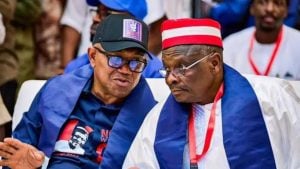
The movement’s National Secretary, Saadatu Sani, previously said the organisation did not require the personal approval of any NDC official to exercise its organisational functions, while stressing that it remained committed to supporting the Obi-Kwankwaso ticket.
Meanwhile, Obi also addressed the separate controversy surrounding his tenure as Anambra State governor, saying he had no disagreement with his successor, Chukwuma Soludo.
The former governor said he had no intention of returning to the governorship of any state, even if the Constitution was amended to allow him to do so.
“I wish to assure the public that I have no disagreement with my dear elder brother, Governor Soludo, or with any governor in Nigeria. I am not seeking the office of governor in any state, and I will not seek that position again, even if the Constitution is amended,” he said.
Obi also appealed to governors to allow presidential candidates and other political contestants to campaign freely in their states regardless of their political affiliations.
He said voters should be allowed to decide which candidates they want to represent them, urging political actors to focus on the economic and social challenges facing Nigerians rather than political distractions.