Sen Nwoko Meets Stakeholders in Fresh Push for Anioma State Creation
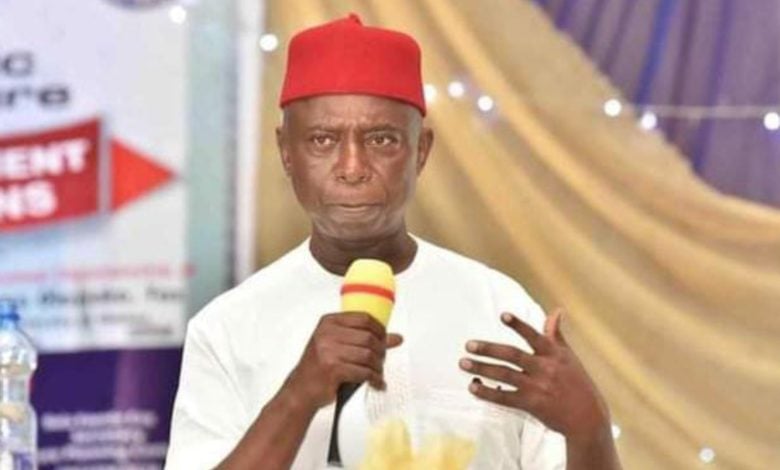
Senator Ned Nwoko has held a fresh meeting with traditional rulers, members of the Technical Committee on Anioma State Creation and other stakeholders as efforts to actualise the proposed Anioma State gather renewed momentum.
The meeting took place at the palace of the Obuzor of Ibusa, HRM Obi Prof. Louis Chelunor Nwaoboshi, who chairs the Technical Committee on the creation of the proposed state.
It brought together representatives of Izu Anioma, Odu Oma Club, Anioma Youth Council and other groups involved in the campaign.
Nwoko, who represents Delta North Senatorial District, has remained one of the leading political figures behind the current push for Anioma State.
The latest engagement was held as a constituency briefing and focused on the progress of the state creation campaign and the steps required to move the proposal forward.
Although the meeting was held behind closed doors, the stakeholders reportedly used the opportunity to review developments around the proposed state and discuss the need for sustained mobilisation.
The stakeholders maintained that the agitation is bigger than any individual seeking political office.
They said the campaign should continue regardless of who eventually represents Delta North in the Senate or which political party controls the various political structures in the area.
Nwoko has previously sponsored a bill seeking the creation of Anioma State, with Asaba proposed as the capital.
The proposal seeks to carve the new state from the present Delta State and has been presented as part of efforts to address the long-standing demand for greater political representation and administrative recognition for the Anioma people.
The campaign has also received support from traditional rulers and community organisations across Delta North.
In April, members of the Technical Committee met at the same palace and warned political actors against actions that could undermine the state creation process.
The committee had said the demand for Anioma State predates the current political contest and should therefore not be reduced to the ambitions of individual politicians.
Speaking on the latest development, a member of the Technical Committee, Dr Christopher Nwayalani, said the group had continued to engage traditional institutions, political leaders, community organisations and other stakeholders in pursuit of the objective.
Nwayalani said the campaign required continued engagement because the creation of a new state involves constitutional procedures and cannot be achieved through political declarations alone.
He said: “The Technical Committee has continued to engage traditional institutions, political leaders, community groups and other stakeholders as part of efforts to advance the proposal.
“The latest meeting also highlighted the importance of unity among the various groups involved in the campaign, particularly given their different political affiliations and interests.”
He added that the stakeholders remained focused on ensuring that the agitation survives changing political circumstances.
Nwayalani said the proposed state would be created from the present Delta State and would provide a new political and administrative structure for the Anioma-speaking communities.
He said the campaign was also being driven by the need for greater access to political representation, infrastructure and development.
According to him, the process must be approached collectively because the aspiration belongs to the people of Anioma and not to a particular politician.
He said: “The Technical Committee has continued to engage traditional institutions, political leaders, community groups and other stakeholders as part of efforts to advance the proposal.”
The committee member further explained that the current campaign builds on several decades of agitation by Anioma leaders, traditional rulers, community groups and other organisations.
The demand has passed through different phases over the years, with advocates repeatedly calling for the establishment of a separate state for the communities that make up Delta North.
The present push gained greater political attention after Nwoko introduced legislation at the National Assembly.
Earlier reports on the proposal indicated that the bill had attracted support from lawmakers and stakeholders who believe the creation of Anioma State would address questions of political balance and regional representation.
Nwoko and several supporters have advocated for the proposed state to be recognised as part of the South-East geopolitical zone.
This position has caused debate, particularly among stakeholders who prefer that the area remain within the South-South arrangement.
Despite the differences, supporters of the state creation campaign have continued to insist that the central objective should not be lost.
The Technical Committee has consequently been engaging traditional rulers and other groups in an attempt to build a common position.
The Obuzor of Ibusa has previously traced the agitation to historical developments dating back several decades, arguing that the campaign existed long before the current political class became involved.
In earlier remarks, Nwaoboshi also cautioned against allowing political differences to divide the people.