N8.7 Billion Fraud: New Judge takes over Malami’s Trial as Ex-AGF battles to recover Properties
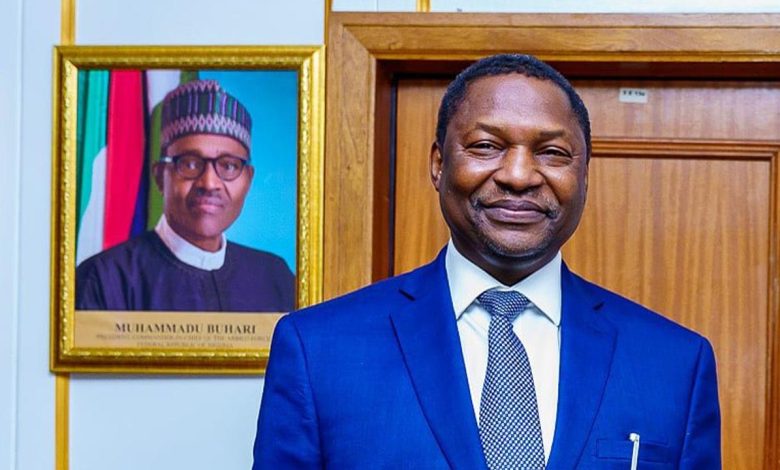
The alleged ₦8.7 billion money laundering case involving former Attorney General of the Federation, Abubakar Malami (SAN), has been reassigned to a new judge of the Federal High Court in Abuja, alongside a related asset forfeiture suit targeting dozens of properties linked to the ex-minister.
The Economic and Financial Crimes Commission (EFCC) had late last year filed charges against Malami, his son, Abdulaziz Malami, and Hajia Bashir Asabe, said to be an employee of Rahamaniyya Properties Limited, a company allegedly associated with the former AGF.
The anti-graft agency is accusing the defendants of conspiring to launder about ₦8.7 billion through the indirect acquisition and retention of properties and funds believed to be proceeds of unlawful activities, in violation of the Money Laundering (Prohibition and Prevention) Acts of 2011 (as amended) and 2022.
The defendants were first arraigned on December 30 before Justice Emeka Nwite, who was sitting as the vacation judge at the Abuja Division of the Federal High Court. On January 6, Justice Nwite also granted an ex parte application by the EFCC for the interim forfeiture of 57 properties allegedly acquired unlawfully by Malami.
However, in line with court practice, the cases were returned to the Chief Judge of the Federal High Court at the end of the court vacation for reassignment.
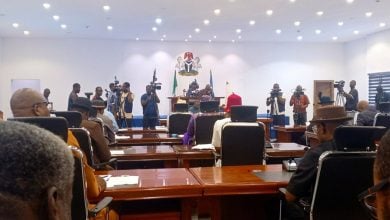
This newspaper confirmed that both matters have now been reassigned to Justice Obiora Egwuatu. The asset forfeiture suit has been fixed for hearing on February 12, while the substantive money laundering case is scheduled for arraignment on February 16.
Meanwhile, Malami has moved to challenge the interim forfeiture order issued against his assets. In a motion filed through his counsel, Joseph Daudu (SAN), the former AGF urged the court to set aside the January 6 order, arguing that it was wrongly granted.
Malami is specifically seeking the release of three out of the 57 properties affected by the interim forfeiture. The properties include Plot 157, Lamido Crescent, Nasarawa GRA, Kano, purchased on July 31, 2019; a four-bedroom duplex with boys’ quarters at No. 12, Yalinga Street, off Adetokunbo Ademola Crescent, Wuse 2, Abuja, acquired in October 2018 for ₦150 million; and the ADC Kadi Malami Foundation Building, purchased for ₦56 million.
In his application, Malami argued that the properties listed as numbers 9, 18 and 48 in the EFCC’s schedule are not linked by any prima facie evidence to unlawful activity or a specific criminal offence. He said the properties numbered 9 and 18 were duly declared in his asset declaration forms submitted to the Code of Conduct Bureau (CCB) in 2019 and 2023.
He further stated that the property listed as number 48 is held by him in trust for the estate of his late father, the late Kadi Malami.
According to Malami, the assets, their values and sources of acquisition were clearly disclosed in his asset declarations over the years, which he described as prima facie evidence of their legitimacy.
He also listed what he described as multiple lawful income streams declared to the CCB, including ₦374.6 million from salaries, estacodes, severance allowances and related earnings; ₦574.07 million from disposed assets; over ₦10 billion in business turnover; ₦2.52 billion in loans to businesses; and ₦958 million received as traditional gifts from personal friends.
Malami added that about ₦509.88 million was realised from the launch and public presentation of his book, “Contemporary Issues on Nigerian Law and Practice, Thorny Terrains in Traversing the Nigerian Justice Sector: My Travails and Triumphs.”
He argued that these earnings sufficiently explain the acquisition of the properties sought to be forfeited and insisted that the interim forfeiture order was granted without any prima facie establishment of unlawful conduct.
The former AGF further accused the EFCC of suppressing material facts and misrepresenting information in obtaining the ex parte order, alleging that the agency exaggerated and maliciously inflated the value of the assets to mislead the court.
He contended that the proper course of action, to avoid duplicative proceedings and conflicting outcomes, would be for the court to dismiss or strike out the forfeiture suit.
Both cases are expected to come up before Justice Egwuatu later this month.