NNPC Increases Petrol Price Despite 30-Day Discount

The Nigerian National Petroleum Company Limited (NNPCL) has increased its petrol pump price to N1,405 per litre, days after reducing it to N1,370 per litre.
Politics Nigeria reports that the latest adjustment comes amid controversy over the Federal Government’s 30-day fuel discount announced earlier this month.
Some fuel pump attendants, who spoke on condition of anonymity, said the new price was disclosed on Thursday and implemented on Friday.
The increase represents an additional N35 per litre. NNPCL has yet to explain the reason for the latest adjustment.
It was recalled that the state-owned oil company had returned its petrol price to N1,370 per litre on Monday after an earlier increase to N1,405 per litre.
The latest development has raised fresh questions about petrol pricing at NNPCL filling stations, particularly following the announcement of a 30-day discount on fuel sold by the company.
Minister of Finance and Coordinating Minister of the Economy, Taiwo Oyedele, rejected the claims during an interview on Channels Television’s Politics Today earlier in October.
However, Oyedele argued that a one-month discount could not reasonably be expected to determine voters’ decisions in an election scheduled for January, according to his remarks during the interview.
“I think that there are some politicians who think that Nigerians are stupid. Election is in January, this discount is for one month. Are we that dumb that we will give you a discount for one month so that you can vote for us in January? How does it even add up?” he said.
The minister maintained that the initiative was intended to provide relief to Nigerians rather than serve as an electoral strategy.
He also questioned why the government should be criticised for offering a discount if the measure was intended to benefit the public.
“What is wrong in saying give people a discount limited to your profit? Aren’t we trying to help the Nigerian people?” Oyedele asked.
He added that the government had introduced or was considering 17 measures, questioning why critics had focused on the fuel discount as evidence of an alleged electoral motive.
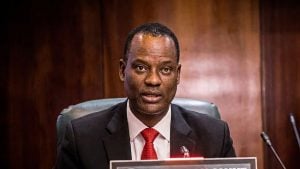
Rodrigo Valdés, director of the IMF’s Fiscal Affairs Department, gave the advice on Wednesday during a press briefing on the fund’s Fiscal Monitor at the 2026 annual meetings of the IMF and World Bank in Bangkok, Thailand.
Valdés said blanket fuel subsidies could place significant pressure on public finances while disproportionately benefiting higher-income consumers.
His comments followed questions about the effects of allowing energy prices to reflect market conditions in Nigeria, where higher petrol prices could increase transportation costs, fuel inflation and worsen poverty.
“Protecting people is not the same as protecting the price of fuels,” Valdés said.
He said fuel subsidies and measures that prevent prices from adjusting fully to energy shocks had cost countries between one and 1.5 per cent of gross domestic product (GDP) in 2026.
The IMF official argued that such interventions were expensive and often regressive because wealthier consumers could benefit disproportionately from general fuel subsidies.