‘You Made Nigerians 300% Poorer’ – Obasanjo Blasts Tinubu Over Reforms
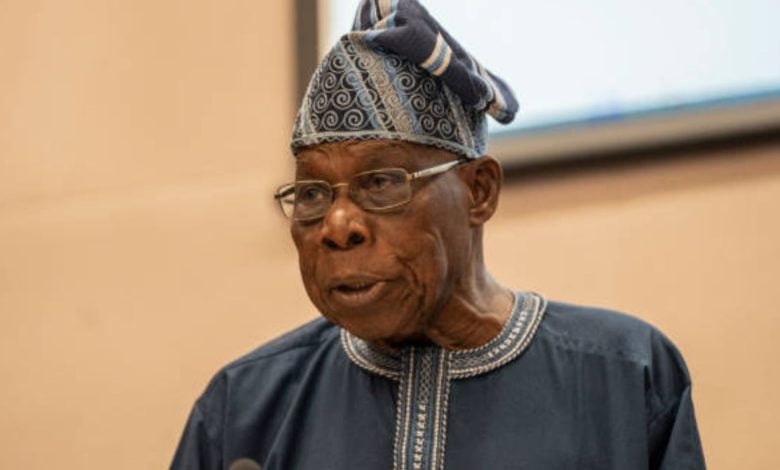
Former President Olusegun Obasanjo has criticised President Bola Tinubu’s economic reforms, accusing his administration of worsening the financial hardship faced by Nigerians through the sharp depreciation of the naira and the removal of the petrol subsidy.
Obasanjo made the remarks on Thursday at the Financial Times Africa Summit 2026 in London, United Kingdom, where he questioned the impact of the policies introduced by the Tinubu administration in 2023.
The former president argued that the rapid fall in the value of the naira had reduced Nigerians’ purchasing power and increased the cost of living.
He maintained that the government could not justify the hardship by pointing to the need for economic reforms when millions of citizens were struggling to afford basic necessities.
Speaking at the event, Obasanjo said, “We do not live in isolation as a country. We interact with the rest of the world. And overnight, you devalue the currency by 300 per cent. The naira went from N500 to a dollar to N1,500 to a dollar. What that meant was that every Nigerian is made poor by 300 per cent.”
He linked the depreciation of the currency to Nigeria’s worsening poverty situation, arguing that the loss of value had made it more difficult for households and businesses to cope with rising prices.
Obasanjo described Nigeria as “the poverty capital of the world,” saying the country’s economic situation had left a large number of its citizens in poverty.
“You cannot say to me that that is good for Nigeria. You cannot say to me that that is good for us in any sense,” he noted.
The former president’s criticism comes amid continuing debate over the effects of the Tinubu administration’s economic policies, particularly the unification of foreign exchange rates and the removal of petrol subsidies.
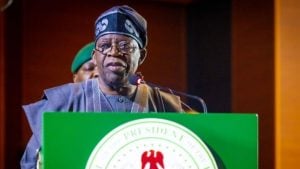
Since assuming office in May 2023, Tinubu has defended the reforms as necessary measures to address longstanding economic distortions, improve government revenue and attract investment.
However, the changes have also contributed to higher transport costs and increased pressure on household budgets, particularly during the initial period of adjustment.
Obasanjo questioned the argument that the government needed more time for the policies to produce positive results.
He said he had yet to see sufficient improvement in the economy to justify the hardship experienced by ordinary Nigerians.
“For the economy, I don’t see anything getting better. What policies are you seeing through? You impoverish your people, and you want to see impoverishment through?” he remarked.
He also rejected the suggestion that the government’s programmes were serving the best interests of Nigerians, insisting that the consequences of the reforms could not be separated from the difficulties faced by the population.
The former president said the government needed to reconsider its approach and give greater attention to the welfare of citizens rather than continue with policies that, in his assessment, had deepened economic hardship.
Obasanjo also spoke about the removal of the petrol subsidy, which remains one of the most controversial aspects of Tinubu’s economic agenda.
He acknowledged the importance of petrol prices to the wider economy, noting that changes in the cost of fuel affect transportation, food distribution, manufacturing and other essential activities.
According to him, fuel costs have consequences for virtually every sector because businesses depend on transportation and energy to move goods and provide services.
However, Obasanjo argued that the government should have addressed corruption associated with the subsidy system before placing the full burden of the adjustment on Nigerians.
He maintained that a country facing serious economic difficulties must take practical steps to reduce waste and ensure that public resources are properly managed.
The former president said a country in a very bad economic situation must “curb corruption, wastefulness and unnecessary luxury and produce.”
His position places the focus on government spending, accountability and domestic production as important parts of any strategy to improve the economy.
He suggested that reducing corruption and waste should be central to efforts to restore economic stability and improve living conditions.
The Tinubu administration, on the other hand, has maintained that subsidy removal was necessary to reduce the financial burden on the government and redirect resources towards infrastructure and other public needs.
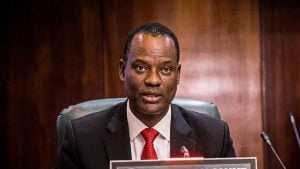
Finance Minister and Coordinating Minister of the Economy Taiwo Oyedele said on August 19 that the removal of the petrol subsidy saved the government N15.8 trillion between June 2023 and December 2025.
The savings figure has featured in the government’s defence of the policy, although the effect of the reform on household purchasing power, transport expenses and the prices of essential goods remains a major concern for many Nigerians.