Reps Dismiss Money Laundering Petition Against NNPC Boss
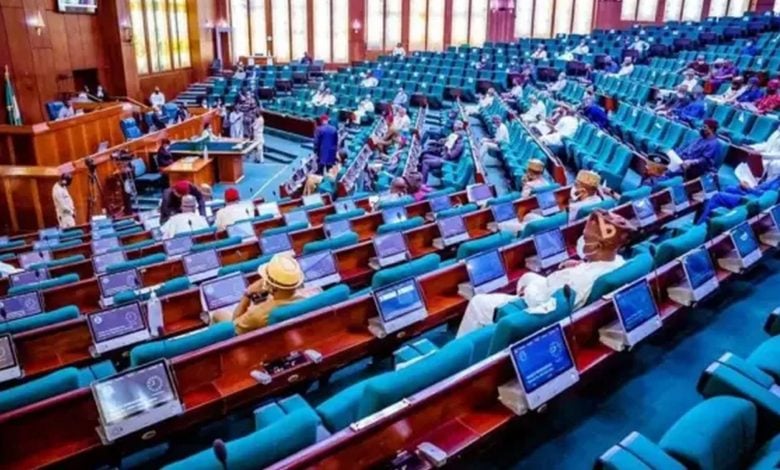
The House of Representatives Committee on Petroleum Resources (Downstream) has dismissed a petition accusing the Nigerian National Petroleum Company Limited’s (NNPCL) Executive Vice President, Downstream, Dr. Mumuni Dagazau, of money laundering and conflict of interest.
The committee said the petitioners failed to provide sufficient documentary evidence to support the allegations, despite being given opportunities to substantiate their claims.
It subsequently dismissed the petition and passed a vote of confidence in President Bola Tinubu and the management of NNPCL, citing developments in domestic refining, crude oil supply and the downstream petroleum industry.
Recall Politics Nigeria earlier reported that President Bola Tinubu had been urged to suspend NNPCL Executive amid the ongoing probe by the House of Representatives.
However, the committee’s chairman, Ikenga Imo Ugochinyere, announced the decisions in Abuja during a review of outstanding matters and the Federal Government’s ongoing reforms in the petroleum sector.
Ugochinyere explained that the decision followed an examination of a report submitted by the committee’s subcommittee, which investigated the petition filed by the Coalition for Transparency and Accountability in Nigeria’s Petroleum Sector.
According to him, representatives of the coalition appeared before the subcommittee on October 21 but failed to present documentary evidence to establish their allegations against Dagazau.
He said the petitioners relied mainly on newspaper publications to support claims involving alleged financial misconduct and a possible conflict of interest.
The committee chairman added that the petitioners were given further opportunities to submit relevant documents but failed to return on October 22 and 23, as expected.
Dagazau, however, responded to the committee’s invitation through his representatives, who addressed the questions raised during the investigation.
Announcing the committee’s decision, Ugochinyere said, “An allegation is not evidence, and a newspaper clipping is not proof.”
He maintained that allegations of money laundering and other forms of financial misconduct required credible evidence before they could be sustained.
The committee therefore dismissed the petition in its entirety.
Ugochinyere also warned against using legislative oversight proceedings to make accusations that could not be supported with verifiable facts.
He said the National Assembly would continue to examine complaints against public officials but insisted that petitioners must provide evidence capable of supporting their claims.
The committee’s decision does not amount to a general declaration that public officials are beyond investigation.
Rather, its stated reason for dismissing the petition was the failure of the petitioners to substantiate the allegations before the committee.
Meanwhile, the lawmakers granted their subcommittee investigating NIPCO Plc an additional 14 days to complete its assignment.

The committee also addressed the debate over the possible return of fuel subsidies, rejecting a blanket restoration of the former nationwide arrangement because of the potential cost to government revenue.
Ugochinyere said Nigeria’s daily petrol consumption was estimated at about 50 million litres.
He argued that restoring the former subsidised pump price, based on the Federal Government’s estimates, could cost more than N20 trillion annually.
According to him, the amount would represent a substantial demand on public finances and could approach the total funds distributed among the federal, state and local governments through the Federation Account in 2025.
He argued that any relief for Nigerians facing high petrol prices should be carefully designed, temporary and affordable, rather than introduced through a nationwide subsidy without a clear funding plan.
“A blanket subsidy does not lower the cost of fuel; it only changes who pays, and when,” he said.
The committee chairman said any proposal to reduce the burden of fuel prices must clearly explain how much it would cost, where the money would come from and the expected effect on pump prices.
He also pointed to interventions by NNPC Retail as examples of measures intended to provide temporary relief without returning to the former subsidy system.
These included a reported N66-per-litre petrol discount introduced on October 1 and a subsequent announcement on October 8 that the company would forgo its profit margin and sell petrol at cost for 30 days.
Ugochinyere said the arrangement was designed to support commercial transport operators who play a major role in moving passengers and food across the country.
He maintained that the intervention differed from the former subsidy regime because the relief was to be provided through NNPC Retail’s profit margin rather than a direct payment from the public treasury.
The committee also reviewed developments involving the rehabilitation of the Port Harcourt and Warri refineries.
Ugochinyere disclosed that prospective technical partners had visited the facilities to assess their condition and determine the work required to restore reliable operations.
He said the assessments were intended to identify a path towards commercially sustainable operations, although the facilities would still require effective technical management and consistent maintenance to achieve that objective.
The committee chairman further highlighted the expansion of compressed natural gas (CNG) and liquefied petroleum gas (LPG) infrastructure as part of efforts to diversify Nigeria’s energy supply and reduce dependence on petrol.
According to figures presented by Ugochinyere, more than 120,000 vehicles were operating on CNG, while NNPCL had acquired 500 CNG-powered trucks for the distribution of petroleum products.
The company had also delivered 35 CNG hybrid buses to the Presidential CNG Initiative.
He disclosed that NNPC Retail commissioned its first solar-powered smart energy station in Abuja in September. The facility combines petrol sales with cooking gas, CNG and electric vehicle charging services.
The committee chairman said between 50 and 70 similar stations were expected to be introduced across the country within six months, although the planned expansion would depend on implementation.
Ugochinyere attributed the developments to the Tinubu administration’s petroleum sector reforms and commended NNPCL management, including Dagazau, for their roles in the downstream industry.
The committee also announced a nine-pillar Roadmap to Downstream Energy Security, which it said would guide its oversight of the sector and help address persistent challenges affecting the availability, distribution and pricing of petroleum products.
The proposed roadmap includes enforceable crude oil supply obligations for domestic refineries, possible amendments to the Petroleum Industry Act, a regulated import market and the establishment of a national strategic petroleum stock.
Other areas covered by the plan include the creation of fuel-quality laboratories across the country, faster development of CNG and gas infrastructure, improved protection of pipelines, transparent pricing arrangements and targeted relief for vulnerable consumers.
It also provides for firm timelines for the rehabilitation of state-owned refineries, an issue that has remained central to discussions about Nigeria’s domestic refining capacity and reliance on imported petroleum products.
Ugochinyere said the committee would monitor the implementation of the roadmap and hold relevant government agencies accountable for their responsibilities.
“The Renewed Hope downstream sector agenda is working,” he said.