FG Seeks Law To Block Reversal Of Tinubu’s Economic Reforms
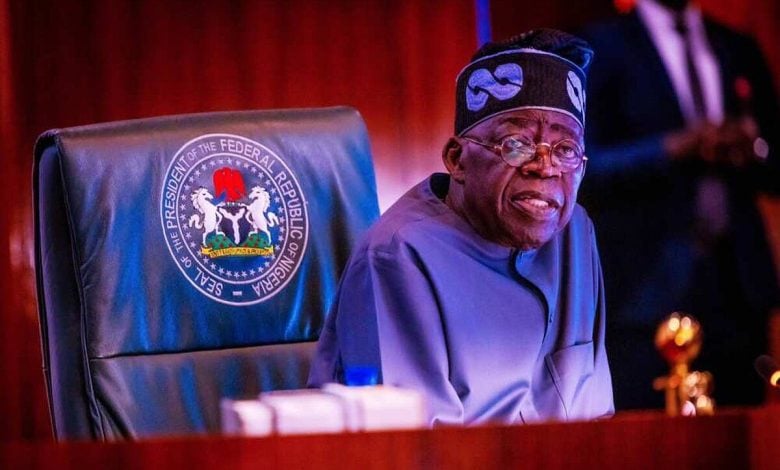
The Federal Government has hinted that it is considering a law that would prevent future administrations from reversing major economic policies introduced under President Bola Tinubu, including the removal of petrol subsidy.
Taiwo Oyedele, the Minister of Finance and Coordinating Minister of the Economy, disclosed this on Monday at the 32nd Nigerian Economic Summit in Abuja, where he called for a legally backed framework to ensure continuity in economic policymaking.
Oyedele said the government wanted to establish a national economic policy framework that would guide successive administrations on taxation, tariffs, subsidies, investment and industrial development.
He explained that the proposal was aimed at ending the pattern of policy reversals that has undermined economic planning, discouraged investors and weakened the impact of previous reforms.
“We now need to lock it in, in institutions, in law, as well as policy framework, so that it can be enduring,” the minister said during a panel session.
He also warned against any attempt to restore petrol subsidy, arguing that the policy had created economic distortions that became increasingly expensive to address.
“Any ideas of returning it, we should forget about it,” Oyedele said, adding that the government was considering whether the proposed framework should be enacted into law and supported by stronger institutions.
President Tinubu removed the petrol subsidy and unified the foreign exchange market after assuming office on May 29, 2023. The reforms were introduced to address economic distortions and improve the country’s fiscal position, although they triggered concerns over rising living costs.
Oyedele said the proposed framework would require political officeholders and government appointees to understand and comply with agreed economic principles.
He added that the principles could be incorporated into the screening of government appointees, with copies of the framework attached to their appointment letters to guide their decisions.
However, the minister clarified that the Nigeria Economic Policy Framework remained a consultation draft and had not been approved as official government policy.
According to him, public consultation would continue until November 27, 2026, through the Ministry of Finance’s website. The document would subsequently be submitted to the Federal Executive Council for approval and the National Economic Council for endorsement.
Presenting the framework, Oyedele described policy uncertainty as a major obstacle to economic growth, arguing that inconsistent government decisions impose additional costs on businesses and discourage investment.
“Policy uncertainty is an invisible tax on enterprise. And unlike most taxes, it generates no revenue for government; it only destroys value and discourages investment,” he said.
The proposal recommends mandatory Policy Impact Assessments before major economic interventions. Under the arrangement, regulators would be required to establish the evidence supporting proposed measures, their costs, beneficiaries and expected duration.
It also proposes an annual National Economic Scorecard to be published on Independence Day, measuring progress in real wages, productive employment and poverty reduction.
Oyedele said the framework would focus on stability, productivity, enterprise, capital, people, markets and institutions, with private businesses expected to drive economic growth under predictable regulations.
He suggested that political parties could eventually concentrate on explaining how they would implement a nationally agreed economic policy rather than developing competing economic manifestos.
On the removal of petrol subsidy, the minister maintained that government should prioritise increasing household incomes instead of keeping prices artificially low.
“Let’s not suppress prices. Let’s focus on raising income,” he said.
Oyedele also questioned the effectiveness of Nigeria’s industrial protection policies, disclosing that vehicles assembled locally contained only about five per cent local content despite enjoying tariff and levy protection of up to 60 per cent.
He advocated temporary protection for domestic industries, subject to performance requirements, alongside improvements in electricity supply, logistics and manufacturing competitiveness.
The minister further disclosed that the government was targeting low single-digit inflation before the end of 2027 to create conditions for single-digit interest rates. However, he declined to provide a definite timeline for cheaper borrowing.
He also cited improved access to foreign exchange, student loans, pension payments, wage adjustments and subsidised credit for small businesses as benefits associated with the government’s reforms.
According to him, salary increases and wage adjustments accounted for the largest expenditure item from Federal Government savings associated with foreign exchange and subsidy reforms.
He urged wealthy Nigerians to fulfil their tax obligations, warning that inadequate government revenue could worsen inflation, borrowing costs and currency depreciation.
The Minister of Budget and Economic Planning, Abubakar Bagudu, backed the position, saying Tinubu had directed government officials to sustain the reforms despite concerns about their immediate effects on households.
“There will be no return to subsidy. There will be no return to those distortions,” Bagudu declared.
He added that the Federal Government had reached agreements with state governments on improving coordination of fiscal and monetary policies, infrastructure development, security and domestic production.
Bagudu also said more than $6bn had been mobilised from the World Bank and other development partners to support household resilience and economic opportunities.
Governor Charles Soludo of Anambra state also warned against abandoning macroeconomic stability but argued that Nigeria’s growth rate of about four per cent was insufficient to deliver rapid poverty reduction and create enough jobs.
“The macroeconomic framework, the stability that is back, must never be taken for granted,” Soludo said, calling for substantially higher investment and economic expansion.