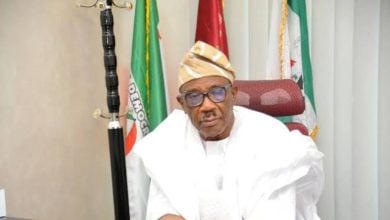
JUST IN: El-Rufai’s family demands immediate release of former Kaduna governor
The family of Mallam Nasir El-Rufai, former governor of Kaduna state, has demanded his immediate and unconditional release from the custody of the Independent Corrupt Practices and Other Related Offences Commission (ICPC).
In a statement issued today, the family said El-Rufai’s continued detention by the anti-corruption agency has no legal basis.
The statement was signed by Mohammed Bello El-Rufai, a member of the House of Representatives representing Kaduna North Federal Constituency.
The family said El-Rufai was first taken into custody by the ICPC on February 18, 2026, adding that the commission subsequently obtained a remand order from a magistrate court on February 19.
The family described the remand order as defective, adding that it only permitted a 14-day detention period.
They said the detention order has now expired without the ICPC filing charges against the former governor in a competent court.
Part of the statement reads: “As of today, March 5, 2026, Nasir El-Rufai remains in ICPC custody under circumstances that have no basis in law. We state categorically that there is currently no valid legal instrument authorizing his detention.
“Following his detention, the ICPC obtained a remand order from a magistrate court on February 19. However, this order was defective from the outset and, by law, provided only a 14-day window for his detention.
“That 14-day period has now ended. The ICPC has not charged him with any offense in a competent court. Neither have they secured a fresh or extended lawful order to continue detaining him.
“Despite the expiration of any legal cover for his detention, the ICPC persists in holding him. This is no longer a matter of lawful procedure; it is unlawful, brazen self-help.
“The ICPC has failed in its fundamental obligation to either charge him before a court of competent jurisdiction or release him.
“The path forward is clear and logical: release him immediately. Their refusal to do so confirms what we have long feared—that the ICPC is being wielded as a tool for political persecution rather than operating as an impartial institution of justice.”