‘Nothing to Hide’ — Umahi Invites EFCC, Anti-Graft Agencies to Probe Road Projects
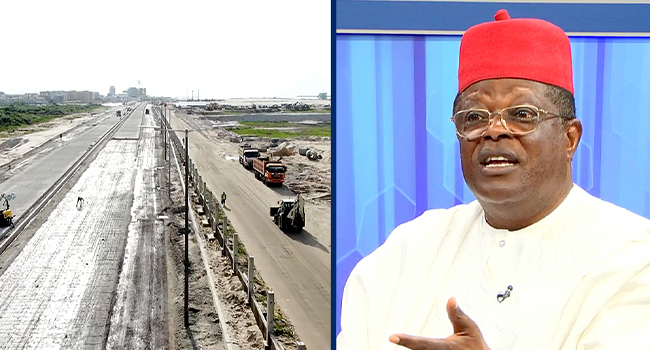
The Minister of Works, David Umahi, has opened up his ministry to investigation, inviting top anti-corruption agencies to scrutinise road projects across the country.
The move comes amid rising public concerns over alleged corruption in infrastructure spending.
Umahi said the ministry has nothing to conceal. He stressed that all project records and execution processes are available for inspection.
According to him, the decision to invite investigators was deliberate, aimed at proving transparency and restoring confidence in the system.
Speaking in Abuja on Wednesday after receiving a “Personality of the Year” award, the minister disclosed that both the Independent Corrupt Practices and Other Related Offences Commission (ICPC) and the Economic and Financial Crimes Commission (EFCC) have been formally contacted to carry out independent checks.
He said, “There have been several allegations and accusations against us, but to show our transparency, we decided to open up the entire Ministry of Works for probe.”
He said, “We wrote to ICPC to go round and investigate all our projects, not on paper, but physically. We also wrote to EFCC. We are not hiding anything. Any file they want, any information, is available.”
The minister maintained that every contract awarded under his supervision can be defended. He insisted that project costs are broken down clearly, covering materials, labour, and equipment.
“If you wake me up and ask about any project… we can disaggregate everything… There is nothing we do in this ministry that we cannot defend,” he stated.
Umahi also addressed criticisms surrounding the shift from asphalt to concrete roads. He described the transition as necessary despite opposition from some quarters.
According to him, concrete roads are more durable and cost-effective in the long run.
“We fought a big battle to move from asphalt to concrete… Concrete roads will last up to 100 years with minimal maintenance,” he said.
On infrastructure impact, the minister said poor road networks limit movement and economic activity. He likened bad roads to a form of restriction on citizens.
“When a road is cut into two, it is like putting people in prison,” he added.
He also cautioned media practitioners against spreading unverified reports. He urged journalists to prioritise accuracy and responsibility in their work.