Minister of Works Umahi Urges Support for Tinubu’s Re-election, Gives Reason
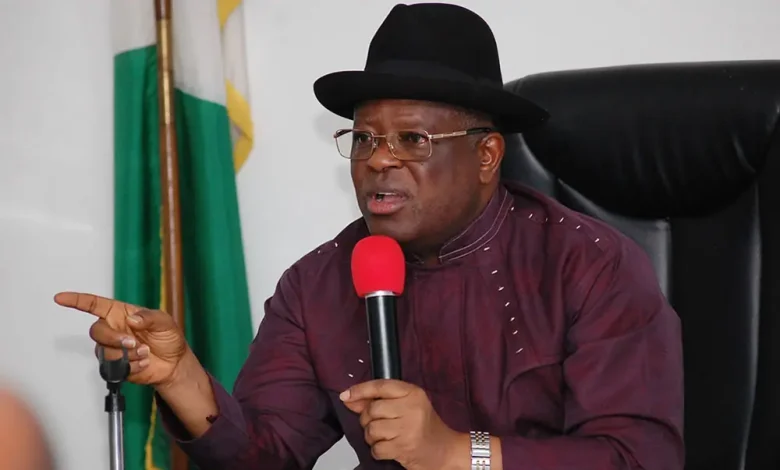
The Minister of Works, David Umahi, has urged stakeholders and host communities along the Bodo-Bonny corridor to support the re-election of President Bola Tinubu, stressing that continuity in government is vital for the completion of Phase II of the strategic road project.
Umahi made the appeal on Friday during the Medallion Award Ceremony organised by the Bodo-Bonny Road and Bridges Peace Committee in Abuja, where he was represented by the Minister of State for Works, Bello Goronyo.
Describing the project as a landmark achievement, Umahi noted that it goes beyond infrastructure, transforming the economic and social landscape of coastal communities.
“This road is more than a physical link; it is a bridge to opportunity, a lifeline for commerce, and a symbol of national cohesion. It connects coastal communities to the mainland, reduces insecurity, and opens doors for prosperity across the Niger Delta,” he said.
Highlighting the government’s commitment to expanding road infrastructure nationwide, Umahi stressed the importance of national connectivity in boosting economic growth.
“Phase II of the project has been approved by Mr President, and we are already putting pen to paper to commence work immediately,” he added.
He urged communities to rally behind the President, stressing that policy continuity is essential for the successful delivery of long-term infrastructure projects.
“So you must make sure that you rally around Mr President to ensure continuity of this project, so that by 2027, when President Bola Ahmed Tinubu returns, this project will continue,” Umahi said.
The minister also praised President Tinubu’s dedication to national unity and inclusive development, emphasising that infrastructure initiatives benefit all regions of the country.
“This is to tell you that Mr President loves everybody in this country, whether you are from the North, South, East, or West. He is a President for all and a leader committed to the unity of this nation,” Umahi said.
Earlier, Chief Jasper Jumbo, Chairman of the Planning Committee for the award ceremony, described the completion of the Bodo-Bonny Road as the end of decades of neglect and agitation by the people.
“For decades, the Bodo-Bonny corridor symbolised both economic potential and infrastructural limitation. Despite being a major hub for oil and gas activities, it remained disconnected from the mainland and relied heavily on water transportation,” he said.
Jumbo also highlighted the challenges that delayed the project, including funding constraints, technical disagreements, and community-related issues, noting that sustained advocacy and collaboration eventually led to its success.
“We witnessed years of disagreements, funding challenges, and community tensions. But we resolved against all odds to mobilise stakeholders, persuade communities, and support the government and contractors to realise this project in our lifetime,” he added.
He commended the minister for facilitating the approval of Phase II of the Bodo-Bonny Road project, which links coastal neighbourhoods with the East-West Road.
Stakeholders said the project, which connects Bonny Island, home to critical oil and gas infrastructure—to mainland Rivers State, is set to unlock new economic opportunities, improve logistics for the oil and gas sector, and enhance regional integration across the Niger Delta.
The project gained renewed momentum under former Minister of Works, Babatunde Fashola, with the introduction of Executive Order 7, which enabled funding through tax credits by Nigeria LNG Limited.
With the road now open to traffic and expansion plans underway, the Bodo-Bonny corridor is poised to transform commerce, reduce security risks, and improve accessibility for residents.