
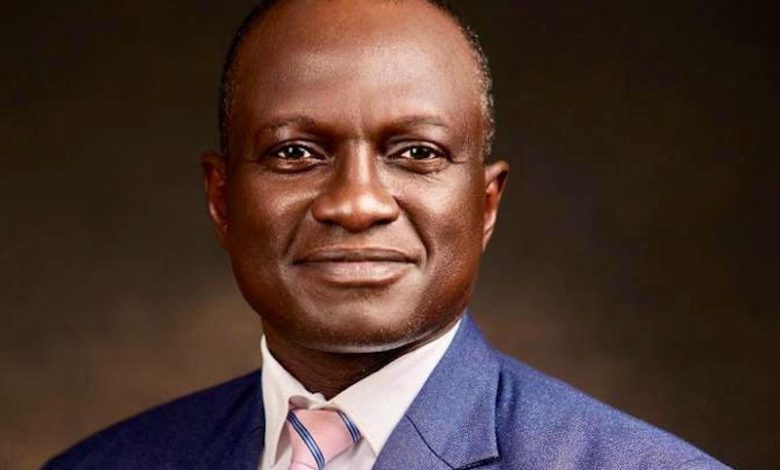
Maj-Gen Garba Laka (rtd), coordinator of the National Counter Terrorism Centre (NCTC) under the office of the National Security Adviser, has revealed that Nigeria’s security situation deteriorated following the military coups in Burkina Faso, Niger and Mali.
Laka made the comment on Tuesday while responding to questions from journalists at the end-of-year media parley with defence correspondents.
He said the Sahel region has experienced heightened instability and extremist activity, developments he said have had direct negative consequences for Nigeria’s internal security.
His words: “We have these countries facing these threats and we think we will see peace in Nigeria? No.
“You must have noticed that towards the end of 2023, the security situation was improving, but immediately after the coups in these countries, that was when the situation began to get worse, because these terrorist groups have connections across the Sahel.”
Laka said Nigeria must assume a leadership role in West Africa and the Sahel to effectively confront the shared security threats.
According to him, porous borders and the withdrawal of Sahelian states from the Multinational Joint Task Force have compounded the challenge, but the coups significantly worsened the situation.
“As long as those countries keep on facing this threat, Nigeria will continue facing the brunt. If you look at the whole region, Nigeria is the richest country in West Africa, and Nigeria is the only country that you kidnap somebody and ask that 100 million be paid and it will be paid,” he added.
Laka said criminal groups exploit Nigeria’s economic capacity to fund operations across borders, stressing that security agencies are intensifying efforts despite the complexity of the task.
He said kidnapping has evolved into a complex enterprise involving informants, facilitators and, in some cases, victims who orchestrate their own abductions.
The NCTC coordinator said several kidnappers have been arrested through tracking operations, though details are withheld for security reasons.
He identified ransom payments through point-of-sale operators as a major obstacle to tracking kidnappers, noting that such transactions often obscure the final recipients.
“You may see that a transfer has been made by a victim to a terrorist, but when you trace the account, it belongs to a POS operator.
“Also, the kidnappers give the POS operator’s number, the victim transfers the money, and then the kidnappers collect it, but we are working on this and we will not relent,” he added.
Laka said Nigeria’s exit from the Financial Action Task Force grey list was achieved through coordinated tracking of ransom payments and recovery of terrorist funds.
“The NCTC set up a joint investigation committee comprising all security agencies involved in financial oversight — EFCC, NFIU and ICPC,” he said.
“This is how we were able to track and recover the funds, and arrests were also made, though some details are not disclosed because they are sensitive,” he added.
He also disclosed that the federal government, working with social media companies, has shut down numerous accounts linked to terrorists and violent extremists.
“We engaged TikTok, Instagram, Snapchat, Facebook and X, and explained the impact of certain posts on national security, and they took them down,” Laka said.
“Even those videos showing bandits displaying their loot on TikTok have been removed and you won’t see that again,” he added.
Laka said security agencies are adapting to evolving terrorist tactics and vowed that counterterrorism efforts would be intensified in 2026 following the president’s directive.
