
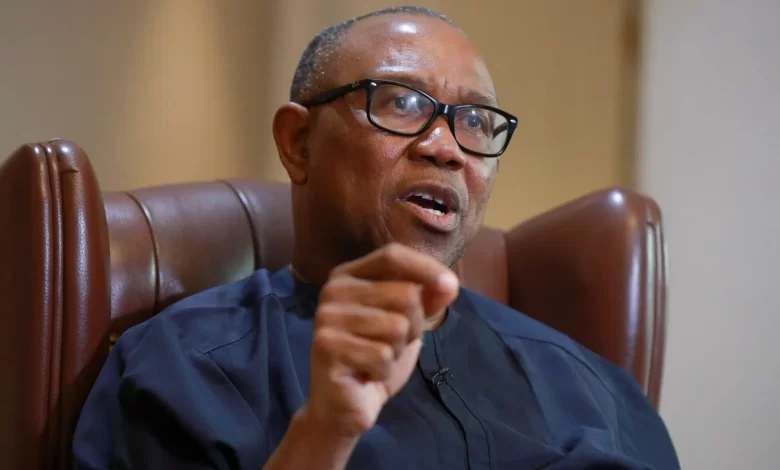
Former Labour Party presidential candidate, Peter Obi, is expected to formally leave the party this week, following months of unresolved leadership crises and deep internal divisions.
Obi’s anticipated exit is linked to the prolonged instability within the Labour Party, which has continued to struggle with factional leadership, court cases and lack of internal cohesion since the 2023 elections.
The development has fueled intense speculation over his next political destination, although no final decision has been publicly confirmed.
Findings by POLITICS NIGERIA indicate that while several opposition parties have reached out to the former Anambra State governor, discussions are still ongoing.
His next platform remains uncertain, with consultations said to be fluid and far from concluded.
There have been strong talks linking Obi to the African Democratic Congress (ADC). However, indications suggest that the party may not be his immediate destination. Internal arrangements and unresolved structural matters are believed to be key sticking points in the ongoing conversations.
Sources familiar with the situation say Obi has raised concerns about internal processes, leadership structure and long-term direction within parties courting him. These concerns, it was learnt, have slowed down any final agreement.
There are also emerging political alignments within the ADC that may affect Obi’s calculations. Some developments suggest the party may be leaning towards a different presidential option ahead of 2027, a situation that could complicate Obi’s own political ambition.
Against this backdrop, Obi is said to be considering an entirely new political platform. The option of joining an existing party with entrenched interests and prior agreements is reportedly being weighed carefully, as he seeks political space to operate freely.
The crisis rocking the Labour Party is largely rooted in leadership disputes that intensified after the 2023 elections. Central to the conflict is the controversy surrounding the tenure of former National Chairman, Julius Abure.
Obi and several party stakeholders have maintained that a Supreme Court ruling effectively brought Abure’s leadership to an end. However, the continued recognition of his faction by the Independent National Electoral Commission (INEC) has prolonged the impasse.
As a result, the party has operated with parallel executives and rival factions, each claiming legitimacy. This division has weakened internal discipline, stalled decision-making and slowed efforts to reposition the party nationally.
Those close to Obi say he believes his continued stay in the party has worsened the situation. His political influence and popularity, they argue, have been used by rival camps to strengthen their claims.
According to insiders, Obi feels that stepping away may give the party breathing space to resolve its internal issues without his name being dragged into the struggle for control.
The Labour Party rose to national relevance during the 2023 presidential election largely due to Obi’s candidacy. His campaign energized young voters, urban professionals and first-time participants, transforming the party from a fringe platform into a major political force.
However, that momentum has since waned. Several elected officials have left the party, citing confusion, lack of direction and the unresolved leadership crisis.
Obi is said to be increasingly concerned that remaining in a party plagued by endless disputes could hurt his reformist image and weaken his support base ahead of future elections.
Although he has not officially announced his next move, indications suggest he is inclined towards a platform that promotes internal democracy, clarity of leadership and minimal legal distractions.
His departure is expected to trigger fresh political realignments across the opposition space. Parties are already positioning themselves to attract supporters of the popular “Obidient” movement, which remains a significant political force.
When contacted, the spokesman of the African Democratic Congress, Bolaji Abdullahi, said he could not confirm whether Obi was set to join the party. He noted that the ADC would be open to welcoming Obi should he decide to come on board.
Attempts to get official reactions from the Labour Party were unsuccessful, as calls to party officials were not returned as of the time of filing this report.

OBI YOU HAVE A 95% CHANCE OF BECOMING VICE PRESIDENT TO ATIKU AND A 40% CHANCE OF BECOMING PRESIDENT IN 2027.CHOOSE WISELY.
Tinubu most go