
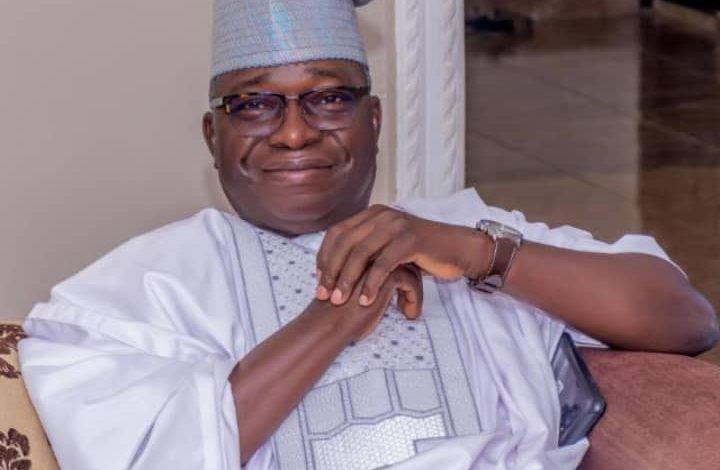
A former federal lawmaker, Senator Ayodele Arise, has urged President Bola Ahmed Tinubu to consider military pressure on Burkina Faso over the continued detention of Nigerian soldiers in the country.
Arise, a chieftain of the All Progressives Congress, said Nigeria should not rule out the use of force if diplomatic efforts fail to secure the release of the detained personnel.
He made the remarks on Saturday while speaking during an interview on an Arise TV programme.
The senator argued that Nigeria must protect its sovereignty and make it clear that its military personnel cannot be detained without consequences.
According to him, good neighbourliness should not be mistaken for weakness.
While acknowledging Nigeria’s internal security challenges, Arise insisted that firm action would send a strong message across the region.
He referenced a historical military operation by Israel in 1976, stating that decisive action often compels cooperation.
He said, “I think we should move and do something. As a matter of fact, once they are aware that we want to do that, I am sure that the man who is President there will have a rethink because they are our neighbours.
“Yes, we should be friendly with our neighbours, but at the same time we should let them know that they can’t be messing with our country.”
Arise, who once represented Ekiti North Senatorial District, also backed Nigeria’s recent military involvement in Benin Republic following reports of a coup attempt.
He rejected claims that President Tinubu acted outside constitutional provisions by authorising action before briefing the National Assembly.
According to him, national security decisions sometimes require swift responses.
His comments came shortly after the Minister of Foreign Affairs, Yusuf Tuggar, confirmed that 11 Nigerian military officers detained in Burkina Faso are still being held.
Tuggar disclosed this while addressing journalists at the ECOWAS Commission in Abuja.
The minister said discussions are ongoing to resolve the issue through diplomatic channels.
He stated, “We are discussing how we can resolve this delicate matter as quickly as possible, and we’re talking. So it’s something that is being handled diplomatically.”
Tuggar also dismissed speculation linking the detained officers to Nigeria’s involvement in the Benin Republic crisis.
According to him, the Nigerian Air Force aircraft involved had no connection to any coup-related operation.
The officers were travelling in a C-130 aircraft that made an emergency landing in Bobo Dioulasso, a city in south-western Burkina Faso.
They were later arrested amid suspicions that the flight was connected to a rescue mission tied to political instability in Benin.
However, Burkina Faso’s Minister of Territorial Administration, Emile Zerbo, claimed the aircraft entered the country’s airspace without proper clearance.
Beyond regional security, Arise also spoke on internal parliamentary procedures.
He criticised the Senate’s continued use of the ‘take-a-bow-and-go’ method in screening ambassadorial nominees.
Although he acknowledged that the Foreign Affairs Committee may have followed due process, he argued that deeper engagement would strengthen legislative oversight.
He said lawmakers need the opportunity to question nominees to better understand their qualifications and preparedness.
According to him, relying solely on security reports and resumes limits transparency.
He said, “There are two ways to look at that. It is either the President and the security agencies have done a good job of due diligence of the candidates, and the Senators have read their profiles, resumes, achievements and contributions to national development.”
The former senator added that meaningful interaction during screenings would benefit both the Senate and the public.
He said, “It is a learning process because the fact that you are a Senator doesn’t mean that you know everything. So, the opportunity for engagement, information for people to know their professions and educating the Senators at large has been lost.”
Arise further stressed the need for nominees to personally justify their appointments.
He said, “But many of us will prefer that the Senate ask questions. Let the nominees justify the nomination from Mr President because he himself can’t know every one of them. He is going to rely on the security report and the reference from those who work around him.”

Hello, what are the objective of military insurgency lobbies at bokinafaso West Africa region. Diamond bank Nigeria PLC account name 0011050010306 of engineers technology industrial education Court kingsley’Aturuobi soliciting e-learning governance features
LAUGHABLE.WHEN YOU COULDN’T DEFEAT COMMON BANDITS