
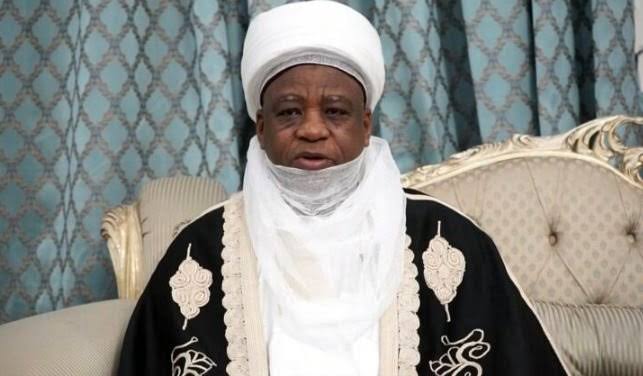
The Sultan of Sokoto, Muhammadu Sa’ad Abubakar, has spoken publicly on the rising debate over the alleged imposition of Sharia law on Christians in some parts of the country.
The respected monarch made it clear that “Christians must not be subjected to Sharia law or court processes meant solely for Muslims,” stressing that the Islamic legal system remains strictly a religious obligation for Muslims alone.
He delivered the message on Wednesday at the opening session of the 2025 triennial meeting of the Nigeria Inter-Religious Council (NIREC) in Abuja.
The gathering, themed “Collaboration of Inter-Religious Council with Government to Promote Peace in Nigeria,” drew top religious leaders, government officials, policymakers and scholars seeking new ways to address the country’s growing tensions.
Sultan Abubakar explained that Nigeria’s diverse religious landscape demands caution and fairness from leaders.
According to him, Sharia is a personal faith-based responsibility designed for Muslims and should not, under any circumstance, extend to the lifestyle, dressing, or worship practices of non-Muslims.
He noted that the country’s constitution already recognises Nigeria as a multi-religious nation and that the government does not—and should not—promote one religion above another.
Speaking on recent calls from some quarters demanding the abolition of Sharia altogether, Abubakar insisted that every Nigerian must be free to practice their chosen faith without fear or intimidation.
He urged political, traditional, and religious leaders to refrain from statements or actions capable of stoking division, adding that inflammatory rhetoric only heightens tension in an already fragile society.
The Speaker of the House of Representatives, Abbas Tajudeen, also addressed the meeting. He emphasised the need for stronger partnerships between NIREC and the Federal Government as the nation battles insecurity and the spread of violent extremism.
Tajudeen warned that extremists continue to exploit religious differences to weaken national unity, insisting that coordinated engagement with faith leaders remains one of the most effective tools for countering radical narratives.
He also pledged that the House is ready to support any practical recommendations that emerge from the council’s deliberations.
The Secretary to the Government of the Federation, Senator George Akume, expressed concerns over the country’s internal security challenges and the growing distrust between citizens and government institutions.
He highlighted how Nigeria is frequently misrepresented abroad, often through distorted portrayals of its security concerns.
Akume gave assurances that the government remains committed to protecting citizens and called on religious and traditional leaders to reinforce peace efforts within their communities.
Christian Association of Nigeria (CAN) President, Archbishop Daniel Okoh, described insecurity as one of the biggest threats to Nigeria’s coexistence.
He stressed that the collaboration between government and faith-based groups is no longer optional, as religious institutions possess a unique reach and influence that can support peacebuilding where government interventions alone may not be enough.
NIREC’s Executive Secretary, Rev. Fr. Cornelius Omonokhua, called for deeper national unity and collective resolve against banditry, terrorism, and all forms of criminality.
He insisted that every Nigerian life must be treated as sacred and protected, regardless of faith or ethnicity.
Omonokhua also appealed for behavioural change and renewed commitment to shared national values.
