‘Our Best Are in the Wrong Places’ – El-Rufai Speaks on Nigeria’s Problem Amid Ongoing Trial
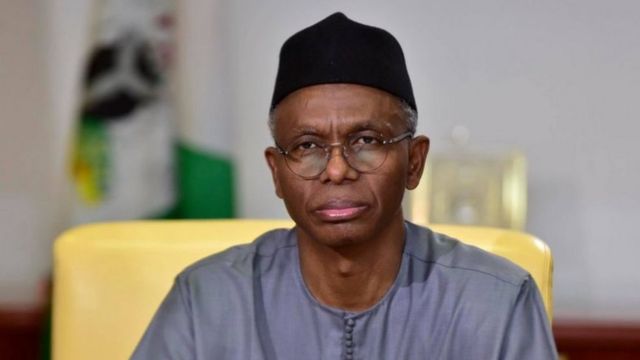
Former Kaduna State Governor, Nasir El-Rufai, has raised fresh concerns about the direction of Nigeria’s economy, stating that the country’s major problem lies in how its human resources are utilised rather than a lack of them.
His remarks come at a time he is also facing legal proceedings, drawing public attention both to his court appearance and his economic views.
In a statement he shared on Wednesday, El-Rufai argued that Nigeria is not short of capable people or ideas. Instead, he said the real issue is where the country’s most talented individuals choose to operate.
According to him, “Nigeria’s growth problem is not primarily a shortage of talent, capital, or ideas. It is a problem of where our best talent goes—and why.”
He explained that many highly skilled Nigerians are naturally drawn to sectors that offer quick and significant financial returns. These sectors, he suggested, often reward access and influence more than productivity.
He noted that this pattern is not driven by bad intentions, stressing that “People do not wake up intending to harm their country. They respond rationally to incentives.”
El-Rufai maintained that the current economic structure encourages rent-seeking activities instead of real production. He warned that such a system continues to weaken the foundation needed for sustainable economic growth and industrial development.
To support his position, the former governor pointed to key economic indicators. He said Nigeria recorded a GDP growth of about 4.1 percent in 2024, yet GDP per capita remains low at around $1,084. He also highlighted that about 93 percent of the labour force operates in the informal sector, while the country’s tax-to-GDP ratio stands at 8.2 percent.
“These numbers are not abstract,” he said. “They describe an economy where scale is risky, visibility attracts predation, and long-term investment struggles to compete with short-term access.”
Meanwhile, El-Rufai was present at the Federal High Court in Kaduna on Wednesday for the continuation of his bail hearing. He arrived at the court premises in the morning, drawing attention from security personnel and observers.
Proceedings had earlier been delayed after his legal team filed a motion asking the presiding judge, Justice Rilwan M. Aikawa, to step aside over alleged bias and a pending petition.
Returning to his economic position, El-Rufai warned that when talented individuals abandon productive sectors, the consequences are far-reaching. He said innovation slows down, entrepreneurship suffers, and the country’s long-term growth potential declines.
He also identified structural challenges affecting businesses, including unreliable electricity supply, inefficiencies at the ports, and limited formal employment opportunities. According to him, these issues make it difficult for serious businesses to grow and compete.
Despite the challenges, he pointed to areas of promise within the economy. He noted that non-oil exports such as cocoa, fertiliser, cashew, and processed agricultural products have shown encouraging growth. He said this proves that Nigerian businesses can thrive when conditions are right. “When incentives align—even partially—Nigerian firms can compete and scale,” he stated.
El-Rufai went further to propose reforms that could redirect the economy. He called for a reduction in discretionary government powers, more predictable and transparent regulations, stronger protection of property rights, and systems that support business expansion.
He concluded by emphasising that Nigeria’s progress depends on creating the right environment for productivity to flourish.
“Nigeria’s future does not hinge on slogans, nor on personalities. It hinges on who wins in our economy. If the system rewards producers over extractors, growth will follow—rapidly and durably. Nigeria does not lack talent. Nigeria must reallocate it.”