Okowa Accuses Nwoko Of Plot To Shift Anioma To South East, Scrap Asaba As Capital
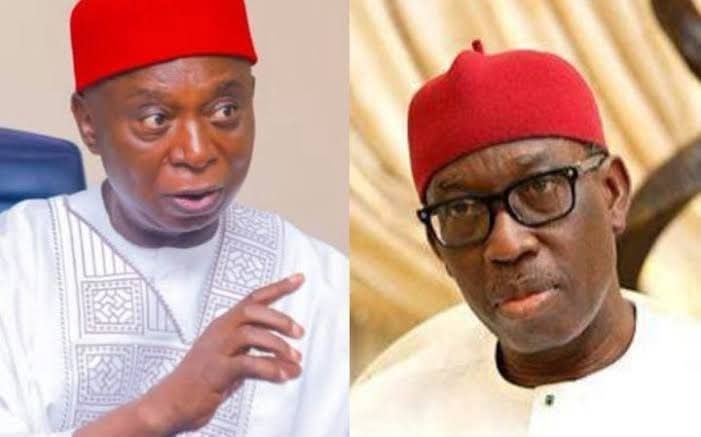
Former Delta State Governor, Ifeanyi Okowa, has criticised Senator Ned Nwoko over his position on the proposed Anioma State, accusing him of pursuing an agenda that could undermine the region’s interests.
Okowa made the remarks on Tuesday while addressing stakeholders of the All Progressives Congress (APC) in Oshimili South Local Government Area during consultations ahead of his 2027 senatorial ambition.
He alleged that Nwoko was scheming to align Anioma with the South-East geopolitical zone and diminish the status of Asaba as a state capital, a move he described as misguided and unacceptable to the people of Delta North.
According to Okowa, the people of Anioma are united in their demand for the creation of a separate state within the South-South geopolitical zone, comprising the nine local government areas, with Asaba as its headquarters.
“There have been misconceptions and misrepresentations in the media regarding Anioma State,” he said, stressing that no Anioma indigene is opposed to the state’s creation under the South-South framework.
In an apparent reference to Nwoko, Okowa criticised attempts to alter the status of Asaba, noting that significant efforts had been made to establish the city as the capital of Delta State.
“An Asaba daughter fought for us and today we have Asaba as headquarters. Someone who does not understand how it came about now wants to wish it away. That is unwise,” he said.
The former governor also faulted Nwoko’s approach to the Anioma State campaign, describing it as lacking broad consultation and grassroots input.
He emphasised the need for inclusive dialogue, noting that any successful push for state creation must reflect the collective will of the people.
Okowa further questioned the timing of Nwoko’s advocacy, pointing out that legislative processes for state creation were not currently at a decisive stage.
He warned against misleading the public, insisting that the realisation of Anioma State would depend on a united position by stakeholders and alignment with constitutional procedures.
He reaffirmed that the demand for Anioma State remains strong but must be pursued collectively, in collaboration with the current administration and the people of the region.