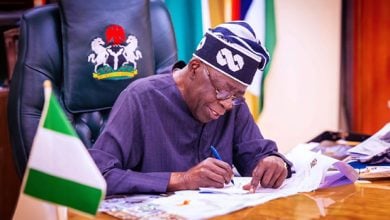
Ex-Cross River Governor Ayade Pleads as Tinubu Orders Him to Drop Senate Ambition

Former Governor of Cross River State, Ben Ayade, has stepped down from his ambition to contest the Cross River North senatorial seat in the 2027 general elections, following a directive from President Bola Tinubu.
In a statement issued on Monday, Ayade revealed that he was recently summoned to Abuja for what he described as a high-level consultation with the Presidency.
He said the President, during the meeting, instructed him to abandon his senatorial bid.
“Recall I was invited to return to Abuja for a high-level national consultation with the Presidency,” Ayade said.
“From the sequence of events that followed my return, Mr President wants me to withhold my Senate ambition. I yield to his request even as I pour tears of ill treatment and agony.”
Ayade highlighted what he described as his significant contributions to the growth of the All Progressives Congress (APC) in the South-South, noting that he was the first APC governor in the region and delivered nearly 40,000 more votes than the Peoples Democratic Party (PDP) for Tinubu in the 2023 presidential election.
“I trust that Mr President may not be aware that the people who turned our churches against Ayade and all of us in APC over the Muslim-Muslim ticket and accused us of Islamisation of Cross River State are the beneficiaries of his instruction,” he said.
“Mr President may recall that I was the first APC Governor in the whole of South-South Nigeria that built the new APC that we enjoy today.
“I worked assiduously for the party and delivered almost 40,000 votes above PDP in the presidential election, first in the history of our state,” he added.
Despite these contributions, Ayade lamented that he has been sidelined for more than three years without any federal appointment.
He also disclosed that he is currently funding a free transportation scheme in support of the President’s anticipated re-election bid in 2027.
Ayade, however, appealed to Tinubu to reconsider the directive, arguing that his federal constituency has only had eight years of senatorial representation, compared to 20 years enjoyed by his main rival.