‘My Name Was Submitted by Enemies’ — Kwankwaso Speaks on US Sanctions Over Sharia Law
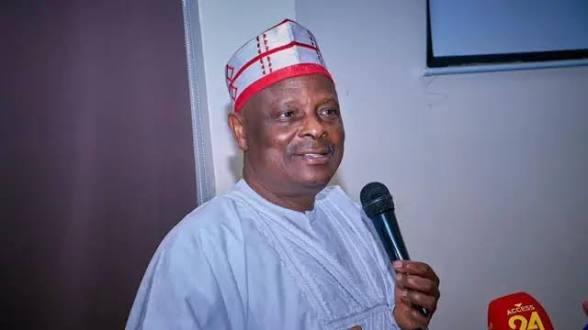
The leader of the New Nigerian Peoples Party (NNPP), Senator Rabi’u Musa Kwankwaso, has broken his silence regarding a controversial legislative move in the United States Congress that could see him facing strict sanctions.
The former Kano State Governor is being targeted in a new American bill over claims that he participated in significant violations of religious freedom during his time in office.
While appearing as a guest on Arise Television’s ‘Prime Time’ program this Monday, the former Minister of Defence dismissed the allegations as a calculated smear campaign.
Kwankwaso suggested that the inclusion of his name in the proposed American law was not an accidental oversight by foreign lawmakers but rather a deliberate act of sabotage by domestic political rivals.
According to him, the move is the result of a coordinated effort by local detractors to tarnish his international reputation and stall his political career.
The legislation at the heart of the storm is the Nigeria Religious Freedom and Accountability Act of 2026. This bill seeks to hold various individuals and groups accountable for what US lawmakers describe as a deteriorating state of human rights and religious liberty within Nigeria.
If the bill is passed and signed into law, it would empower the US government to freeze assets and revoke the visas of those listed, including Kwankwaso and certain Fulani-ethnic groups.
Addressing the specific historical context often cited by his critics, the NNPP chieftain pointed out the irony of being blamed for the implementation of Sharia law in Kano. He explained that during the early 2000s, there was an intense public and legislative push for the legal reform which started in Zamfara State.
Kwankwaso noted that while he initially sought to study the implications of the move, the pressure from the State Assembly and the general public was overwhelming.
Defending his record, the former governor stated, “My name was submitted by our enemies here in this country to the US Congress.”
He further elaborated on the legal reality of that era, noting that even if he had refused to sign the Sharia bill, it would have automatically become law through the legislative process after a certain period.
He expressed shock that a decision made over two decades ago, which many at the time felt he was too slow to implement, is now being used to label him an extremist in 2026.
Kwankwaso maintained that his administration’s actions were rooted in the democratic will of the people and followed due process. He lamented that those who once criticized him for being hesitant about the Sharia legal system are likely the same forces now misrepresenting his history to international authorities.
POLITICS NIGERIA recalls that the United States government recently placed Nigeria back on its watchlist of countries with severe religious freedom concerns. This move followed a series of reports detailing targeted attacks on worship centers and the perceived failure of the state to prosecute those behind the violence.
The introduction of the 2026 Accountability Act appears to be an escalation of this diplomatic pressure, as Washington looks beyond general designations toward individual accountability for Nigerian political figures.