Daniel Bwala Gives Reasons for Hardship Under Tinubu’s Government
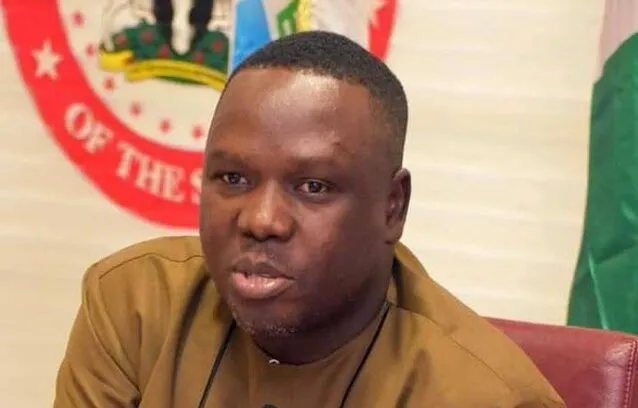
Special Adviser to President Bola Ahmed Tinubu on Media and Policy Communication, Daniel Bwala, has said Nigerians may not yet fully feel the impact of ongoing economic reforms, noting that growth under the current policies will take time and should be expected to remain gradual but steady.
Speaking during an interview on Tuesday, Bwala attributed the persistent economic hardship in the country to Nigeria’s large population and limited resources.
“The answer is simply population and resources. The population is over 230 million. The resources we have, however, the increased revenue is not enough,” he said.
He explained that while the administration is recording progress, public expectations must be realistic.
“Growth will have to be slow. But it will be slow, steady, and consistent. That is what we take pride in,” he added.
Bwala defended the policies of President Bola Ahmed Tinubu, saying some effects of the reforms are already being felt, especially through increased allocations to states.
“The effect of that increased revenue is the increase allocation to states, which has resulted in state administering and which has also resulted in the impact on the people,” he said.
When asked how increased funding to states translates into improved living conditions amid corruption concerns, he maintained that some state governments are already taking steps to tackle hardship.
“There are states you can point at tangible results… dealing with hunger by the provision of food and agricultural materials,” he noted.
He also pointed to federal initiatives aimed at supporting citizens, including the Nigerian Education Loan Fund (NELFUND) student loan scheme, the compressed natural gas (CNG) transport programme, and healthcare interventions.
“For example, when we talk about over one million beneficiaries of NELFUND, these are not children of the rich. When we talk about transportation, the direct effect is on the poor man,” he said.
On healthcare, Bwala said government support for services such as caesarean sections and dialysis is designed to assist vulnerable Nigerians.
“Every policy introduced by this government, the direct beneficiaries are the poor,” he argued.
He acknowledged concerns over the slow pace of improvement but maintained that reforms require time before their effects become fully visible in people’s daily lives.