10th National Assembly passed over 100 bills in three years, says Akpabio
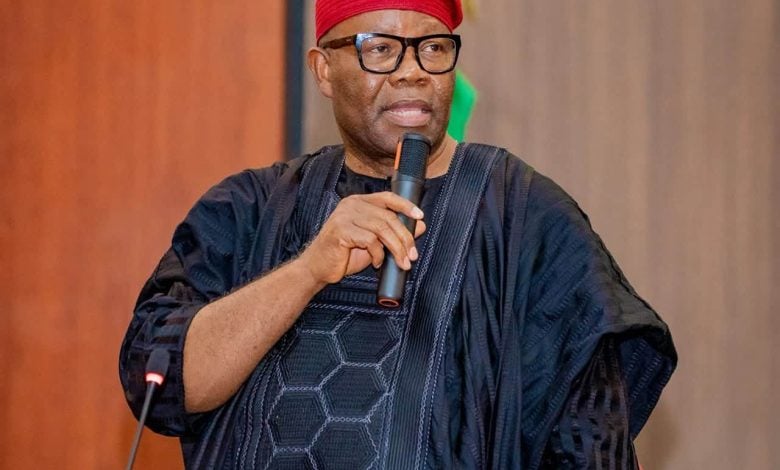
The President of the Senate, Senator Godswill Akpabio, has disclosed that the 10th National Assembly has passed more than 100 bills in its first three years, describing the feat as unprecedented at this stage of Nigeria’s democratic journey.
Akpabio made the disclosure on Tuesday while declaring open the 2026 National Assembly Open Week in Abuja.
He said the legislature’s performance should be measured by the impact of its laws on the lives of Nigerians rather than the volume of legislation passed.
His words: “In that period, the National Assembly has passed well over one hundred bills—more than any previous Senate had achieved at this stage of our democratic journey.
“I promise not to detain you with a legislative shopping list, because even the finest menu is less satisfying than the meal itself. Yet one truth deserves to be remembered: a law is only ink on paper until it changes the life of a citizen.”
Akpabio said the National Assembly had enacted laws aimed at addressing insecurity, improving education and strengthening the economy.
He stated: “That conviction has guided our work. We strengthened laws against terrorism and insecurity because every Nigerian deserves to live in safety.
“We enacted measures to return out-of-school children to the classroom because no nation can mortgage its future by abandoning its children.”
“We modernised our tax laws to build a stronger economy while protecting ordinary Nigerians, approved a new national minimum wage in recognition of the dignity of labour, advanced investment and industrial legislation to stimulate enterprise and employment, and established Regional Development Commissions so that every part of our federation would have a stronger institutional platform to pursue development and address long-standing challenges.”
The Senate President said the upper chamber had also exercised its constitutional responsibility of screening and confirming public office holders with diligence.
“In exercising our constitutional responsibility of screening and confirming public officers, we have remained mindful that public office is a public trust demanding competence, integrity and character. Every confirmation has been approached with the seriousness that such constitutional responsibility deserves,” he said.
Akpabio said Nigeria had returned to the executive committee of the Inter-Parliamentary Union (IPU) after nearly six decades, describing the development as a vote of confidence in the country’s democratic institutions.
“Our return to the Executive Committee of the Inter-Parliamentary Union after nearly six decades reflected renewed international confidence in Nigeria’s democratic institutions and reaffirmed our commitment to parliamentary diplomacy.
“It has also ensured that Nigeria once again contributes meaningfully to conversations shaping parliamentary practice across the world,” he stated.