2027: Lawyer Spots Major Flaw in Atiku’s Suit Seeking to Disqualify Tinubu
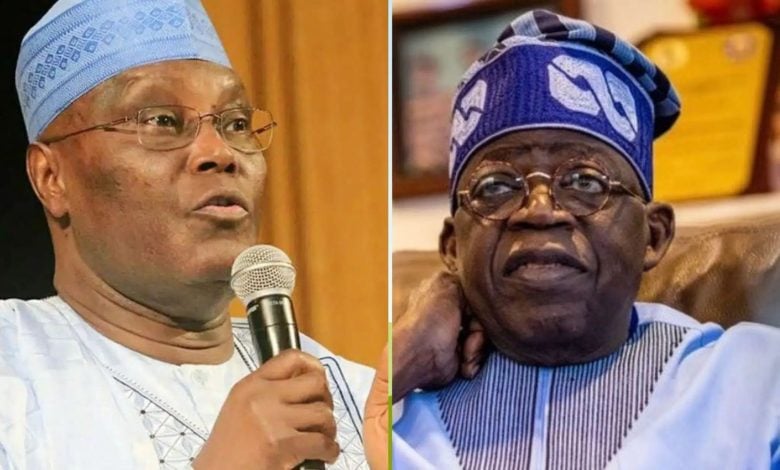
The suit filed by former Vice President Atiku Abubakar seeking President Bola Ahmed Tinubu’s disqualification from the 2027 presidential race met the constitutional deadline for pre-election matters, but the procedure used to bring the case may expose it to a strong legal challenge, according to a review of the filing and established case law.
Atiku personally appeared at the Federal High Court registry in Abuja on Friday, August 14, 2026, to depose to an affidavit backing the suit, which he filed alongside his party, the African Democratic Congress, against Tinubu, the All Progressives Congress and the Independent National Electoral Commission.
The action rests on Sections 137(1)(j), 139(1)(a)(i) and 285(14)(c) of the 1999 Constitution as amended, along with relevant provisions of the Electoral Act 2026. At its core is an allegation that the NYSC discharge certificate Tinubu submitted to INEC bears a name that differs from his own.
Legal analyst Ekene Aninze, reviewing the timing of the filing, noted that Atiku fell squarely within the 14-day window set by Section 285(9) of the Constitution for pre-election matters.
INEC had displayed the personal particulars of presidential candidates, including Tinubu’s, on Saturday, August 1, 2026, in line with its published election timetable. Counting from that date, Atiku’s filing on August 14 came on the 13th day, within the statutory limit.

Where the case may run into difficulty, according to Aninze, is the format in which it was brought. The suit was filed by way of Originating Summons, a procedure typically reserved for disputes over the interpretation of documents rather than contested facts.
Nigerian courts have repeatedly held that allegations bordering on forgery cannot be resolved on affidavit evidence alone and require a Writ of Summons, which allows for oral testimony and cross-examination.
That principle traces back to the Supreme Court’s handling of the Delta State PDP governorship tussle between Sheriff Oborevwori and David Edevbie, where the apex court held that Edevbie’s forgery allegations against Oborevwori could not be resolved through Originating Summons and ought to have been commenced by Writ of Summons, since only oral and documentary evidence tested in open court could settle such claims.
A similar reasoning shaped the Court of Appeal’s earlier intervention in the same dispute, which faulted Edevbie for not calling the institution alleged to have issued the disputed document as a witness.
The same logic featured in the long-running feud between Godwin Obaseki and his APC rivals, where the University of Ibadan had to be drawn into proceedings to speak to the authenticity of a contested credential, and in Bashir Machina’s dispute with the APC over the Yobe North senatorial primaries, often cited as a cautionary tale on the risks of using Originating Summons for a contentious matter.
Applying that pattern to the Atiku suit, Aninze argued that questions over the authenticity of the NYSC certificate would likely require testimony from the NYSC itself to confirm or deny that it issued the document, something an Originating Summons process, built on affidavits, is not designed to accommodate.
Neither Tinubu’s legal team nor the APC had filed a response to the suit as of the time of this report.