NDC Reveals Move To Change Party’s Logo
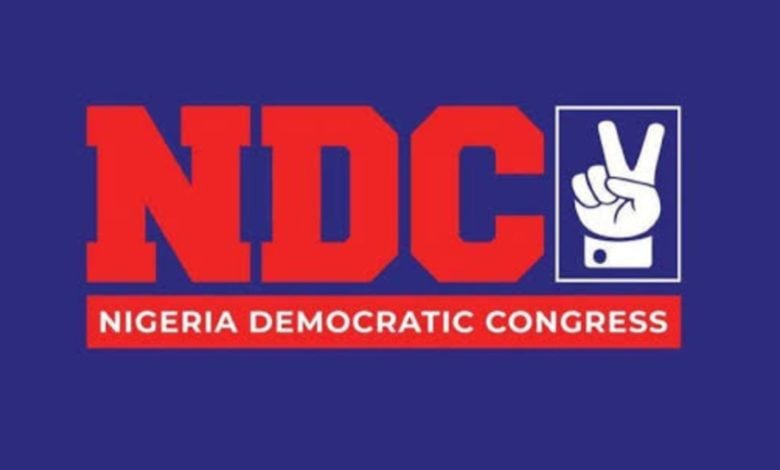
The Nigeria Democratic Congress (NDC) has disclosed that efforts were underway to replace its existing logo with a modified version.
This was just as the party said it was still engaging the Independent National Electoral Commission (INEC) to resolve administrative issues surrounding the change.
The party, in a statement issued on Friday by its National Publicity Secretary, Osa Director, said the proposed modification had already been communicated to INEC following consultations between both parties.
According to the NDC, the process of replacing the current logo is being delayed by administrative procedures that are still being addressed.
Recall that the party is facing legal battle over the use of the logo following a suit instituted by the Peace Movement Party (PMP), who claimed ownership of the logo.
However, the party directed its candidates and members to continue using the existing logo, which features a two-finger victory sign, until the process is concluded.
“The NDC, in consultation with INEC, have also modified our logo and notified INEC appropriately, at a meeting INEC themselves attended with us,” Director said.
He added that the party was working to resolve the outstanding administrative details before the modified logo would officially replace the existing one.
“Until then, however, we enjoin all our candidates and members to continue using the old logo, which is also the two-finger victory sign, for campaign purposes, pending the conclusion of all engagements and arrangements with INEC regarding the replacement,” he said.
The development comes as the NDC moves to activate its campaign structures ahead of the 2027 general elections.
The party has directed all its candidates to commence campaigns and grassroots engagements in accordance with the timetable released by INEC.
Its presidential candidate, Peter Obi, Vice-Presidential candidate, Senator Rabiu Musa Kwankwaso, and National Assembly candidates were instructed to begin consultations with constituents and roll out campaign activities across their respective areas.
Governorship and State House of Assembly candidates were similarly directed to work with party stakeholders and the national secretariat in organising their campaign programmes.
The NDC said its state, local government and ward structures should draw up itineraries for local campaigns, including familiarisation, sensitisation and consultation meetings.
The party also disclosed that it would soon inaugurate its campaign committees and other campaign organs ahead of the elections.
Director, however, warned candidates and supporters against violence, abusive language and inflammatory rhetoric during the campaign season.
He said the NDC’s campaigns would be centred on issues affecting Nigerians and guided by the party’s commitment to peaceful political engagement.
“In keeping with the ideology of NDC, the party reiterates that all campaigns must be issue-based and devoid of violence and foul language. The NDC has no room for violence,” he said.
The party said the campaigns should not only promote its candidates but also communicate its message as a grassroots-oriented political organisation.
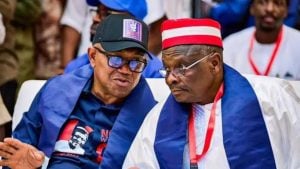
Relatedly, Peter Obi, on Friday, formally commenced his campaign for the 2027 presidential election, promising to tackle insecurity, poverty and unemployment if elected.
The former Anambra State governor, who outlined his plans for addressing Nigeria’s economic and security challenges, said the country was endowed with sufficient human and material resources to overcome its difficulties but required a government focused on production, accountability and efficient use of public resources.
He listed insecurity, food shortages, internal displacement, unreliable electricity, unemployment and the rising cost of doing business among the major problems confronting Nigerians.
According to him, Nigeria must move away from an economy driven predominantly by consumption and imports and instead build its productive capacity.
“Nigeria cannot import its way to prosperity. We will produce more of what we consume, process more of what we produce, and compete more effectively in global markets,” he said.