Fresh Demand Made Following Mary Habila’s Burial

The burial of Mary Habila, the 25-year-old community health worker who died at the country residence of Minister of Works, David Umahi, in Ebonyi State, has renewed calls for transparency as the police confirmed that an autopsy has been conducted and its report is ready.
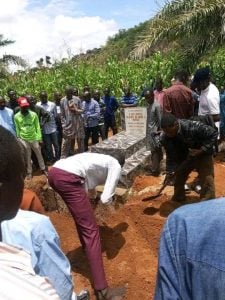
Habila was buried in Nok, her parents’ hometown in Jaba Local Government Area of Kaduna State, on Friday, August 21, after weeks of uncertainty and public interest surrounding the circumstances of her death.
However, her burial has not ended the questions surrounding what happened in the final hours of her life.
Residents of Nok and neighbouring communities said many people only learnt that Habila had been buried after the ceremony had already taken place.
The latest development came after the police confirmed that a post-mortem examination had eventually been conducted, despite the family’s earlier opposition to an autopsy.
The police spokesman, CSP Anietie Iniedu, confirmed that the examination had been carried out and that the report was ready. However, he declined to disclose its findings.
Habila died on June 27, 2026, after she was reportedly found unresponsive at Umahi’s country home in Uburu, Ebonyi State, where she worked as a personal nurse.
The Ebonyi State Police Command had confirmed receiving a distress call over a medical emergency involving her. She was subsequently taken to the David Umahi Federal Teaching Hospital, Uburu, where she was certified dead on arrival.
The case was initially handled by the Ebonyi State Police Command before being transferred to the State Criminal Investigation Department and later moved to the police headquarters in Abuja following the national attention generated by the incident.
Before her burial, Habila’s family disclosed that she had been living with a congenital heart condition and had previously been diagnosed with a hole in her heart.
In a biography released as part of her burial activities, the family said her condition deteriorated despite medical attention, prayers and support from relatives and friends.
“Mary Habila lived with a heart condition, having been diagnosed with a hole in her heart,” the family stated.
The family added that her condition “became critical” despite efforts to manage it and that she “sadly passed away following a cardiac arrest.”
Meanwhile, Umahi had earlier given an account of Habila’s final conversation with her boyfriend, saying she complained of a nosebleed shortly before she died.
Umahi told journalists at a press conference in Abuja on July 16 that Habila spoke to her boyfriend by telephone and informed him that the bleeding had stopped before saying she intended to take a bath.
According to the minister, her boyfriend advised her to seek medical attention before the call ended.
“Three minutes later, the boyfriend called back, but she was no longer responding,” Umahi said.
That account contrasted with recollections from some of Habila’s colleagues, who said she had appeared healthy shortly before she was found unresponsive.
Her friend and colleague, Anita Baaki, said Habila visited her room before going to bed.
“Mary told me she was tired and wanted to take a shower before going to bed. That was the last time I saw her alive,” Baaki said.
Habila had travelled from Abuja to Ebonyi State on June 26 as part of the entourage attached to the Works Minister ahead of official and community activities at his hometown of Uburu.
A staff member who saw her after she arrived said she appeared to be in good health and was involved in preparations at the minister’s residence.
“It appeared they were preparing for an event or meeting because Mary was busy arranging things with other domestic staff of the minister. I was shocked to hear the unfortunate news the following day,” the source said.
Her family, however, has remained largely silent since the burial.
Habila’s father, Pastor Habila Wisdom, declined to speak when approached at the family home in Nok.
“I don’t have anything to tell you. I’m very sorry,” he said.
He directed further inquiries to the family’s lawyer, who also declined to comment on the matter and promised to respond later.
The lack of information about the burial and the autopsy has caused concern among some residents of the area.
Samson Monday Ham, a resident of Kwoi, the headquarters of Jaba Local Government Area, said the community had followed the case closely but was surprised by the limited information available about both the investigation and burial.
“Mary Habila’s death caught the attention of not only the international communities, but Jaba Local Government Area and, more especially, her neighbouring communities. But we don’t know why we were denied information about the case, the autopsy result and the silent burial,” Daily Trust quoted Ham.
Another community figure, Monday Gyubok, a former youth leader in the local government, said the concerns raised by the case should not simply be ignored.

“These concerns should not simply be dismissed,” Gyubok said.
He, however, appealed to members of the public to respect the wishes of Habila’s family, particularly its earlier decision concerning the autopsy.
“As young people, we are appealing for understanding, restraint and peace. The search for truth should not become a source of hatred, division or further pain. We can demand accountability while still respecting the dignity of the deceased and the wishes of her family,” he said.
Gyubok stressed that the circumstances surrounding a person’s social or political environment should not determine the value placed on their life.