Medicine After Death – Atiku Knocks Tinubu’s Fresh CNG Conversion Push
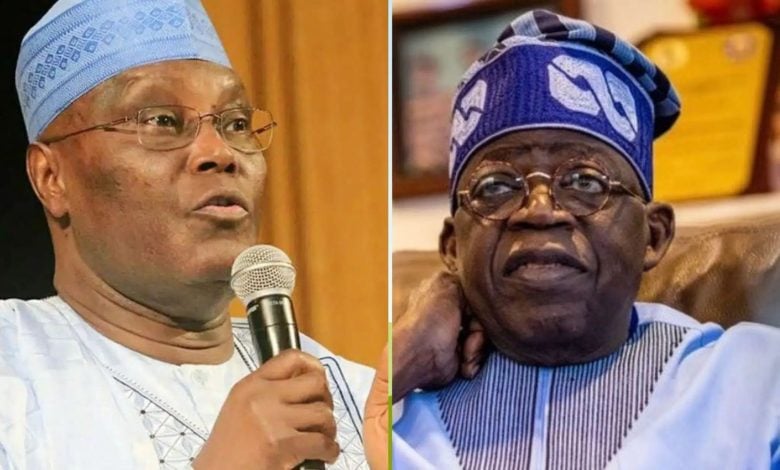
The 2027 presidential candidate of African Democratic Congress (ADC), Atiku Abubakar, has criticised President Bola Tinubu’s renewed push to expand Compressed Natural Gas (CNG) infrastructure.
He, specifically, described the move as a belated response to a transport and cost-of-living crisis reportedly worsened by the administration’s policies.
Atiku, through his senior special assistant on public communication, Phrank Shaibu, faulted the Federal Government’s reported conversion of about 120,000 vehicles to CNG, arguing that the figure represented less than one per cent of the estimated 14 million vehicles on Nigerian roads.
He described the figure as evidence of what he called the administration’s poor performance in using CNG as a major component of its response to the economic hardship that followed the removal of fuel subsidy.
According to Atiku, the government had effectively “published its own scorecard of failure” by celebrating 120,000 conversions after more than three years.
He likened the situation to celebrating a bucket of water while a house was still burning, arguing that the scale of the CNG rollout was inadequate to address the transportation challenges confronting millions of Nigerians.
Atiku also slammed Tinubu’s position that cheaper fuel should translate into lower transport fares, saying the statement amounted to an admission that the administration’s energy policies had failed to adequately address the daily economic realities of Nigerians.
“If Tinubu’s grand strategy for cushioning the consequences of his reckless and poorly thought-out subsidy removal is CNG conversion, then the admission that only about 120,000 vehicles have been converted in more than three years is not an achievement. It is an advertisement of policy failure,” he said.
The former vice president argued that the government’s CNG programme could reduce the operating cost of converted vehicles but could not, by itself, restore the purchasing power of Nigerians whose incomes have been eroded by rising living costs.
“CNG can make a converted bus cheaper to operate. It cannot make a poor Nigerian richer. That distinction demolishes the propaganda,” Atiku said.
He argued that Nigerians were travelling less because of high transport fares, while workers, traders, students and farmers were struggling with transportation costs that were affecting their livelihoods.
“So what exactly has Tinubu solved if the bus becomes cheaper to operate but the passenger has become too poor to enter it?” he asked.
“A cheaper bus without an affordable passenger is not economic recovery.”
Atiku further accused the Tinubu administration of waiting until the approach of the 2027 elections to intensify efforts aimed at reducing transport costs.
He alleged that Nigerians had endured years of rising transportation and food costs, alongside high energy expenses for businesses, without receiving adequate relief from the government.
“Now that elections are approaching, and Nigerians are rallying behind Vice President Atiku Abubakar’s proposal for a production-based subsidy to immediately tackle the cost-of-living crisis created by Tinubu, the same government that ridiculed and criticised Atiku’s plan has suddenly discovered that Nigerians need cheaper transportation,” he said.
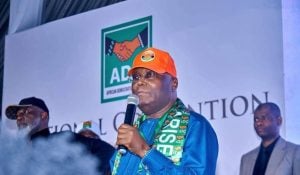
The ADC candidate described the renewed CNG push as “medicine after death,” insisting that the government could not take credit for attempting to address a crisis it had allegedly contributed to creating.
His comments followed Tinubu’s directive for the deployment of an additional 500 CNG refuelling stations nationwide.
The directive, announced on Thursday after the President’s meeting with the Governors’ Forum, disclosed the planned CNG refuelling infrastructure under the Federal Government’s programme would hit 1,000 stations.
Tinubu said the governors had agreed to take immediate measures to reduce transportation costs in their respective states, including through greater adoption of CNG-powered and electric vehicles.
While acknowledging that expanding CNG conversion centres could be beneficial, Atiku maintained that alternative fuel adoption should not be presented as a comprehensive solution to Nigeria’s wider purchasing-power crisis.
He insisted that reducing the cost of operating commercial vehicles would have limited impact if millions of Nigerians remained unable to afford transportation.