2027: Presidential Candidate Kicks Over Exclusion From INEC Final List
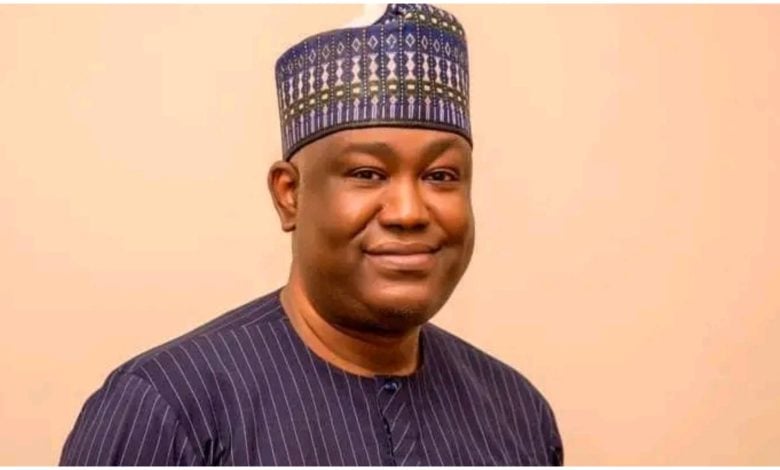
Accord Party presidential candidate, Gbenga Olawepo-Hashim, has rejected his exclusion from the Independent National Electoral Commission’s final list of candidates for the 2027 presidential election.
Hashim, in a statement issued in Abuja on Saturday, maintained that he emerged as the Accord Party’s duly nominated presidential candidate and argued that INEC’s publication of the final list could not override a subsisting court case challenging his exclusion.
“I am the candidate of the Accord Party. No one can exclude me from the 2027 presidential election. The court will do justice,” he said.
His reaction followed INEC’s publication of the final list of presidential candidates for the 2027 election, which did not include his name.
Hashim contended that INEC had no constitutional authority to make an administrative listing the final determination in a dispute over a political party’s candidate.
He said such disputes were subject to judicial scrutiny, adding that the courts had a role in preventing administrative processes from being used to deny candidates their political rights.
“Our democracy does not give INEC any right of finality over who stands as the candidate of a political party,” he said.
Hashim further cited the recent legal developments surrounding the Osun governorship election, arguing that courts had previously intervened in cases involving candidates who were initially excluded from INEC processes.
“That is why nobody should assume that an administrative publication by INEC is the final word in a matter that is before the courts,” he added.
The Accord candidate has already instituted a suit at the Federal High Court in Abuja, seeking an order compelling the party to recognise him as its presidential candidate and submit his name to INEC.
The matter has been heard, with judgment reserved.
Hashim’s claim is based on his assertion that he won Accord’s presidential primary held on May 30, 2026, after paying the required nomination fee and participating in an exercise monitored by INEC officials.
He said his emergence at the primary could not subsequently be nullified through an administrative listing by the electoral commission.
“The publication by INEC is not the final determination of my candidacy. There is a subsisting legal dispute before the court, and I have confidence in the judicial process,” Hashim said.
“I emerged from the presidential primary as the candidate. I have done what the law requires, and I believe the court will uphold the law.”
The presidential hopeful also alleged that political interests opposed his participation because of his potential to challenge established political calculations in the 2027 election.
According to him, some political actors would prefer an election dominated by ethnic, religious and factional considerations rather than a contest based on policies and competence.
“We know for a fact that those who have benefited from the dysfunction in Nigeria, together with their enablers across various institutions, are scared stiff of one candidate being on that ballot—Gbenga Hashim,” he said.

Hashim insisted that his legal challenge was not merely about securing a place on the ballot but also concerned the credibility of political party primaries and the right of party members and Nigerians to participate in democratic processes.
He questioned what would become of internal party democracy if a person declared winner of a presidential primary could subsequently be prevented from contesting the election.
“The real issue is whether a political party can conduct a presidential primary, produce a winner, and subsequently prevent that winner from participating in the election,” he said.
“If that can happen without judicial scrutiny, then what happens to internal democracy within political parties? What happens to the right of party members who participated in the primary? And ultimately, what happens to the right of Nigerians to choose who they want on the ballot?”
Hashim urged his supporters to remain calm, saying he would pursue the matter through lawful and constitutional channels.
“I am not asking anyone to break the law. I am asking that the law be allowed to work,” he said.
“The court will speak, and when it does, we will abide by the judgment.”