N’Assembly Sends State Police Bill to 36 State Assemblies for Approval
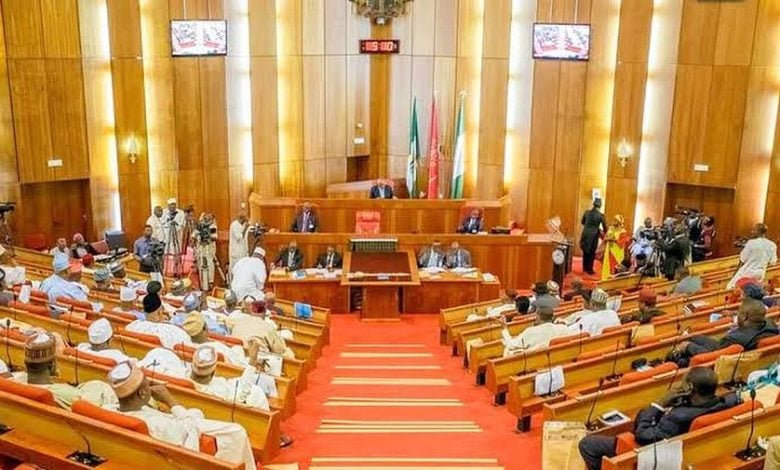
The National Assembly has transmitted the 2026 Constitution alteration bill to the 36 State Houses of Assembly, moving the proposed establishment of state police into the next stage of the constitutional amendment process.
Politics Nigeria gathered that the bill was forwarded to the state legislatures on Wednesday, September 16, 2026, following its consideration and passage by the National Assembly.
The proposed state police structure is contained in the wider Constitution (Sixth Alteration) Bill, 2026.
The transmission means the State Houses of Assembly will now have to consider the proposed constitutional changes and decide whether to give their concurrence.
Their resolutions will determine whether the amendment can move forward under the provisions of the 1999 Constitution.
The Clerk to the National Assembly, Kamoru Ogunlana, confirmed the development in a statement issued on Thursday.
He said the bill was transmitted in accordance with Section 9 of the Constitution, which sets out the procedure for altering the nation’s supreme law.
“The National Assembly has commenced the next stage of the constitutional alteration process with the transmission of the Constitution of the Federal Republic of Nigeria, 1999 (Sixth Alteration) Bill, 2026 to the Houses of Assembly of the 36 States of the Federation for their consideration and approval.
“The Clerk to the National Assembly has, pursuant to the directive of the leadership of the National Assembly, transmitted the Bill to the respective State Houses of Assembly in accordance with Section 9 of the Constitution of the Federal Republic of Nigeria, 1999 (as amended) today, 16th September, 2026,” he said.
The National Assembly has asked the state legislatures to consider the bill and communicate their resolutions within 30 days of receiving it.
Ogunlana, however, made it clear that the 30-day period is not a constitutional deadline. It is an administrative timeframe intended to allow the process to move forward in an organised manner.
The distinction is important because the Constitution does not prescribe a specific number of days within which State Houses of Assembly must respond to a constitutional alteration bill.
The state legislatures are therefore expected to carry out their constitutional responsibilities in accordance with their own legislative procedures.
For the proposed amendment to become part of the Constitution, it must receive the approval of at least two-thirds of the 36 State Houses of Assembly.
This means that at least 24 state legislatures must approve the proposal before the National Assembly can proceed with the remaining constitutional steps.
Section 9 of the 1999 Constitution requires constitutional alterations to secure the support of not less than two-thirds of the State Houses of Assembly after passage by the National Assembly.
The state police proposal has been one of the major issues in the current constitutional review process.
The Senate passed the bill seeking to establish state police in June 2026.
The House of Representatives subsequently considered the proposal, allowing the measure to clear the federal legislative stage before it was transmitted to the states.
The proposal seeks to alter Nigeria’s existing policing arrangement by providing a constitutional framework for state police services alongside the federal police structure.
The Senate’s version of the proposal included provisions dealing with the administration and operation of state police, including the role of state authorities in the policing structure.
However, the constitutional amendment process still requires the participation of the state legislatures before any such change can take effect.
The 2026 constitutional amendment exercise is not limited to state police.
The National Assembly is considering more than 30 proposals aimed at altering different aspects of the 1999 Constitution.
The proposals cover areas of governance, elections, representation and the relationship between the federal and state governments.
Other issues under consideration include local government autonomy, independent candidacy and reserved legislative seats for women, among other proposed reforms.
Each legislature is expected to examine the proposals and take its position through its established legislative process.
The state assemblies will then communicate their respective resolutions to the National Assembly.
The National Assembly will collate the responses from the states and determine the next step based on the outcome.
If the required number of states approves the relevant constitutional amendment, the process will move to the subsequent stage provided under the Constitution. If the required threshold is not met, the amendment cannot proceed to completion.

For the state police proposal, the immediate task is now before the 36 State Houses of Assembly.
They are expected to receive, study and debate the constitutional alteration bill before taking their respective positions.
The National Assembly has also reiterated that the process must be conducted in accordance with the Constitution and through cooperation between the federal and state legislative institutions.
The proposed state police arrangement will therefore not take effect merely because the National Assembly has passed the bill.
Approval by at least 24 State Houses of Assembly remains a necessary part of the constitutional process.