Kwankwaso Backs Atiku’s Fuel Subsidy Policy, Reveals NDC’s Plan
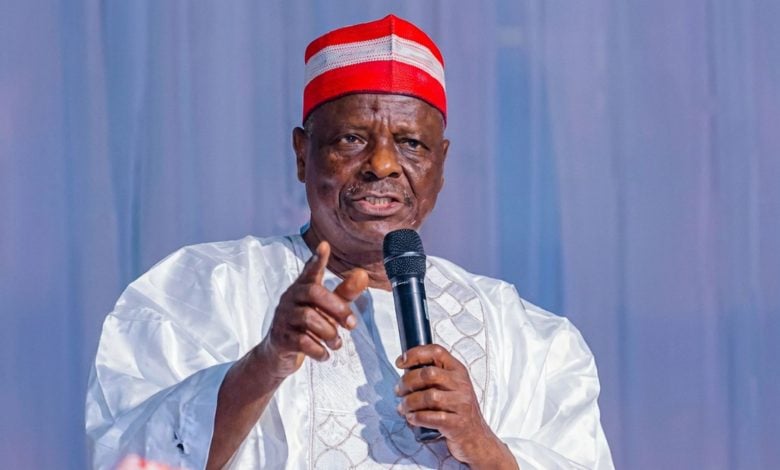
Rabiu Kwankwaso, the vice-presidential candidate of the Nigeria Democratic Congress (NDC), has disclosed that the party would consider government intervention to reduce the price of petrol, including investment in refineries and other measures aimed at lowering production costs.
Kwankwaso made the disclosure while discussing the fuel subsidy debate and the different positions being taken by major opposition figures ahead of the 2027 presidential election.
The former Kano State governor said the NDC would pursue its own approach to making petrol more affordable, even though its presidential candidate, Peter Obi, has publicly opposed a return to the traditional fuel subsidy regime.
His comments came amid renewed debate over fuel prices after former Vice President Atiku Abubakar, the presidential candidate of the African Democratic Congress (ADC), proposed a targeted production subsidy for petroleum products refined in Nigeria.
Atiku has argued that government intervention should be directed towards domestic refining rather than subsidising imported petroleum products.
He has also proposed safeguards, including budgetary limits, transparency and independent auditing of the programme.
Kwankwaso, while speaking during an interview with Arise TV, was asked whether the NDC would face difficulties campaigning in parts of the North-West where support for a return of fuel subsidy remains an important issue.
He rejected the suggestion that the party had no answer to the subsidy question.
“No, no, no, look. We are bringing subsidy in our own way,” he said.
When asked how the party intended to achieve that objective, Kwankwaso pointed to increased investment in domestic refining.
He argued that if private individuals could establish refineries in Nigeria, there was no reason the government could not also invest in refining capacity where necessary.
“Of course, there are many ways. One, I can tell you: now we have a refinery built by a businessman, and I’m sure more refineries would be built.
“Now, if individuals in this country could build refineries, I see no reason why government, under certain circumstances, will not build a refinery or refineries to the extent that we achieve the minimum requirement.
“What is the minimum requirement? The minimum requirement is for the people across the country to go to the filling stations and buy fuel at a reasonable price.
“We, in the NDC, will do whatever it takes, really, to put the price of oil down,” he said.
Atiku recently intensified his campaign for government intervention in the petrol market, arguing that high energy costs have contributed to increased transportation, food and business expenses.
In his latest proposal, the ADC candidate said his planned production subsidy would support petroleum products refined within Nigeria, rather than imported fuel.
He said the arrangement would be subject to a spending ceiling, legislative approval and independent audits.
Atiku has also said that government support should help reduce the cost of crude supplied to local refineries, allowing them to produce petrol at lower costs while remaining commercially viable.
The former vice president has maintained that his proposal is different from the old import-based subsidy system.
Moreover, Kwankwaso criticised the manner in which President Bola Tinubu removed the petrol subsidy after assuming office in May 2023.
Tinubu announced the policy during his inauguration on May 29, 2023, when he declared that “subsidy is gone.”
The decision immediately changed the fuel pricing structure and was followed by a sharp increase in petrol prices and transportation costs.
Kwankwaso said the three major presidential candidates in the 2023 election had campaigned on subsidy reform, but argued that Tinubu’s decision to implement the policy immediately created additional economic pressure.
He said, “No, that’s what I know. Of course, among the three of them, Bola Tinubu decided to do so and removed the subsidy. And the consequences that we thought would happen, certainly happened.
“And not only he decided to remove the subsidy, what he did was to remove it immediately – in fact, day one – without looking at all those possible issues that were associated with that. And that’s how we find ourselves in this total mess, economically.”