
Rivers APC Candidate Chinda Faces Legal Challenge Over 2027 Candidacy
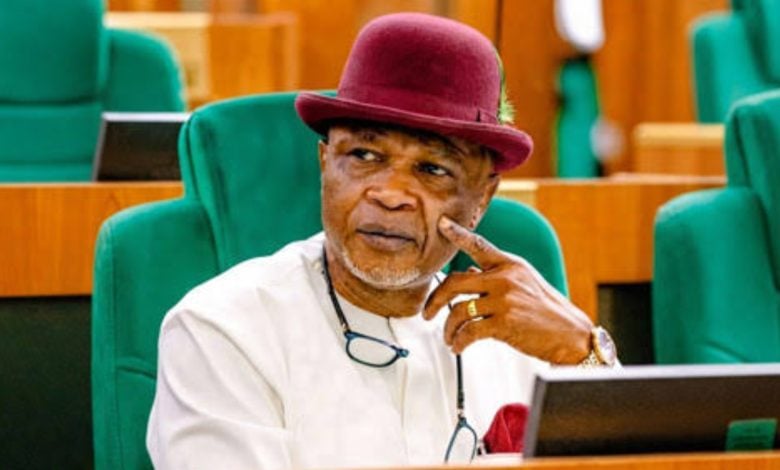
A Chieftain of the African Democratic Congress (ADC), Chief Eze Chukwuemeka Eze, has asked the All Progressives Congress (APC) to provide documentary evidence establishing the legality of Kingsley Chinda’s nomination as its candidate for the 2027 Rivers State governorship election.
Eze made the demand against the backdrop of the Supreme Court judgment which restored key provisions of the Electoral Act 2026 dealing with political party membership registers and the nomination of candidates.
The Supreme Court, in a unanimous judgment delivered on September 24, restored Sections 77(5), 77(6), 77(7) and 84(2) of the Electoral Act after setting aside an earlier Court of Appeal decision that had invalidated the provisions.
The ruling has raised fresh questions over the nomination of some candidates ahead of the 2027 general elections, including Chinda, who emerged as the APC governorship candidate in Rivers State.
Section 77(5) provides that only members whose names are contained in a political party’s membership register submitted to the Independent National Electoral Commission (INEC) within the required period can participate in the party’s primaries, congresses or conventions.
Section 77(6) requires parties to use the same register submitted to INEC for those exercises, while Section 77(7) provides consequences for a party that fails to comply with the statutory requirement.
The controversy surrounding Chinda centres on the timing of his membership of the APC and the party’s Rivers governorship primary.
Chinda, a member of the House of Representatives, was reported to have registered with the APC on April 27, 2026.
He subsequently emerged as the party’s candidate after its governorship primary in Rivers State on May 21.
The Rivers APC has maintained that Chinda had satisfied the 21-day requirement because April 27 was 24 days before the May 21 primary.
The party’s Publicity Secretary, Ikenga Chibike, rejected calls for Chinda’s disqualification and said the Supreme Court judgment did not invalidate his candidacy.
“There is no atom of truth in that. They said 21 days, and Hon. Chinda’s timing was 24 days when you calculate it,” Chibike said.
But Eze has argued that the issue goes beyond simply calculating the number of days between Chinda’s reported registration date and the date of the primary.
In a statement made available to journalists, the ADC chieftain said the crucial question was whether Chinda’s name appeared in the specific APC membership register that was validly submitted to INEC within the period required by law.
“APC cannot merely announce that its Rivers State governorship candidate, Hon. Kingsley Chinda, is qualified because the party says he registered 24 days before its primary. The critical question, he said, is whether Chinda’s name was actually contained in the verified APC membership register validly submitted to INEC within the period prescribed by Section 77 of the Electoral Act and whether every other statutory requirement relating to the nomination of APC candidates was equally satisfied.”
He further called on the APC to make the relevant records available if it is confident that its Rivers governorship primary complied with the Electoral Act.
“The Supreme Court has spoken. What remains is compliance. The APC cannot substitute political assertions for documentary evidence. If the party insists that its Rivers candidates are validly nominated, let it place before INEC and, where necessary, the courts, the very documents upon which the legality of those nominations rests.”
The dispute has also attracted legal action.
The Association of Legislative Drafting Practitioners (ALDRAP) has a pending suit before the Federal High Court in Abuja concerning aspects of Chinda’s nomination. The case, marked FHC/ABJ/CS/972/2026, lists INEC, APC, Chinda and other parties among the respondents.
The association has questioned the application of the membership-register provisions to the Rivers APC primary and has sought legal intervention over the nomination process.
The development has placed greater attention on the records held by APC and INEC, particularly the membership register used for the May 21 primary.

The Supreme Court did not specifically name Chinda or issue an order disqualifying him from the 2027 Rivers governorship race. Rather, the judgment restored the statutory provisions governing party membership registers and candidate nomination.
The question of how those provisions apply to individual nominations is therefore becoming a matter for the relevant electoral and judicial processes.
Eze said Section 177(c) of the 1999 Constitution also makes party membership and sponsorship relevant to anyone seeking the office of governor.
According to him, the constitutional requirement should be considered alongside the Electoral Act provisions governing the process through which political parties select their candidates.
“This is not about Kingsley Chinda as an individual. It is not even about APC as a political party. It is about whether the rule of law will govern the 2027 electoral process in Rivers State or whether political expediency will once again be allowed to supersede statutory compliance.”
He urged INEC to examine the APC’s Rivers State nomination records and membership register in the same manner it would examine those of other political parties.
Eze said the commission should establish whether the register used by the APC complied with the statutory timeline and whether all participants in the primary were entitled to take part under the restored provisions of the Electoral Act.
“If the answer is yes, let the documentary records establish it. If the answer is no, then the law must take its course. There should be no special exemption for APC, PDP, ADC or any other political party. The sanctity of the ballot begins with the legality of the process through which candidates emerge.”
The ADC chieftain also linked the controversy to Rivers State’s history of prolonged political and legal disputes involving party structures, nominations and elections.
He said the state had witnessed several instances where disagreements within political parties eventually ended up before the courts, adding that the latest controversy should be resolved through established legal procedures.
Eze also referred to the political influence of former Rivers State governor and current Minister of the Federal Capital Territory, Nyesom Wike, in the state’s political affairs.

He argued that political disagreements involving Wike, Chinda and other actors should not determine how electoral laws are applied.
“I do not subscribe to the idea that justice should be administered according to the principle of vengeance. But I firmly believe in the law of consequences: when political actors manipulate institutions, circumvent established procedures or disregard the rights of others, they must understand that the same legal and institutional structures may eventually subject their own actions to scrutiny.”
He said his objection was not based on any personal disagreement with Chinda.
“I have known Chinda for years and I have no personal quarrel with him. My concern is institutional. Public office, particularly the office of governor, should never be pursued at the expense of the legal order. Those who aspire to lead Rivers State must demonstrate, from the very beginning, respect for the Constitution, the Electoral Act and the institutions established to administer our democracy.”
Eze further cautioned political actors against turning the Rivers governorship contest into an ethnic or senatorial struggle.
He said every qualified Rivers State citizen should be able to seek elective office, irrespective of whether the person is from Ijaw, Ikwerre, Ogoni, Kalabari, Etche, Okrika, Opobo-Nkoro, Bonny, Andoni, Eleme or another part of the state.
“Rivers State is not the private estate of Wike, Chinda or anybody else. It belongs to all Rivers people. The Constitution does not establish an Ikwerre State, an Ijaw State, an Ogoni State or an Etche State; it establishes Rivers State. Political power must therefore be contested on the basis of law, competence, legitimacy and the freely expressed will of the electorate.”
He also criticised the political developments that preceded the 2025 declaration of a state of emergency in Rivers State, saying the experience should strengthen calls for greater respect for constitutional and democratic institutions.
Eze said the current dispute should not be settled through political pressure or retaliation.
He maintained that INEC should allow the relevant documents to determine whether the APC nomination complied with the law.
“The lesson of the Supreme Court judgment is simple: nobody is bigger than the law. Not APC. Not PDP. Not Wike. Not Amaechi. Not Chinda. Not Tinubu. Not even INEC. Where the law imposes a condition, that condition must be satisfied. Where the Constitution confers a right, that right must be protected. And where a party fails to comply with mandatory electoral requirements, the appropriate legal consequence must follow, irrespective of the political stature of the persons affected.”
The latest development comes days after the Rivers APC publicly dismissed calls for Chinda’s disqualification and insisted that his April 27 membership date placed him 24 days ahead of the May 21 primary.
Eze has consequently called on INEC, the APC and other political stakeholders to ensure that the 2027 electoral process in Rivers State is conducted within the framework of the Constitution and the Electoral Act.
“Rivers State deserves an election in which the law speaks before political power speaks, the Constitution stands above political interests, and the people—not political godfathers—retain the final sovereign authority to determine who governs them.”




One Comment