DSS Uncovers Plot to Attack NYSC Members for 2027 Elections
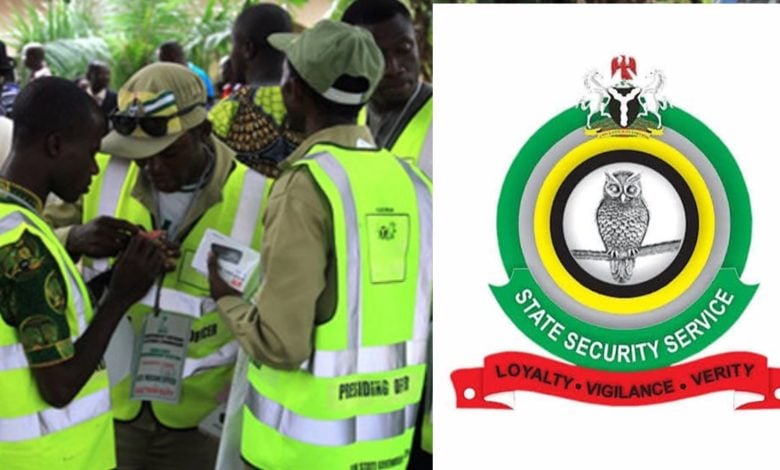
The Department of State Services (DSS) has uncovered a plot targeting members of the National Youth Service Corps (NYSC) and other ad hoc personnel expected to participate in the conduct of the 2027 general elections, according to the Chairman of the Independent National Electoral Commission (INEC), Professor Joash Amupitan, SAN.
Amupitan disclosed that those allegedly involved in the plot had been identified and arrested, adding that they would soon face prosecution.
He said the development formed part of the security concerns being addressed by the commission as preparations for the next general elections gather momentum.
The INEC chairman made this known in Enugu during the South-East Zonal Interactive Meeting with staff and Readiness Assessment for the 2027 General Election.
The meeting brought together commission officials to discuss operational preparations, staff readiness and the challenges that could affect the electoral process.
According to information contained in INEC’s Daily Bulletin, the commission had identified potential threats to its ad hoc personnel, particularly corps members who are often deployed to assist with election duties across the country.
The DSS subsequently uncovered the individuals allegedly behind the plan, leading to their arrest.
Although details of the alleged plot, including the identities of the suspects, the locations targeted and the precise nature of the planned attacks, were not disclosed in the statement, the development has placed the safety of election workers among the issues requiring attention ahead of the 2027 polls.
Corps members have traditionally played important roles in Nigeria’s electoral process.
They are deployed to polling units and collation centres to support the work of electoral officers, assist with accreditation and voting procedures, and carry out other assignments determined by INEC.
Their participation has made the NYSC an important part of the country’s election administration.
The reported threat has therefore raised concerns about the protection of personnel who will be deployed during the forthcoming elections.
INEC will be expected to work with security agencies to ensure that those assigned to electoral duties can carry out their responsibilities without intimidation, violence or other forms of interference.
Amupitan said the commission was taking steps to strengthen its security arrangements and would convene a security conference soon to address additional issues connected with election security.
He did not provide a specific date for the proposed conference but indicated that it would form part of the commission’s wider preparations for the 2027 general elections.
The INEC chairman also said the commission had strengthened its partnership with the Inter-Agency Consultative Committee on Election Security (ICCES), a platform through which electoral authorities and security agencies coordinate their efforts to maintain order during elections.
He explained that INEC was working with security agencies at both national and state levels, using its Election Risk Management (ERM) tools to identify possible threats and develop measures to address them before they disrupt electoral activities.
According to him, the objective is to establish “a robust, intelligence-driven security architecture” capable of responding to threats before, during and after the elections.
The planned security conference is expected to provide an opportunity for further discussions on the protection of electoral personnel, the security of election materials and facilities, and the coordination of agencies responsible for maintaining peace throughout the electoral process.
Beyond physical security, Amupitan identified public distrust, voter apathy and the spread of misinformation and disinformation as major challenges facing the commission.

He warned that false information could spread rapidly online and undermine confidence in the electoral process, particularly when unverified claims circulate before official clarification is issued.
“A single malicious fake news post, an unverified rumour, or a deepfake video can travel across millions of screens in seconds,” he warned.
The chairman said the commission’s ability to counter false narratives would depend partly on how effectively its officials perform their duties.
He noted that delays, administrative failures and poor conduct could create opportunities for misleading claims to gain public attention.
“The conduct, competence, and character of our staff in the field are either our strongest defence against fake news, or its biggest catalyst,” he stated.
Amupitan said INEC intended to respond through “proactive transparency, swift official communication, and uncompromising operational precision at every polling unit.”
His comments suggest that the commission’s preparations will extend beyond logistics and the deployment of security personnel to include better communication, staff accountability and measures to maintain public confidence in the electoral process.
He also warned electoral officials against conduct that could compromise the neutrality of the commission.
According to him, INEC would not tolerate partisan behaviour, negligence, extortion or ethical violations by staff involved in election administration.
“Partisan leaning, administrative negligence, extortion, or compromised ethics will not be tolerated under my leadership,” he said.
The chairman further reminded staff of the provisions of Section 26 of the Electoral Act 2026, which, as he stated, requires electoral personnel, including Electoral Officers, Presiding Officers, Returning Officers and participating security officials, to swear an oath of loyalty and neutrality.
He stressed that the responsibilities of election officials must be guided by the law rather than political interests or personal considerations.
“The question governing your actions must never be ‘Who will benefit from this decision?’ The question must always be ‘What does the law require me to do?’” he said.