INEC Under Fire Over Alleged AI-Generated Images in Voters’ Register

The Independent National Electoral Commission (INEC) has come under heavy criticism following allegations that its preliminary register of voters contains artificial intelligence-generated photographs, duplicate records and questionable voter profiles ahead of Nigeria’s 2027 general elections.
The controversy erupted on Monday after Nigerians began examining the register published on the electoral commission’s website.
Several social media users questioned the authenticity of entries they claimed to have discovered, demanding an urgent explanation from INEC over the reported irregularities.
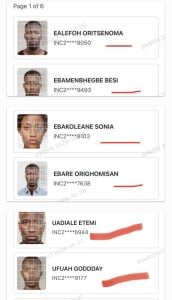
Some of the complaints centred on photographs allegedly created using artificial intelligence, while others concerned claims of identical images appearing against different voter records.
There were also allegations that some entries carried similar identification details despite having different voter registration numbers.
The development has triggered fresh concerns about the accuracy of the national voters’ register and the measures INEC has put in place to prevent multiple registrations, impersonation and other electoral offences before the next general elections.
Several Nigerians have called on the commission to explain how the disputed records entered the register, who was responsible for capturing the affected voters and whether the individuals involved had collected their Permanent Voter Cards (PVCs).
One of the areas specifically mentioned in the online complaints is Ward 11 in Etsako West Local Government Area of Edo State.
Social media users who claimed to have examined the records from the area demanded clarification over photographs they suspected were artificially generated.
A user identified as Sule questioned the commission over the entries, asking, “Dear @inecnigeria can you explain why you have AI Generated images on the INEC Register in polling units in Ward 11, Etsako West LG, Edo State. We want explanation. Who infused AI generated images in the register? who did the capturing? Who collected their pvcs if they have been collected? We want answers!!!!!”
Another user, Micfobiz, also called for an immediate response, writing, “Suspicion over alleged INEC @inecnigeria fake AI pictures on their voters list posted in Etsako, Edo State. Picture of Ghost voters PVC suspected. INEC need to clarify as a matter of urgency.”
The allegations have fuelled speculation about the possible implications for the 2027 elections.
However, the claims circulating online have not, by themselves, established that the disputed records are fraudulent or that artificial intelligence was deliberately used to manipulate the register.
The controversy has also drawn criticism from Nigerians who believe that the electoral commission must be transparent about the information it publishes, particularly as political parties and voters begin preparing for the next election cycle.
A social media user identified as Umeh accused the commission of undermining public confidence in the electoral process, saying, “They keep saying get your voters card, but behind the scene they are working to make your votes invalid. Imagine an agency saddled with the responsibility of conducting free and fair election having its head accused of supporting the ruling party, and now AI generated images and names on its website. Nigerians are not angry enough!”
Another user, Pat Utomi, expressed concern about the implications of the allegations for electoral accountability, stating, “INEC cannot afford to be careless with the credibility of Nigeria’s electoral process. The presence of AI-generated images in a register meant to support our democracy raises serious questions about verification, transparency and accountability. Our democracy is at stake here!”