FG Holds Fresh Talks With TUC Over Rising Hardship, Insecurity
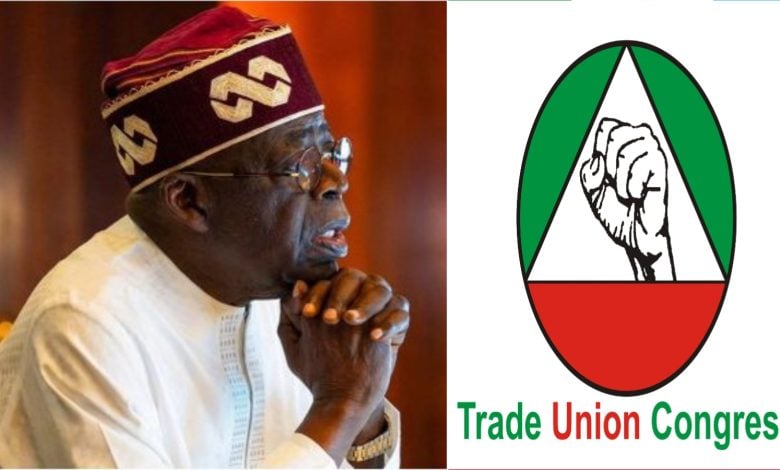
The Federal Government is set to meet with the Trade Union Congress of Nigeria (TUC) on Thursday following a dispute over measures to ease the economic hardship confronting Nigerian workers.
Politics Nigeria reports that the meeting was scheduled for October 29, 2026, at the Office of the Secretary to the Government of the Federation (OSGF) in Abuja.
This development follows the congress’s request for urgent discussions on pressing economic, security and labour issues.
The federal government confirmed the meeting in a letter dated October 27, 2026, addressed to the TUC President-General.
Signed by Ibrahim Abdulkadir, Deputy Director of the General Services Office, on behalf of the Secretary to the Government of the Federation, the letter conveyed the approval for a roundtable discussion with the union’s representatives.
The meeting comes after the Federal Government approved a N70,000 monthly transport allowance for workers for six months, beginning in November, an arrangement the TUC has rejected as inadequate.
Politics Nigeria reports that the allowance was approved following a conciliation meeting between the government and the Nigeria Labour Congress (NLC) at the Federal Ministry of Labour and Employment on Tuesday, October 27.
The resolutions were signed by the Minister of Labour and Employment, Dr Muhammad Maigari Dingyadi; NLC President Joe Ajaero; Director-General of the Budget Office of the Federation, Tanimu Yakubu; and other government and labour representatives.
However, the TUC said temporary financial relief would not resolve workers’ persistent financial difficulties, insisting that the government should prioritise salary increases.
In a statement issued on Wednesday, the congress’s President, Festus Osifo, and Secretary-General, Nuhu Toro, questioned the sustainability of allowances that would expire after six months.
The union argued that the government could increase workers’ earnings without waiting for another minimum wage negotiation, pointing out that there was no legal ceiling preventing employers from paying above the statutory minimum wage.
“Government does not require minimum wage to be negotiated before increasing workers’ pay as there is no maximum wage law in the country.
“Temporary wage awards are not sustainable and far-reaching. How do we go back to the same wage award that never benefited all workers?
“How can workers be expected to trust fresh promises when previous obligations remain outstanding?” the TUC asked.
The congress proposed a N300,000 salary for the lowest-paid government worker, alongside corresponding increases for other categories of workers.
It maintained that regular salary payments would offer workers more dependable financial support than temporary interventions that expire without addressing their long-term needs.
The TUC also cited the wage award agreed upon by the Federal Government and organised labour on October 2, 2023, which was introduced to cushion economic hardship pending the conclusion of minimum wage negotiations in 2024.
According to the congress, some workers were still owed one or two months of the previous award, while others did not receive any payment.
It further alleged that more than 80 per cent of states and the informal sector failed to implement any form of wage award.
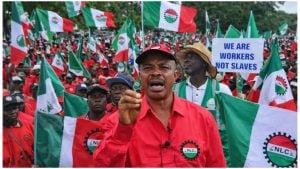
Reiterating its position, the union called for salary increases for government workers, describing regular pay as the most dependable means of improving their living conditions.
“From the foregoing we further reiterate our demand for a pay raise for all government workers as salary is the only consistent and far-reaching pay that workers could rely upon.
“Government must move beyond policy announcements and demonstrate tangible improvements in the living conditions of Nigerians,” it said.
Beyond remuneration, the TUC urged the government to ensure prompt payment of salaries and pensions, protect jobs, tackle exploitative labour practices and reduce the cost of essential goods and services.
It also called for the revival of the productive sector and the creation of decent employment opportunities, stressing the need for adequate funding and clear timelines for implementing government policies.