Power Minister Gives Fresh Update On Blackout In Lagos, FCT, Others

The minister of power, Joseph Tegbe, has announced that electricity has been restored to several areas affected by recent power disruptions in Lagos, Ogun, Oyo, Kwara and the Federal Capital Territory (FCT).
Tegbe disclosed this in an update shared on his Facebook page on Monday, adding that efforts were ongoing to restore supply to other affected locations.
He said the vandalised Benin-Egbin 330kV transmission line had been repaired and returned to service, increasing electricity supply to the Lagos Complex to more than 1,000 megawatts.
According to the minister, the development has helped restore electricity supply to levels recorded before the disruption.
Tegbe said the government was working with key stakeholders in the power sector, including generation companies, the system operator, the Transmission Company of Nigeria and electricity distribution companies, to address the challenges and improve supply.
“Our teams continue to work to restore full supply to the remaining affected locations,” he said.
He added that the government remained committed to collaborating with industry stakeholders to ensure stable electricity supply across the country.
“ This restoration helped to bring the total power supply to the Lagos Complex to over 1,000 megawatts, effectively normalizing to the condition before the disruption.
“We are working with the key power sector stakeholders, including the Generation Companies, System Operator, Transmission Company and the Distribution Companies to ensure sustained and improved availability of power.
“Our priority continues to be the provision of reliable electricity to Nigerians,” the statement read.
The development comes amid widespread complaints over worsening electricity supply in several parts of the country, including Lagos, Abuja, Ogun, Kwara and Oyo.
Electricity allocation to distribution companies reportedly dropped to about 2,926 megawatts on November 5, worsening the outages experienced by households and businesses.
The Nigerian Independent System Operator (NISO) attributed the decline in power generation to inadequate gas supply to thermal power plants and reduced output from hydroelectric stations.
In a statement, NISO explained that limited gas availability had prevented affected thermal generating stations from operating at their available capacities, while reduced water inflows into reservoirs had affected hydroelectric generation.
It said the shortfall had reduced the volume of electricity allocated to distribution companies, resulting in fewer hours of supply and increased load shedding across their networks.
The system operator acknowledged the difficulties faced by electricity consumers and said it was working to maintain grid stability and optimise the distribution of available power.
Meanwhile, electricity distribution companies have also blamed the reduced energy allocations for the persistent outages.
The Ibadan Electricity Distribution Company (IBEDC), while apologising to customers over the lingering blackout, said it was engaging relevant stakeholders to improve supply.
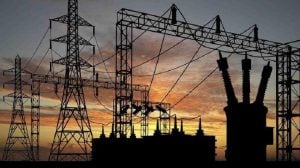
Politics Nigeria reports that the prolonged outages have triggered public frustration, with residents in several communities resorting to generators and solar-powered systems amid rising temperatures.
In Lagos, residents of Somolu and other areas have reportedly staged protests over the disruptions, which have affected businesses, sleep and other daily activities.
The situation has also renewed criticism of the federal government’s handling of the power sector, particularly ahead of the 2027 general elections.