2027: EU Announces Fresh Move Against Election Violence in Nigeria
The European Union (EU) has announced plans to provide additional funding to strengthen human rights protection and prevent election-related violence in Nigeria ahead of the 2027 general elections.
The proposed support will focus on protecting civic and political spaces, strengthening democratic participation and supporting Nigerian institutions and civil society organisations working to promote credible elections.
This announcement comes amid concerns over alleged political intimidation, voter harassment, hate speech, electoral violence and restrictions on the rights of citizens, journalists and human rights defenders.
EU Ambassador and Head of Delegation to Nigeria and ECOWAS, Gautier Mignot, disclosed the development on Wednesday in Abuja during the 2026 Civil Society and Human Rights Defenders Forum on the State of Human Rights.
The event was organised by the National Human Rights Commission (NHRC) in partnership with the European Union.
Speaking at the gathering, Mignot said the EU was preparing a new project with additional funding in collaboration with the commission.
He explained that the initiative would strengthen existing efforts to protect human rights and promote democratic governance as Nigeria approaches another general election.
The ambassador described the forum’s theme, “Protecting Human Rights in Civic and Political Spaces in the 2027 Elections,” as particularly important given the challenges facing Nigeria’s democratic environment.
He noted that reports of electoral violence, hate speech, political intimidation and violations of fundamental rights required attention before the election period.
According to him, protecting democratic institutions goes beyond the conduct of elections.
Citizens must also have the freedom to participate in political activities, express their opinions and engage with candidates without facing threats or intimidation.
Mignot stressed that the EU’s involvement was not intended to influence the outcome of Nigeria’s elections or interfere with the country’s electoral process.
“Our objective is not to interfere in the elections, but support legitimate Nigerian stakeholders to fully play their roles in order to contribute to a free, fair, and credible electoral process,” he said.
He explained that the European Union wanted Nigerian institutions and relevant stakeholders to have the necessary support to perform their responsibilities effectively.
The ambassador also warned that restrictions on civic and political activities could discourage citizens from participating in elections and weaken confidence in democratic institutions.
He identified press freedom, peaceful assembly, open public discussions and the activities of civil society organisations as important elements of a functioning democracy.
According to Mignot, citizens must be able to examine the records of political candidates, discuss national issues and question those seeking public office without fear of censorship, harassment or retaliation.
He called on government institutions, political parties, civil society groups and the media to work towards protecting these freedoms.
He further assured participants that the EU and its member states would examine the recommendations and roadmap expected from the forum.
The documents would subsequently be shared with relevant authorities for further consideration.
At the same event, Executive Secretary of the National Human Rights Commission, Dr Anthony Ojukwu, SAN, raised concerns over the treatment of journalists, civil society organisations and human rights defenders in the country.
Ojukwu said individuals and organisations working to protect human rights continued to experience harassment, arbitrary arrests and alleged misuse of existing laws.
He specifically mentioned concerns surrounding the application of provisions of the Cybercrimes Act, noting that such developments could affect freedom of expression and the ability of citizens to hold public institutions accountable.
The NHRC boss also highlighted several challenges that could affect participation in the 2027 elections.
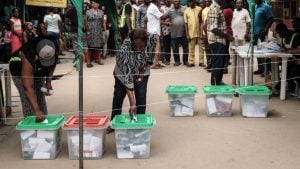
These include voter intimidation, hate speech, electoral offences and high political nomination fees, which he said could prevent certain categories of Nigerians from participating in the political process.
He expressed concern that the cost of obtaining nomination forms could place women, young people and persons with disabilities at a disadvantage when seeking elective positions.
Ojukwu also questioned the lack of accountability for individuals involved in electoral offences, warning that failure to punish offenders could encourage further violations during future elections.
“As long as people can commit these election-related offences and go scot-free, then anybody can try anything they like,” Ojukwu said.
He maintained that the credibility of elections depended not only on the activities of electoral institutions but also on the ability of law enforcement agencies and other relevant authorities to investigate violations and ensure that offenders faced appropriate consequences.
The NHRC executive secretary also presented figures from the commission’s September 2026 Human Rights Situation Dashboard, which documented 338,810 complaints of human rights violations across its 38 offices nationwide.
According to the figures, the North-Central geopolitical zone recorded the highest number of complaints during the period covered by the dashboard.
The commission’s Human Rights Observatory also documented 208 killings and 210 kidnappings.
Other reported incidents included deaths in custody and cases of violence against children.
Ojukwu disclosed that the commission had completed 2,458 investigations into human rights-related complaints.
It also carried out 113 monitoring visits to police stations, correctional centres and other detention facilities.
The monitoring exercises were aimed at examining conditions in detention facilities, identifying possible human rights violations and ensuring that individuals in custody were treated in accordance with established laws and standards.
He further announced that the commission was putting additional measures in place to monitor human rights conditions during the 2027 election period.
According to him, the NHRC’s Human Rights and Election Situation Room would operate round the clock throughout the elections to receive complaints, monitor developments and coordinate responses to reported violations.
The commission also plans to deploy monitors to identified electoral hotspots across the country.
Ojukwu said legal aid partnerships would be established to assist individuals whose rights might be violated during the election period.
.