ICPC Recovers N5.3bn From Local Government Accounts
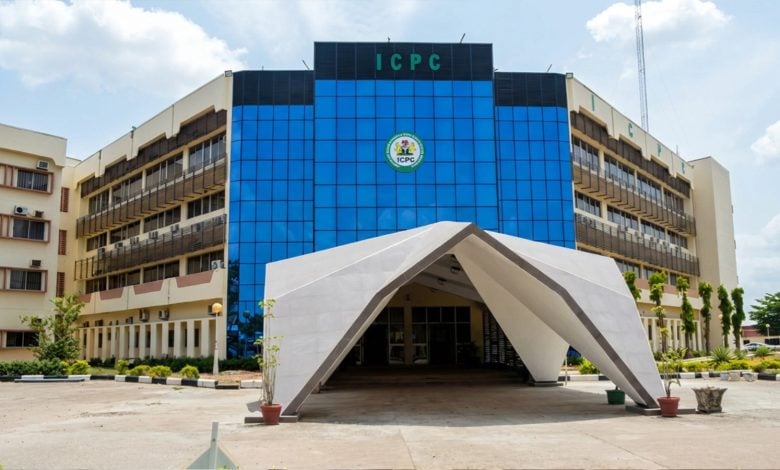
The Independent Corrupt Practices and Other Related Offences Commission (ICPC) has disclosed that it recovered more than N5.3 billion after examining the financial records of local government councils in seven states and the Federal Capital Territory (FCT).
The commission said the recovery followed investigations into the management of local government funds as part of efforts to identify financial irregularities and prevent the diversion of public resources.
Politics Nigeria reports that ICPC also announced plans to introduce digital platforms that will require all 774 local government councils in Nigeria to publish their financial records, budgets, allocations and expenditure online.
The initiative is aimed at giving residents direct access to information about how their councils receive and spend public funds.
It is also expected to make it easier for citizens, journalists and relevant government institutions to monitor financial activities at the grassroots.
ICPC Chairman, Dr Musa Adamu Aliyu, SAN, made the disclosure on Thursday in Lafia, Nasarawa State, during the official launch of the ICPC-National Information Technology Development Agency (NITDA) Local Government Websites Pilot Project.
The project, which commenced in Nasarawa, is expected to serve as a model for the proposed nationwide implementation across the country’s 774 local government areas.
Speaking at the event, Aliyu explained that the recovery of more than N5.3 billion exposed the need for stronger financial monitoring at the local government level.
He said public funds must be properly managed, particularly following the restoration of financial autonomy to local councils.
He recalled the Supreme Court judgment of July 2024, which affirmed the financial independence of local governments and directed that their statutory allocations should be paid directly to them.
According to him, the development places greater responsibility on council officials to demonstrate transparency in the management of public resources.
“Autonomy brings responsibility. Funds that now flow directly to the councils must be spent openly and for the benefit of the people,” he said.
The ICPC chairman explained that the proposed websites would be developed using a standardised format under the commission’s Accountability and Corruption Prevention Programme for Local Governments.
He said the platforms would provide important financial and administrative information that residents could access without visiting council secretariats or submitting repeated requests to government officials.
Among the information expected to be published are annual budgets, statutory allocations, internally generated revenue, expenditure records, audit reports and outstanding debts.
The websites will also contain details of public procurement, personnel management, citizen engagement activities, whistleblowing channels and measures introduced by councils to prevent corruption.
Aliyu said making such records available online would improve public oversight and reduce the opportunities for financial misconduct to go unnoticed.
He maintained that residents should have the opportunity to know how much money enters their local governments and how the funds are eventually spent.
“When these records are published regularly, citizens can follow the money, the media can ask informed questions and oversight institutions can detect risks early, before they become losses,” he said.
He also called on local government chairmen to ensure that the websites remain functional after their official launch.
According to him, each council should appoint officers responsible for managing the platforms, verifying information and ensuring that financial records are updated regularly.
He warned that the initiative would achieve little if councils failed to provide accurate information or abandoned their websites after the initial implementation.
“A website is only as good as the information on it; one that is launched and then abandoned will only disappoint the people,” he added.
Aliyu further explained that the commission was introducing the initiative to strengthen accountability and prevent corruption rather than target or intimidate local government officials.
He said the experience gained from the Nasarawa pilot project would help address possible challenges before the initiative is extended to other states.
“Transparency is not an event. It is a habit that will lead to accountability,” he said.
In his goodwill message, NITDA Director-General, Kashifu Inuwa Abdullahi, said the partnership would address the difficulties residents face when trying to obtain information about activities and projects being undertaken by their local governments.
He explained that many Nigerians, particularly those living in rural communities, still spend considerable time and money travelling to government offices to make enquiries about public projects and administrative decisions.
Abdullahi illustrated the situation with the example of a woman living in a remote community in Nasarawa State who might have to travel more than 60 kilometres at her own expense to find out whether her local government had approved a community project or to submit a complaint.
He said digital platforms would eliminate much of the difficulty by allowing residents to access government information from their phones and other internet-enabled devices.
“We are in a digital age. Our people are online; therefore, government needs to be online to serve them better,” he said.
The NITDA boss identified improved governance, stronger citizen participation and increased economic opportunities as the major objectives of the project.
He explained that the agency would provide the necessary technical standards, website templates and training to ensure that local governments could operate the platforms effectively.
He also encouraged councils to engage technology professionals within their communities to support website maintenance and other digital services.
Abdullahi disclosed that NITDA had committed to registering domain names, developing and hosting websites for all 774 local government areas for at least one year.
He said the project was not simply about creating websites but about using technology to improve the relationship between government institutions and the people they serve.
“Our ambition is not 774 websites. It is 774 digitally empowered local governments delivering better experience to millions of Nigerians,” he said.

Flagging off the initiative, Nasarawa State Governor, Abdullahi Sule, announced that the Nasarawa State Information Technology and Digital Economy Agency would serve as the state’s technical lead for the project.
Sule directed local government councils to take responsibility for the information published on their respective websites.
He said designated officials must verify all details before making them available to the public.
The governor stressed that the success of the project would depend on the quality and regular availability of information rather than the ceremony organised to introduce it.
He also expressed optimism that publishing financial allocations online would address some of the excuses frequently given by local government authorities over their inability to meet certain financial obligations.
Sule specifically pointed to complaints about delayed salary payments, noting that public disclosure of council allocations would make it easier for residents to establish whether local governments had received their statutory funds.
However, the governor challenged the ICPC and NITDA to extend the transparency programme beyond local governments to include state governments.
He argued that citizens should also be able to monitor how state governments manage public resources, particularly funds allocated for projects and services at the grassroots.
Sule offered Nasarawa State as the first state willing to make such financial disclosures available to the public.
The Emir of Lafia, Justice Sidi Bage Muhammad I (retd.), also commended the ICPC, NITDA and the Nasarawa State Government for introducing the initiative.
He acknowledged the importance of transparency in public administration and the need for traditional institutions and other stakeholders to support efforts aimed at improving governance.
Similarly, the Speaker of the Nasarawa State House of Assembly, Danladi Jatau, pledged the legislature’s support for the programme.
Jatau recalled that the Constitution gives state Houses of Assembly oversight responsibilities over local government finances.
He said the legislature would continue to support measures that promote accountability in the management of council resources.
The launch ceremony took place at the Government House Banquet Hall in Lafia under the theme, “Deepening Transparency and Accountability at the Grassroots through Digital Disclosure.”
A technical session on the standardised website template for local government councils followed the official flag-off.
The initiative is connected to the ICPC’s broader Accountability and Corruption Prevention Programme for Local Governments, which was introduced following the Supreme Court’s landmark ruling on local government financial autonomy on July 11, 2024.
In the judgment, the Supreme Court ruled that allocations meant for democratically elected local government councils should be paid directly to them from the Federation Account rather than being controlled by state governments.
The apex court also declared the continued administration of local governments by unelected caretaker committees unconstitutional, emphasising the need for democratically elected officials to manage council affairs.